
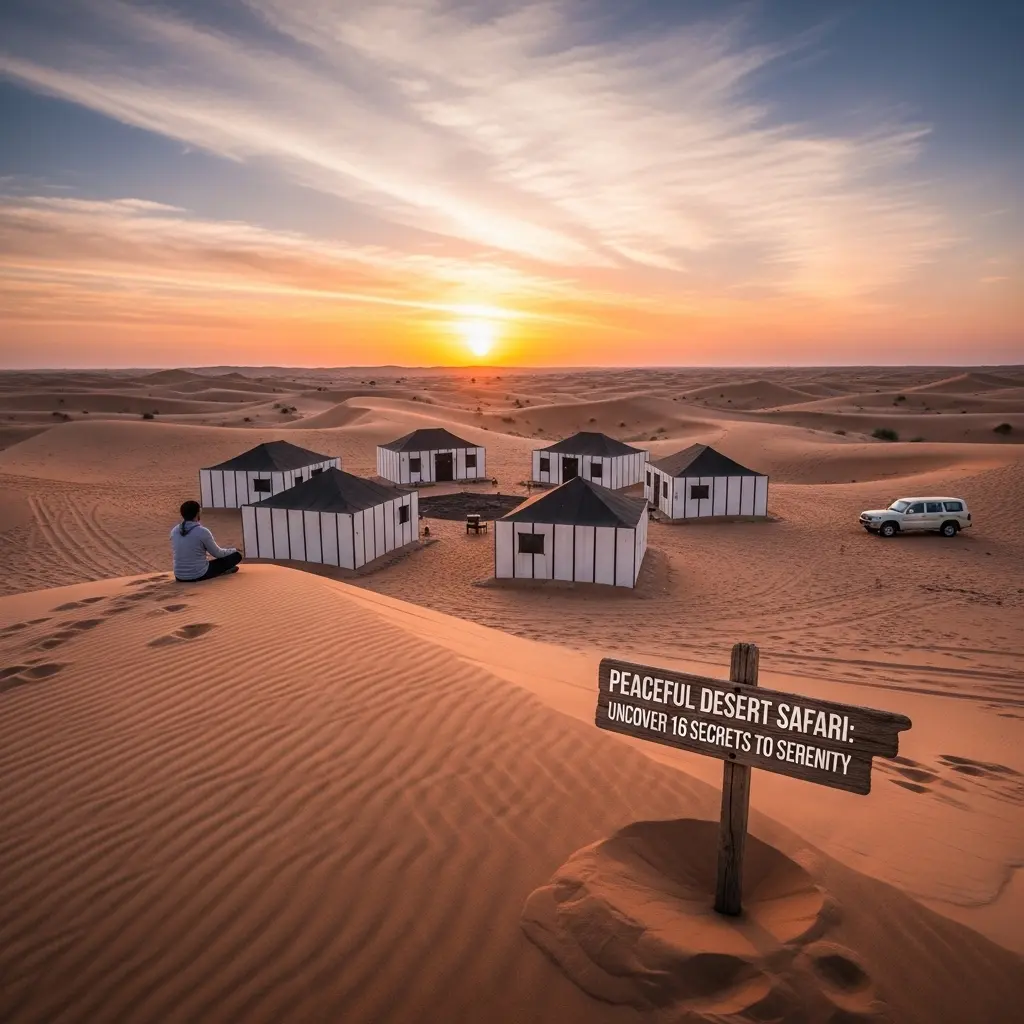
Peaceful Desert Safari: 16 Powerful Secrets to Finding the Most Tranquil UAE Experience
The desert is often sought for its roar of excitement. Yet, its deepest beauty lies in its silence.
For the traveler seeking a retreat, the Peaceful Desert Safari offers profound tranquility. It is an escape from the busy city life.
This specialized experience prioritizes solitude, nature, and cultural respect. It avoids high-speed chaos.
Understanding the unique requirements for finding quiet is essential. This ensures your journey is truly restorative.
This extensive guide reveals 16 powerful secrets. We detail how to vet and book the ultimate Peaceful Desert Safari.
Following these insights guarantees an experience of serenity and majestic beauty.
1. The Core Secret: Finding the Quiet Desert Experience
The most significant factor in a Peaceful Desert Safari is the deliberate elimination of noise and crowds.
H3: Secluded Safari Tours and Location
A genuine Quiet Desert Experience requires access to remote, privately managed areas. These are far from the main tourist roads.
The location must be away from the loud, mass-market safari camps and their entertainment systems.
This geographical isolation is paramount for achieving true tranquility.
H3: Low Impact Safari Transportation
The Peaceful Desert Safari often replaces aggressive dune bashing with a slow, scenic drive or a gentle ride.
The Low Impact Safari focuses on minimal disruption to the natural environment and the sense of quiet.
Avoid any tour that heavily promotes high-octane speed for these routes.
H4: Soundscape Vetting
The quiet of the desert is easily broken. Check reviews for complaints about excessive engine noise or loud music at the camp.
The goal is an acoustic sanctuary, enhancing the Quiet Desert Experience.
2. The Nature Connection: Conservation Reserve Tour
The highest quality Peaceful Desert Safari tours operate in protected areas.
H3: Conservation Reserve Tour Access
Safaris that hold permits for conservation areas (like the DDCR or Al Marmoom) guarantee low traffic and high ethical standards.
A Conservation Reserve Tour prioritizes ecological viewing and protection over human thrill.
This restricted access ensures a genuinely high-quality environment.
H3: Wildlife Watching and Observation
The quiet movement of a Peaceful Desert Safari increases the chance of spotting wildlife (Oryx, Gazelle).
Guides are often naturalists, trained to point out subtle signs of Desert Flora and Fauna.
The best viewing happens during the cool, silent hours of dawn.
H4: Ethical Safari Practices
Support only those operators who adhere to strict Ethical Safari Practices. This includes no littering and maintaining respectful distances from animals.
This commitment to the environment ensures the long-term preservation of the quiet routes.
3. The Ultimate Comfort: Luxury Quiet Camps and Overnight Stay
For the ultimate immersion, an extended stay provides maximum tranquility.
H3: Luxury Quiet Camps Accommodation
Luxury Quiet Camps replace basic camping with high-end glamping suites. These offer thick insulation and quality bedding.
The best Peaceful Desert Safari options ensure private, clean washroom facilities.
Comfort is crucial for fully embracing the quiet of the night.
H3: Desert Stargazing and Silence
The Luxury Quiet Camps location minimizes light pollution, offering spectacular Desert Stargazing.
This unique celestial view is the tranquil reward for staying overnight.
The profound silence amplifies the sense of peace.
H4: Private Overnight Tour Options
A Private Overnight Tour is the peak of exclusivity. It guarantees a dedicated, private camp setup.
This eliminates all potential noise and interruption from other guests.
This high level of service defines a truly intimate Tranquil Desert Escape.
4. Logistics and Timing: Best Serenity Safaris
Punctuality and meticulous scheduling are crucial for securing the best natural light and quietude.
H3: Sunrise Nature Walk
The Best Serenity Safaris include a guided Sunrise Nature Walk. This is the quietest activity of the day.
The cool air and soft dawn light are perfect for meditative reflection and photography.
This activity is a signature of a dedicated Peaceful Desert Safari.
H3: Optimal Best Serenity Safaris Timing
The most tranquil hours are from 5:00 AM to 7:00 AM (Sunrise). Book a morning tour for maximum quiet.
If booking an evening tour, choose a time that ensures the camp is quiet after 10:00 PM.
This careful timing is key to the success of the Peaceful Desert Safari.
H4: Transfer Vetting
Verify the transfer method. Low Impact Safari operators use slow, controlled driving techniques.
Check reviews on transfer professionalism and adherence to the serene atmosphere.
5. Booking and Value: Low Impact Safari and Assurance
You must ensure the package is genuinely quiet, not just marketed as such.
H3: Low Impact Safari Inclusions Check
A reliable Low Impact Safari will explicitly state that aggressive dune bashing is excluded.
It should include the services of a naturalist guide and access to conservation areas.
Check the inclusions against the quiet focus of the Peaceful Desert Safari.
H3: Vetting External Reviews for Serenity
Use external sites like https://dubaidesertsafarie.com/ and https://hafiztourism.com/ to check feedback.
Filter reviews for terms like “quiet,” “serene,” “peaceful,” and “solitude.”
Consistent praise for the ambiance confirms a high-quality Tranquil Desert Escape.
H4: Internal Resources for Exclusive Access
Consult specialized providers like https://royaldesertadventures.ae/ for private access to the quietest reserves.
Their bespoke services guarantee a highly secluded Peaceful Desert Safari.
6. Final Verdict: Best Serenity Safaris
The Peaceful Desert Safari is an investment in personal well-being and genuine natural experience.
It proves that the ultimate desert adventure is found in the quiet moments.
Tranquility Factors Comparison
| Feature | High-Quality Peaceful Desert Safari | Standard Evening Safari (Crowd Risk) | Focus Keyword Relevance |
| Activity | Sunrise Nature Walk, Camel Trekking | High-impact Dune Bashing (Loud) | Low Impact Safari |
| Vehicle | Vintage 4×4 or Gentle Drive | Modern 4×4 (Aggressive Thrill) | Scenic Safari Routes |
| Ambience | Near-Silent, Low Ambient Lighting | Loud Music, Fire Shows, High Foot Traffic | Quiet Desert Experience |
| Accommodation | Luxury Quiet Camps, Insulated Tent | Basic Tent/Shared Seating (Communal) | Luxury Quiet Camps |
| Primary Goal | Observation, Reflection, Solitude | Adrenaline, Entertainment, Socializing | Peaceful Desert Safari |
Frequently Asked Questions (FAQs) – Peaceful Desert Safari
1. How does a Peaceful Desert Safari manage the high-impact dune bashing element to ensure a tranquil experience?
A Peaceful Desert Safari manages the dune bashing element by excluding it entirely or replacing it with a slow, gentle, scenic drive. The tour focuses on accessing the quiet, remote areas of the desert via smooth, established tracks. This strategy prioritizes the tranquility of the Quiet Desert Experience and wildlife observation over adrenaline, making it a true Low Impact Safari.
2. What specific types of Desert Flora and Fauna can I expect to see during a Sunrise Nature Walk that are not visible during the day?
During a Sunrise Nature Walk, you can expect to see Arabian Oryx and Gazelles, which graze during the cool dawn hours. You may also spot the elusive Desert Fox or Jerboas (small rodents) returning to their burrows after nocturnal foraging. This early morning activity is key for spotting Desert Flora and Fauna before the heat drives them into the shade.
3. Why is booking a Low Impact Safari often recommended for serious photographers, even if they aren’t interested in wildlife?
A Low Impact Safari is recommended for photographers because it guarantees access to pristine, untracked dunes. The lack of vehicles and people in remote areas ensures a clean, aesthetically superior backdrop for landscape shots. The slow pace also allows the photographer more control and time to set up for the perfect light, enhancing the quality of the Peaceful Desert Safari images.
4. What key features should be present in Luxury Quiet Camps to guarantee a truly comfortable and secluded overnight stay?
Key features in Luxury Quiet Camps must include proper, raised beds (not thin mattresses), high-quality duvets and linens, and private, en-suite washroom facilities. The camp itself should be structurally designed for solitude, with tents spaced far apart and minimal artificial lighting to ensure a dark, quiet, and comfortable Tranquil Desert Escape.
5. How far in advance should I book a Private Overnight Tour to guarantee seclusion during the peak winter season?
You should book a Private Overnight Tour at least 8 to 12 weeks in advance during the peak winter season (November to March). Private tours have limited slots, and the exclusive, quiet locations (the Secluded Desert Spots) are highly sought after. Early booking is essential to secure the dedicated resources and isolation required for a truly tranquil experience.
6. How does a Conservation Reserve Tour ensure it adheres to Ethical Safari Practices regarding the fragile desert ecosystem?
A Conservation Reserve Tour adheres to Ethical Safari Practices by restricting vehicle movement to designated tracks, enforcing a strict “Leave No Trace” policy (removing all waste), and maintaining ethical distances from wildlife. The guides are specially trained to interpret the environment without causing any disturbance to the Desert Flora and Fauna.
7. What types of food are typically served during a Quiet Desert Experience traditional breakfast, and how is it maintained in the remote area?
The traditional breakfast during a Quiet Desert Experience is typically hot and fresh. It includes traditional bread, eggs, cheese, honey, and local preserves, often served with Arabic coffee and tea. It is maintained by using insulated containers and dedicated ground crew who transport and prepare the food in the cool, early morning hours.
8. What specific Desert Stargazing equipment should a traveler ask about to ensure a high-quality astronomical viewing experience?
A traveler should ask about the availability of a high-powered reflector or refractor telescope and an expert guide specializing in astronomy. This ensures the Desert Stargazing is educational and allows for viewing celestial objects in high detail, maximizing the Peaceful Desert Safari experience in the dark, clear sky.
9. How can a traveler use external review sites (like https://dubaidesertsafarie.com/) to confirm a tour is genuinely focused on a Quiet Desert Experience?
A traveler should use external review sites by filtering reviews for keywords like “silent,” “secluded,” “no crowds,” and “tranquil.” Look for consistent positive feedback that praises the ambiance and the absence of loud music or traffic noise, confirming the operator’s commitment to delivering a genuine Quiet Desert Experience.
10. What is the biggest logistical risk to a Peaceful Desert Safari itinerary, and what protocols do operators use to mitigate it?
The biggest logistical risk is traffic congestion on the public roads leading to the desert access points, which compromises the start time. Operators mitigate this by scheduling very early pickups (pre-dawn for morning tours) and using GPS routing to avoid known bottlenecks, ensuring a punctual and stress-free start to the Peaceful Desert Safari.
11. What is the value of a Sunrise Nature Walk in a Peaceful Desert Safari compared to a full-speed dune bashing session?
The value of a Sunrise Nature Walk lies in serenity, intimacy, and ecological connection. It offers a profound sense of peace and the chance to observe Desert Flora and Fauna closely. In contrast, dune bashing offers adrenaline. The walk provides a reflective, culturally rich experience that is highly valued by those seeking a deeper connection with the desert.
12. How should a traveler pack to manage the extreme temperature swing between the heat of the day and the cold of the night during a Luxury Quiet Camps stay?
A traveler should pack using the layering strategy. They need lightweight, breathable clothing for the daytime, and thick thermal layers (jackets, hats, socks) for the night (when temperatures drop drastically). Even in a Luxury Quiet Camps tent, personal warm layers are essential for sitting outside by the campfire or stargazing.
13. How does the Low Impact Safari model ensure a better quality of service and attention compared to a high-volume safari?
The Low Impact Safari model ensures better quality by limiting guest numbers. This allows the operator to maintain a higher staff-to-guest ratio. The reduced volume translates directly to more personal attention from the guide, faster service at mealtimes, and a generally more refined, exclusive, and less chaotic experience for the traveler.
14. What essential items should travelers bring to enhance the Desert Stargazing experience, beyond relying on the operator’s equipment?
Travelers should bring a red-light headlamp or flashlight (to preserve night vision), a warm blanket or sleeping bag (for sitting out in the cold), and a sturdy tripod if they plan on attempting long-exposure photography. These items maximize comfort and technical capacity for the Desert Stargazing Adventure.
15. What makes the Private Overnight Tour the ultimate choice for a Tranquil Desert Escape?
The Private Overnight Tour is the ultimate choice because it guarantees absolute seclusion and customization. The traveler receives a dedicated camp setup, private dining, and control over the schedule, eliminating any potential noise or intrusion from other tourists. This high-level exclusivity ensures a truly private and peaceful Tranquil Desert Escape.
16. How can a traveler use the external link https://hafiztourism.com/ to validate the authenticity of the cultural component of a Peaceful Desert Safari?
A traveler should use https://hafiztourism.com/ by filtering reviews for comments on the cultural program’s depth and professionalism. Look for specific mentions of authentic music, knowledgeable guides sharing folklore, and genuine hospitality. Positive reviews that prioritize these cultural elements over just “party fun” confirm the Peaceful Desert Safari offers a true heritage experience.
17. What specialized knowledge should the guide possess to effectively lead a Conservation Reserve Tour focused on the desert’s ecology?
The guide for a Conservation Reserve Tour must possess specialized knowledge of local ecology, native species behavior (Oryx, Gazelle), and traditional tracking techniques. Their ability to interpret footprints, identify Desert Flora and Fauna, and explain the conservation efforts elevates the tour from a simple drive to an educational, high-value Peaceful Desert Safari.
18. How does the unique ambiance of Luxury Quiet Camps contribute to the overall memory of the desert experience?
The unique ambiance of Luxury Quiet Camps contributes to memory by providing sensory perfection. The soft, traditional lantern lighting, the absence of noise, and the deep silence of the remote desert enhance the feeling of magic and exclusivity, ensuring the memory of the Peaceful Desert Safari is one of profound tranquility and luxury.
19. Why should a traveler choose a Low Impact Safari if their primary goal is high-quality landscape photography?
A traveler should choose a Low Impact Safari because it guarantees access to pristine, untracked dunes. By avoiding the aggressive, high-traffic routes, the tour reaches untouched areas. The resulting landscape photographs are cleaner, visually superior, and convey a powerful sense of solitude and vastness.
20. What is the value proposition of a package that includes a dedicated Sunrise Nature Walk in the Peaceful Desert Safari itinerary?
The value proposition of the Sunrise Nature Walk is tranquility, unique light, and enhanced wildlife viewing. It offers the quietest time of the day for observation. The gentle physical activity is invigorating, and the soft, early morning light is perfect for capturing beautiful, reflective photographs of the Peaceful Desert Safari.