
A Bridge of Understanding: Your In-depth Jumeirah Mosque Visit Guide
In a city of soaring, futuristic structures, there stands a landmark of serene, timeless beauty that offers a different kind of awe. This is the ultimate Jumeirah Mosque visit guide, your key to exploring one of Dubai’s most iconic and important cultural institutions. With its magnificent white stone facade and intricate architectural details, the Jumeirah Mosque is not just a place of worship; it is a powerful symbol of the city’s heritage and a beacon of cross-cultural understanding.
This is more than just a simple tour; it is a journey into the heart of Islamic culture, offered through a unique and welcoming program. This in-depth Jumeirah Mosque visit guide will walk you through every aspect of this incredible experience, from its breathtaking architecture to the enlightening cultural presentations held within its walls.
We will delve into the history of its design, explore the rituals of Islamic prayer, and uncover the profound meaning behind the “Open Doors, Open Minds” policy that makes this mosque so special. We will provide you with all the essential information you need to plan your 2025 visit, ensuring it is a respectful, enriching, and truly unforgettable experience.
Prepare to look beyond the headlines and connect with the authentic culture of the UAE. This Jumeirah Mosque visit guide is your invitation to a world of beauty, knowledge, and genuine human connection.
The “Open Doors, Open Minds” Philosophy: A Unique Invitation
The very foundation of the Jumeirah Mosque visit guide experience is the remarkable “Open Doors, Open Minds” policy. This is not a mosque that is closed off to the world; it is a place that actively invites visitors of all faiths and backgrounds to step inside, to learn, and to ask questions.
This pioneering program is run in partnership with the esteemed Sheikh Mohammed Centre for Cultural Understanding (SMCCU). The centre’s mission is to build bridges between cultures, demystify the traditions of the UAE, and create a safe and open environment for dialogue. The Jumeirah Mosque is one of the most important venues for this noble mission.
The presenters who lead the tours are not just guides reciting a script; they are passionate Emirati hosts who are eager to share their faith and culture with visitors. Their goal is to replace stereotypes with personal stories and to foster a world of greater understanding and respect. This philosophy is what transforms a simple tour into a profound cultural immersion.
An Architectural Masterpiece: The Beauty of the Fatimid Style
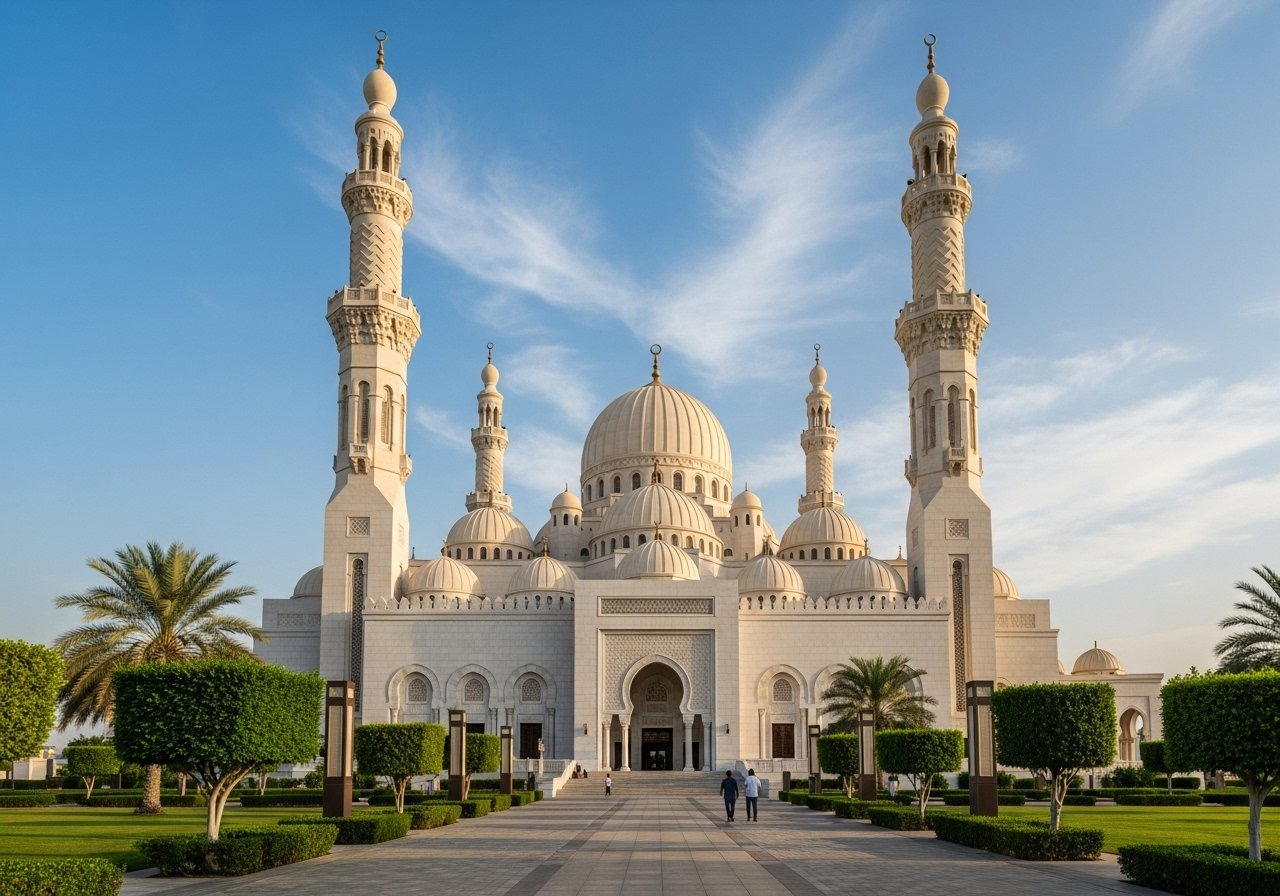
The Jumeirah Mosque is widely regarded as one of the most beautiful mosques in the UAE, and its architecture is a key part of the experience. This landmark is a stunning example of the traditional Fatimid architectural style, which originated in North Africa in the 10th century.
Constructed entirely from pure white stone, the mosque has a majestic and almost ethereal quality, especially when seen against the brilliant blue of the Dubai sky. It is particularly breathtaking during the “golden hours” of sunrise and sunset, and when it is dramatically floodlit at night.
The Majestic Exterior
The first thing that captures your attention is the mosque’s perfect symmetry and intricate detail.
- The Twin Minarets: Two elegant, slender minarets frame the magnificent central dome. These towers are from where the traditional call to prayer, or “Adhan,” is broadcast five times a day.
- The Central Dome: The grand central dome is a masterpiece of design, with beautiful, intricate carvings and a graceful, soaring quality.
- Intricate Stonework: As you get closer, you can appreciate the incredible detail of the carved stonework. The walls are adorned with beautiful geometric patterns and flowing, organic motifs, all meticulously crafted from the same white stone.
The exterior of the mosque is a photographer’s dream and a perfect introduction to the beauty that awaits inside. A complete Jumeirah Mosque visit guide must emphasize appreciating these external details before even stepping inside.
The Serene Interior
Stepping inside the main prayer hall is a moment of profound peace. The interior is designed to be a calm, uncluttered, and serene space, conducive to prayer and contemplation.
- The Prayer Hall: The hall is a vast, open space, its floors covered with a single, beautifully patterned carpet. The carpet features lines that guide the worshippers to stand in straight rows, shoulder to shoulder, facing towards the holy city of Mecca.
- The Mihrab: The focal point of the prayer hall is the “mihrab,” a beautifully decorated niche in the wall that indicates the “qibla,” the direction of Mecca. The Imam, or prayer leader, stands here to lead the congregational prayers.
- The Chandeliers: Magnificent, ornate chandeliers hang from the high ceiling, casting a warm and gentle light throughout the hall.
- Geometric Patterns: The walls and ceiling are adorned with beautiful, non-figurative art, primarily in the form of intricate geometric patterns and flowing calligraphy from the Holy Quran.
The Jumeirah Mosque Visit Guide: A Step-by-Step Walkthrough
The guided tour of the mosque is a structured and incredibly informative 75-minute program that provides a complete introduction to Islamic faith and Emirati culture. This Jumeirah Mosque visit guide will walk you through each step of this fascinating journey.
Arrival, Welcome, and Traditional Attire
The tours are held at a specific time each day (traditionally at 10:00 AM, six days a week, but always check for the latest 2025 schedule). It is advisable to arrive about 15-20 minutes early to register.
You will be greeted at the majlis (the welcome area) by the friendly hosts from the SMCCU. A crucial part of the experience is the respectful dress code. For visitors who are not dressed appropriately, the centre provides traditional Emirati attire to borrow, free of charge.
- For Women: A traditional “abaya” (a long, elegant robe) and a “shayla” (a headscarf).
- For Men: A traditional “kandora” (a long, white robe).
This act of providing traditional clothing is a wonderful gesture of welcome, allowing all visitors to feel comfortable and to participate fully and respectfully in the experience.
The Ritual of Ablution (Wudu): A Demonstration of Purity
Before the tour enters the mosque itself, the hosts often conduct a demonstration of “wudu,” the ritual of ablution or washing that Muslims perform before they pray.
This is a fascinating and highly educational part of the tour. The host will explain the spiritual significance of cleanliness in Islam, which is seen as being half of the faith. They will then demonstrate the step-by-step process of washing the hands, face, arms, and feet, explaining the meaning behind each action.
This demonstration provides a valuable insight into the practical and spiritual preparations for Islamic prayer and is a key part of what makes this more than just an architectural tour. It is a true cultural Jumeirah Mosque visit guide.
Inside the Prayer Hall: An Immersive Explanation
Once inside the serene beauty of the main prayer hall, you will be invited to sit on the plush carpet as your host begins their presentation.
The Five Pillars of Islam: The talk usually begins with a clear and concise explanation of the Five Pillars of Islam, which are the foundational principles of the faith.
- Shahada: The declaration of faith.
- Salat: The five daily prayers.
- Zakat: The charitable giving.
- Sawm: The fasting during the holy month of Ramadan.
- Hajj: The pilgrimage to the holy city of Mecca.
The host explains each pillar in an accessible and engaging way, providing a solid foundation for understanding the Islamic faith.
Understanding the Prayer (Salat): A significant portion of the presentation is dedicated to explaining the ritual of prayer, or “Salat.”
- The Call to Prayer (Adhan): The host will often beautifully recite the Adhan and explain the meaning of its words.
- The Prayer Positions: They will demonstrate the different physical positions of the prayer—standing, bowing, prostrating, and sitting—and explain the spiritual significance of each posture, such as humility and submission before God.
This part of the tour is incredibly enlightening, offering a rare opportunity to understand the meaning and beauty behind the rituals that are practiced by millions of Muslims every day.
The Q&A Session: Your Chance to Ask Anything
The absolute highlight of this Jumeirah Mosque visit guide experience is the open Q&A session. True to the “Open Doors, Open Minds” motto, the host will open the floor to any and all questions.
This is a unique and valuable opportunity to have an open, honest, and respectful conversation. The hosts are incredibly gracious and candid, and they create a safe and welcoming environment for even the most direct questions.
Common Questions Often Asked:
- “Why do Muslim women wear the hijab or headscarf?”
- “What is the significance of fasting during Ramadan?”
- “What is the role of women in Islam and in Emirati society?”
- “Can you explain the difference between Sunni and Shia Muslims?”
- “What are some common misconceptions about Islam that you would like to correct?”
The willingness of the hosts to tackle these complex topics with honesty and humor is what makes this experience so profoundly impactful and memorable.
Traditional Refreshments (Fuala)
After the tour concludes, you are invited back to the majlis to enjoy “fuala,” a traditional Emirati custom of offering light refreshments to guests.
You can sit and chat with your host while enjoying complimentary Arabic coffee, dates, and traditional pastries like “luqaimat” (sweet dumplings). It is a perfect and hospitable end to a truly enlightening experience.
Photography at the Mosque: Capturing the Beauty Respectfully
The Jumeirah Mosque is incredibly photogenic, and photography for personal use is actively encouraged.
- Exterior Shots: The best time to photograph the exterior is during the golden hours of sunrise or sunset. The night shots, when the mosque is beautifully illuminated, are also spectacular.
- Interior Details: Inside, focus on the beautiful geometric patterns, the intricate details of the mihrab, and the stunning chandeliers.
- Respectful Photography: While photography is allowed, it is important to be respectful. Avoid taking intrusive photos of people who are there to worship, and always ask for permission before taking a close-up picture of your host or other visitors.
A Practical Guide for Your 2025 Visit
To make your Jumeirah Mosque visit guide experience as smooth as possible, here is some essential practical information.
Tour Timings and Booking
- Tour Times: The “Open Doors, Open Minds” tour is typically held at 10:00 AM, from Saturday to Thursday (closed on Fridays). However, it is essential to check the official SMCCU website for the most current schedule for 2025, as timings can sometimes change.
- Booking: While walk-ins are sometimes possible, it is highly recommended to book your spot in advance online, especially during the peak tourist season.
- Cost: There is a small fee for the 75-minute program, which includes the tour, the Q&A session, and the traditional refreshments.
Dress Code in Detail
A modest dress code is required for all visitors entering the mosque.
- For Women: Clothing should cover the shoulders, arms, and knees. Trousers or a long skirt are ideal. You will also be asked to cover your hair with a headscarf (“shayla”).
- For Men: Trousers and a shirt with sleeves are required. Shorts are not permitted.
- Attire Provided: Do not worry if you do not have the appropriate clothing. The mosque provides clean, traditional abayas and shaylas for women and kandoras for men to borrow for the duration of the tour, completely free of charge.
How to Get There
The Jumeirah Mosque is located on Jumeirah Beach Road.
- By Taxi/Ride-Hailing: This is the easiest and most direct option. Every driver in Dubai knows the location of the Jumeirah Mosque.
- By Public Transport: Several RTA bus routes run along Jumeirah Beach Road and have stops near the mosque.
- By Car: There is limited parking available at the mosque, so arriving by taxi or bus is often easier.
Integrating Your Cultural Visit with a Desert Adventure
A visit based on this Jumeirah Mosque visit guide is a profound immersion in the urban, cultural, and spiritual heritage of the UAE. To create a truly unforgettable and well-rounded Dubai vacation, you can perfectly complement this enlightening experience with the timeless, natural heritage of the Arabian desert. Imagine following up a morning of cultural discovery and open dialogue with a spectacular and thrilling evening desert safari. For a premium and authentic adventure, you can book an experience with a company like https://royaldesertadventures.ae/, where you can enjoy exhilarating 4×4 dune bashing as the sun sets over the golden sands, a peaceful camel ride, and a delicious barbecue dinner at a traditional Bedouin-style camp under a canopy of stars.
To craft a complete and seamless itinerary that combines the best of Dubai’s cultural and natural attractions, it is wise to work with experienced local tour operators. Reputable companies such as https://dubaidesertsafarie.com/ offer a comprehensive range of city tours and desert adventures to suit every traveler. For planning diverse excursions and activities across the UAE, https://hafiztourism.com/ is another excellent and trusted partner that can help you organize your perfect vacation.
Frequently Asked Questions (FAQs)
- Do I need to be a Muslim to visit the Jumeirah Mosque? No, absolutely not. The Jumeirah Mosque is famous for its “Open Doors, Open Minds” policy and warmly welcomes visitors of all faiths and backgrounds to join its guided tours.
- Are the guided tours free of charge? There is a small fee for the 75-minute program, which goes towards supporting the non-profit work of the Sheikh Mohammed Centre for Cultural Understanding.
- What is the best way to book a tour? The best way is to book online in advance through the official Sheikh Mohammed Centre for Cultural Understanding (SMCCU) website.
- Can I visit the mosque outside of the official tour times? Non-Muslims are only permitted to enter the mosque as part of the official guided tours.
- Is the Jumeirah Mosque the same as the Sheikh Zayed Grand Mosque? No, they are two different mosques. The Jumeirah Mosque is the iconic cultural landmark in Dubai. The Sheikh Zayed Grand Mosque is the much larger, national mosque located in Abu Dhabi.
- Are children allowed on the tour? Yes, children are very welcome on the tour. It is a fantastic and highly educational experience for them to learn about a different culture and religion in a welcoming environment.
- What language are the tours conducted in? The public tours are primarily conducted in English. Private tours in other languages can sometimes be arranged by contacting the SMCCU directly.
- Is there a specific prayer I need to perform inside the mosque? No, non-Muslim visitors are not expected to participate in any prayers. The tour is purely for educational and observational purposes.
- What happens if I am not dressed appropriately? Do not worry. The mosque provides appropriate, traditional clothing (abayas for women, kandoras for men) for you to borrow, free of charge, to ensure you can participate in the tour respectfully.
- What makes this tour a unique part of a Jumeirah Mosque visit guide? The most unique aspect is the completely open and uncensored Q&A session. It is a rare opportunity to have a direct and honest conversation with an Emirati host about their culture and faith, making it far more than just a simple architectural tour.
An Unforgettable Cultural Connection
A journey based on this Jumeirah Mosque visit guide is more than just a sightseeing stop; it is one of the most meaningful and enriching cultural experiences you can have in Dubai. It is a chance to step beyond the superficial and engage in a genuine dialogue that fosters understanding, breaks down stereotypes, and connects you with the true, hospitable spirit of the Emirates.
In a city that is a crossroads of the world, the Jumeirah Mosque stands as a beautiful and powerful symbol of tolerance and respect. A visit here will leave you not only with beautiful photographs of a stunning architectural landmark but also with a deeper and more profound appreciation for the rich cultural tapestry that makes Dubai so special.