

The Legacy Unveiled: Embarking on a Desert Story Safari
Dubai’s glittering facade hides centuries of rich history. This history is written not in stone, but in sand.
The true past of the region is preserved through spoken word. It is held within the authentic desert narratives.
This is the central focus of the Desert Story Safari.
It is a unique cultural heritage safari. It transports guests back to the days of the Beduin nomads.
This bespoke journey is the best storytelling safari available in the region.
The Desert Story Safari turns the vast landscape into a living library of Dubai legendary tales.
Why a Desert Story Safari is the Ultimate Cultural Journey
The Desert Story Safari offers depth that traditional tours cannot reach. It engages the mind and the imagination.
It is an active choice for travelers seeking genuine cultural exchange.
The Oral Tradition of Beduin Storytelling
The Beduin culture relied entirely on memory and transmission. This is the oral tradition experience.
Stories were the primary means of teaching history, morality, and survival skills.
The Desert Story Safari revives this tradition. It places guests directly with a skilled storyteller.
This method ensures the preservation of authentic desert narratives.
It is a profound difference from passively watching a performance.
Connecting History to the Landscape
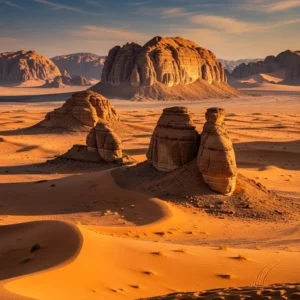
Every dune, every fossil, every well has a story attached to it.
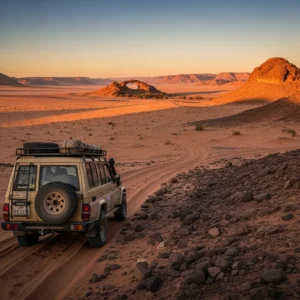
The Desert Story Safari uses the physical landscape as a guide.
The guide narrates the history of the land, linking it directly to the stories.
This immersive desert history makes the surroundings meaningful.
The location where a legend occurred becomes immediately real.
The landscape enhances the oral tradition experience.
The best storytelling safari uses the environment as a powerful narrative tool.
Key Legends and Themes of the Desert Story Safari
The Desert Story Safari explores themes central to the Beduin worldview.
These tales speak of resilience, ingenuity, and community.
They form the backbone of the cultural heritage safari.
Stories of Resilience and Survival
A major theme is survival against the harsh environment.
Stories detail how the Beduin located water in the dry season.
They narrate the ingenuity of constructing shelter from simple materials.
The Desert Story Safari highlights the mental toughness required for desert life.
These authentic desert narratives teach respect for the resourcefulness of the people.
The Legend of the Lost Well
One frequent story told on the Desert Story Safari is the tale of a hidden, lost well.
The well was believed to have moved or been protected by jinn (spirits).
This legend emphasizes the vital importance of water in the desert economy.
It serves as a reminder of the extreme challenges faced by the nomads.
The immersive desert history component brings this critical survival element to life.
Tales of the Wise Falcon
The falcon is a central figure in Arabian folklore. It symbolizes courage and vision.
The Desert Story Safari features tales of the “Wise Falcon.”
These stories often teach lessons in loyalty, hunting, and the bond between man and bird.
This theme is intertwined with the falconry demonstrations offered on the tour.
The best storytelling safari uses these animals to deepen the narrative.
Journeys of the Trade Caravans
Before modern roads, the desert was a network of trade routes.
The Desert Story Safari shares narratives of long caravan journeys.
These tales involve hardship, daring, and encounters with strangers.
This provides an authentic look into the historical economic life of the region.
The oral tradition experience makes the vast distances understandable.
The Interactive Desert Story Safari Experience
The Desert Story Safari is designed to be interactive and personal.
The Role of the Rawi (Storyteller)
The Rawi, or professional storyteller, is central to the Desert Story Safari.
The Rawi is a cultural expert, not just a guide. They master the delivery of authentic desert narratives.
Their skill lies in bringing characters and events to life with vocal skill.
Their presence ensures a genuine oral tradition experience.
Campfire Setting and Atmosphere
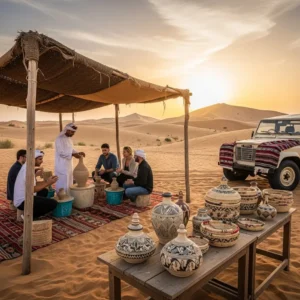
Stories are best told around a fire. The Desert Story Safari utilizes this traditional setting.
The flickering light and quiet atmosphere enhance the immersive desert history.
It creates a powerful sense of timelessness and intimacy.
The campfire serves as a focal point for the cultural heritage safari.
Inviting Guest Participation
The best storytelling safari encourages questions and discussion.
Guests are invited to share their reflections on the Dubai legendary tales.
This participatory element ensures active engagement.
The Desert Story Safari becomes a shared discovery process.
Learning the Language of the Desert
Storytelling sessions often include explanations of key Arabic terms.
Words for different types of sand, dunes, and water sources are shared.
This small language lesson enhances the understanding of the authentic desert narratives.
It provides deeper insight into the immersive desert history.
The Exclusive Heritage Route and Setting
The atmosphere of the Desert Story Safari is protected by its location.
Secluded Camp Locations
These tours use private, secluded locations. They are far from the noise of tourist areas.
The quiet environment is essential for the oral tradition experience.
This ensures the focus remains entirely on the storyteller.
The Journey to the Exclusive Heritage Route
The drive to the storytelling camp is often a guided historical journey.
The guide narrates the history of the route itself.
This transforms the transit time into part of the Desert Story Safari.
This exclusive heritage route adds a sense of adventure and discovery.
For unique routes and camps, look at operators listed on https://royaldesertadventures.ae/.
High-Quality Camp Amenities
Despite the focus on tradition, comfort is maintained.
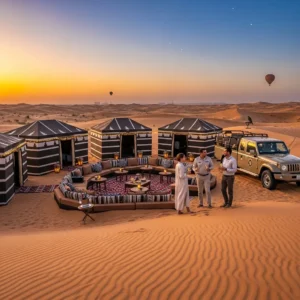
The camps feature comfortable seating and soft lighting.
This ensures guests can relax fully and enjoy the cultural heritage safari.
This balance of authenticity and comfort defines the Desert Story Safari.
Planning Your Authentic Desert Story Safari
Selecting the right tour is crucial for experiencing the best storytelling safari.
Operator Expertise in Oral Tradition
Choose operators who prioritize cultural expertise. Their focus should be on immersive desert history.
The guides must be skilled Ravis or trained cultural ambassadors.
Avoid tours where the storytelling is merely a brief performance act.
Timing for Optimal Experience
Evening and overnight safaris are best for the Desert Story Safari.
Stories told under the stars are far more evocative.
The quiet of the night enhances the profound nature of the authentic desert narratives.
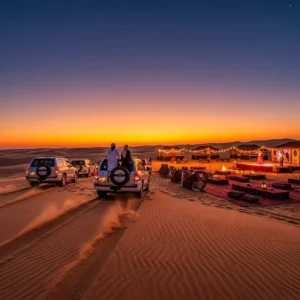
A late-afternoon start allows for a sunset view before the storytelling begins.
Duration and Depth of the Program
Look for programs that dedicate several hours specifically to the stories.
A true Desert Story Safari should allocate time for Q&A and discussion.
This ensures a deep dive into the cultural heritage safari.
Preservation Through the Desert Story Safari
The act of listening is an act of preservation. The Desert Story Safari sustains a vital heritage.
Supporting the Rawi Community
The tour provides financial support to the Ravis. This enables them to continue their practice.
This is a direct, ethical way to preserve the oral tradition experience.
Guests become patrons of the authentic desert narratives.
Creating Demand for Immersive Desert History
The success of the Desert Story Safari encourages other operators to adopt cultural programs.
This shifts the tourism focus toward cultural sustainability.
It ensures the preservation of Dubai legendary tales.
Documenting Authentic Desert Narratives
Some specialized Desert Story Safari programs work with cultural institutions.
They help document the stories for future generations.
This collaborative approach strengthens the cultural heritage safari mission.
The Journey Continues: Immersive Desert History
The stories themselves inspire further learning. The Desert Story Safari is the start of a journey.
Connecting Stories to Astronomy
Many Dubai legendary tales relate to the stars and constellations.
The Rawi connects the myth to the visible night sky.
This blending of folklore and astronomy enhances the immersive desert history.
It provides a rich, multi-layered cultural heritage safari.
The Evolution of the Beduin
The stories track the Beduin journey from nomadic life to modern stability.
They showcase the values that remain central to Emirati society today.
The Desert Story Safari provides context for contemporary Dubai.
For checking operator cultural credentials, visit https://dubaidesertsafarie.com/.
The Legacy of the Desert Story Safari
Guests leave with more than photos. They leave with stories.
They become carriers of the authentic desert narratives.
The experience fosters a deeper respect for the region’s cultural soul.
The Desert Story Safari creates a lasting personal connection to Dubai.
The Best Storytelling Safari Experience
The best storytelling safari is defined by its quality of delivery and atmosphere.
Utilizing Simple Tools
The Rawi uses minimal props. The focus is on vocal ability and memory.
This simple yet powerful delivery enhances the oral tradition experience.
It proves that the most valuable part of the trip is the human connection.
Community Engagement
Some Desert Story Safari tours include interaction with the camp staff during the stories.
The staff may offer their own short anecdotes or family tales.
This ensures a diverse and genuine collection of authentic desert narratives.
Final Reflection on the Exclusive Heritage Route
The journey along the exclusive heritage route ends, but the story does not.
The Desert Story Safari leaves its mark long after the dust settles.
It is a powerful reminder of the enduring strength of culture.
Book your ultimate storytelling journey with expert hosts at https://hafiztourism.com/.
15 Frequently Asked Questions (FAQs) about the Desert Story Safari
1. What is the core difference between a Desert Story Safari and a standard cultural safari?
The Desert Story Safari focuses intensely on the oral tradition experience, dedicating hours to genuine storytelling by a Rawi (storyteller) in an intimate setting. A standard cultural safari typically offers storytelling as a brief, secondary part of the traditional desert entertainment, focusing more on the buffet and performances rather than deep, authentic desert narratives.
2. Who is the Rawi (storyteller), and what are their qualifications for leading the Desert Story Safari?
The Rawi is the official title for the professional storyteller. On the Desert Story Safari, they are often highly knowledgeable individuals, sometimes with Beduin lineage or academic training in Arabian folklore. Their qualification lies in their ability to engage guests and accurately convey the cultural heritage safari information and authentic desert narratives.
3. Are the stories told during the Desert Story Safari purely historical, or do they include folklore and legends?
The stories are a mix of both. The Desert Story Safari features authentic desert narratives that include verifiable historical accounts of famous Beduin journeys, alongside traditional Arabian folklore and legends (like tales of jinn, talking animals, and ancient heroes). This blend makes the immersive desert history both educational and entertaining.
4. Is the Desert Story Safari suitable for families and children, or is the content too complex?
The Desert Story Safari is suitable for families. Skilled Ravis tailor their authentic desert narratives to be engaging for children, focusing on adventure, animal stories, and moral lessons. The interactive nature and the visual elements of the campfire enhance the oral tradition experience for younger listeners.
5. How is the intimate atmosphere of the Desert Story Safari maintained, especially in large desert camps?
The intimate atmosphere is maintained by using small, secluded camp sites or private sections within larger areas, specifically dedicated to the storytelling. The Desert Story Safari limits group sizes and uses soft, centralized campfire lighting, ensuring quietness and minimizing distractions during the immersive desert history sessions.
6. Does the Desert Story Safari include a designated activity where guests can try their hand at writing Arabic calligraphy?
Yes, many specialized Desert Story Safari packages include a component where guests can participate in a workshop, such as learning basic Arabic calligraphy. This hands-on activity integrates art into the cultural heritage safari, allowing guests to appreciate the beauty of the written language behind the oral tradition experience.
7. What is the traditional Majlis setting, and how is it used during the Desert Story Safari?
The Majlis is a traditional communal sitting area designed for discussion, hosting, and social gathering. During the Desert Story Safari, the Majlis is used as the primary location for the storytelling session, symbolizing warmth and hospitality, and ensuring a comfortable, authentic setting for sharing authentic desert narratives.
8. What is the most common time of day for the Desert Story Safari, and why is the evening preferred?
The most common and preferred time for the Desert Story Safari is the evening, starting just after sunset and continuing into the night. The darkness and the campfire atmosphere are crucial for the oral tradition experience, enhancing the drama and power of the immersive desert history.
9. Are there food and beverages provided during the Desert Story Safari, and is it part of the cultural exchange?
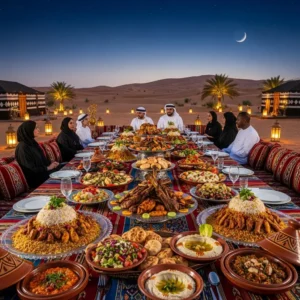
Yes, a lavish meal, typically a traditional Arabian BBQ, is provided. Food is a vital part of the cultural heritage safari, demonstrating Beduin hospitality. The feast is often followed by traditional Qahwa (coffee) and tea, which facilitates relaxed discussion and the sharing of authentic desert narratives.
10. How does the Desert Story Safari differ from a tour that simply includes a “cultural show”?
The Desert Story Safari differs by focusing on participatory, educational storytelling as the main event, led by a cultural expert (Rawi). A standard cultural show is generally a brief, theatrical performance (dancing, fire) designed for entertainment, with minimal connection to the deep oral tradition experience or the exclusive heritage route history.
11. Can I book a Desert Story Safari that focuses only on one specific region’s legends or history?
Yes, specialized providers of the Desert Story Safari often offer tailored itineraries focusing on specific geographic areas or eras. This might include a focus on pearl diving history, specific tribal migration routes, or geological legends, creating a bespoke journey along a precise exclusive heritage route.
12. Are the guides on the Desert Story Safari equipped to answer complex questions about Arabian folklore and cultural nuances?
Yes, the guides and Ravis on the Desert Story Safari are cultural experts with deep knowledge of Arabian folklore, history, and customs. They are specifically trained to facilitate complex discussions and answer nuanced questions, ensuring a rich and accurate immersive desert history experience.
13. What steps should I take to ensure I book the most authentic Desert Story Safari and avoid superficial tours?
To ensure authenticity, look for tours that guarantee small group sizes, advertise the use of a Rawi (professional storyteller), and emphasize the oral tradition experience in their description. Check specialized heritage operators like those on https://dubaidesertsafarie.com/ and https://hafiztourism.com/.
14. What unique mementos or crafts can I bring home from the Desert Story Safari experience?
The most unique mementos from the Desert Story Safari are typically personalized. This could include a signed piece of Arabic calligraphy learned during a workshop, a small bag of traditional spices, or an audio recording of a segment of the authentic desert narratives shared around the campfire.
15. How does the physical journey to the remote camp enhance the storytelling component of the Desert Story Safari?
The journey along the exclusive heritage route is often integrated into the storytelling itself. The guide narrates historical events or relevant legends that took place on that specific route or dune, physically connecting the landscape to the oral tradition experience and making the immersive desert history feel immediate and real.