
Desert Safari Packing Guide: 18 Powerful Secrets to What Every Traveler Must Bring (And What Not To)
The desert safari is Dubai’s essential adventure. Yet, the extreme climate demands specific preparation.
What you bring—or fail to bring—directly impacts your comfort, safety, and photographic success.
A reliable Desert Safari Packing Guide is your most important tool. It ensures you are ready for every possible scenario.
We reveal 18 powerful secrets. These tips ensure your Desert Safari Packing Guide is complete.
Following these insights guarantees a comfortable and unforgettable experience.
1. The Core Secret: Layering for Safari Extremes
The desert is defined by its temperature extremes. Mastering Layering for Safari is the most vital step.
H3: The Layering for Safari Rule: Day vs. Night
Despite the intense daytime heat, the air cools rapidly after sunset. The temperature swing can be as much as 15°C.
You must pack layers. The afternoon requires light, protective clothing. The evening demands insulation.
This simple rule of Layering for Safari prevents discomfort and shivering during the cultural shows.
H3: Warmth is Non-Negotiable
A light jacket, shawl, or sweater is mandatory for the evening, even in the shoulder seasons.
This warmth ensures you enjoy the Evening Safari under the stars.
The Desert Safari Packing Guide always prioritizes warmth for the night.
H4: Fabric Choice
Choose loose-fitting, light-colored fabrics (cotton or linen). These reflect sunlight and allow the skin to breathe.
Avoid tight, dark synthetic materials. They absorb heat and retain sweat, leading to discomfort.
This adherence to fabric choice is a core Desert Outfit Tips.
2. Attire and Footwear: What to Wear Desert
Choosing the right footwear is essential for safety and movement in the sand.
H3: Footwear for Sand: The Closed-Toe Mandate
The number one mistake is wearing inappropriate shoes. Footwear for Sand must be closed-toe.
Avoid high heels (impossible to walk in) and simple sandals/flip-flops (sand is hot, sharp, and abrasive).
Sturdy trainers or closed canvas shoes offer the best protection and grip for dune walking.
H3: What to Wear Desert: Modesty and Sun Protection
Dress modestly: Cover the shoulders and knees, especially when at the cultural camp. This shows respect for local traditions.
Long sleeves and trousers provide better Sun Protection Tips than exposed skin.
The sun’s intensity in the desert is extreme.
H4: Accessories
A wide-brimmed hat and a light scarf (bandana) are essential accessories. The scarf protects the mouth and nose from wind-blown sand.
These items complete your practical and stylish Desert Outfit Tips.
3. Safety and Sun: Sun Protection Tips and Hydration
Proactive protection against the sun and heat is mandatory for a safe trip.
H3: Sun Protection Tips: UV Shield
High-SPF sunscreen (SPF 30+) must be applied liberally to all exposed skin. This is vital.
UV-protective sunglasses are non-negotiable. The glare from the vast, bright sand is intense.
This ensures you adhere to strict Sun Protection Tips.
H3: Hydration Strategy
Carry extra bottled water. While tours provide water, personal hydration control is key.
Drink consistently throughout the trip, starting well before pickup.
The dry air of the desert accelerates dehydration.
H4: Basic First Aid
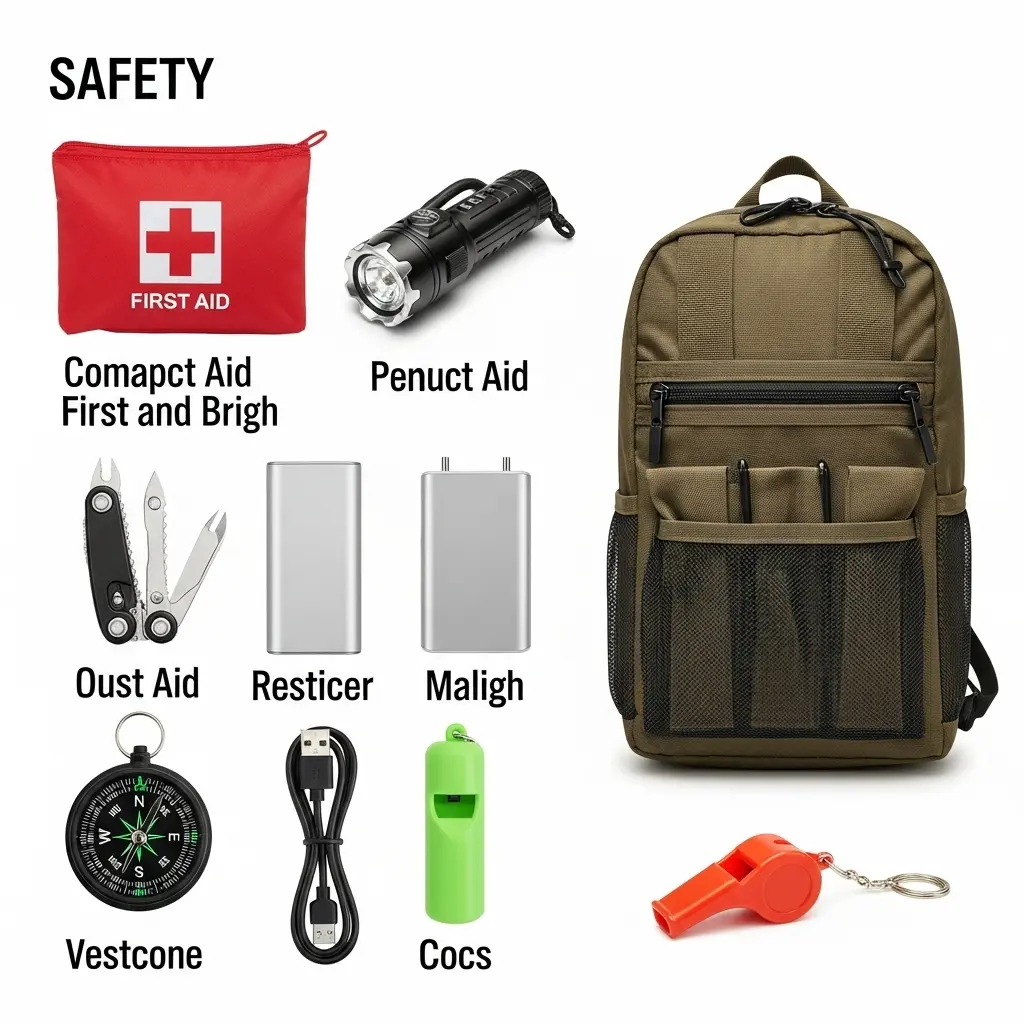
A small, personal first-aid kit with pain relievers, band-aids, and allergy medication is a smart inclusion.
This small measure increases your self-reliance in the remote desert location.
4. Technology and Content: Camera Gear Protection
Protecting your electronics from the fine, abrasive sand is a top priority.
H3: Camera Gear Protection Protocol
The fine sand can easily damage camera lenses and sensors. Use sealed plastic bags (Ziploc) or dry bags.
Camera Gear Protection is essential for all professional and amateur photographers.
Never change lenses outdoors on the dunes where sand is flying.
H3: Power Banks and Charging
Carry a fully charged power bank. The high heat or cold can quickly drain device batteries.
The Desert Safari Packing Guide advises having backup power for both phones and cameras.
Power is needed for photography and maintaining communication.
H4: Tripod Advice
If planning night or sunset photography, a lightweight, sturdy tripod is Essential Desert Gear.
Its stability is necessary for sharp Low Light Desert Shots.
Choose a tripod that can be easily dusted off.
5. Financial and Comfort: Smart Packing Hacks
Small decisions about packing can lead to big differences in comfort and budget.
H3: Smart Packing Hacks for Budget
Carry small cash (Dirhams) for tipping the driver or purchasing small souvenirs.
Avoid purchasing marked-up items like water, soda, or heavy shawls at the desert camp.
A planned approach maximizes the value of your Smart Packing Hacks.
H3: Comfort and Cleanliness
Pack wet wipes or hand sanitizer. The sand is pervasive, and clean-up is necessary before the buffet dinner.
A small towel or scarf is invaluable for quickly wiping down equipment or your face.
This small effort ensures a more Comfortable Desert Trip.
H4: Avoiding Unnecessary Items
Leave expensive jewelry and large, heavy bags at your hotel. They are cumbersome and unnecessary in the desert.
Focus on lightweight, functional gear for your Essential Desert Gear.
6. Safety and Emergency: Desert Safety Checklist
A final review of safety essentials is the most responsible part of your preparation.
H3: Desert Safety Checklist Documentation
Keep a digital and hard copy of your booking confirmation, emergency contact numbers (including the tour operator’s main office), and your identification.
Share your tour details and estimated return time with a trusted contact.
This detailed preparation is a critical step in your Desert Safety Checklist.
H3: Knowing the Vehicle Protocol
Familiarize yourself with the seatbelt and harness rules before the dune bashing begins.
Never try to open the door or stand up during the High-Impact Drive.
Your adherence to the rules is part of the Desert Safety Checklist.
H4: Communication Check
Confirm your phone has adequate battery and credit for necessary calls.
Even the best tours require communication in case of separation or emergency.
7. Final Verdict: The Best Prepared Adventure
The success of your safari is directly proportional to your preparation.
A complete Desert Safari Packing Guide ensures you are ready for every challenge.
Pack smart, travel safely, and enjoy the magical Arabian night.
Essential Gear Checklist (Mandatory/Optional)
| Item | Status | Rationale/Tip | Focus Keyword Relevance |
| Warm Jacket | Mandatory | Essential for Layering for Safari; cold night temperatures. | Layering for Safari |
| Closed-Toe Shoes | Mandatory | Safety and comfort; protects feet from hot/sharp sand. | Footwear for Sand |
| High-SPF Sunscreen | Mandatory | Critical UV protection against reflective sand glare. | Sun Protection Tips |
| Power Bank | Highly Recommended | Needed for continuous photography/filming. | Camera Gear Protection |
| Wipes/Sanitizer | Essential | Necessary hygiene before Evening BBQ Dinner. | Smart Packing Hacks |
| Scarf/Bandana | Recommended | Protects face/camera from airborne dust. | Desert Outfit Tips |
Frequently Asked Questions (FAQs) – Desert Safari Packing Guide
1. Why is layering, specifically packing a jacket, critical for the Desert Safari Packing Guide even if the weather forecast shows high temperatures?
Layering is critical because the desert experiences extreme temperature swings. While the daytime heat is intense, the temperature drops rapidly by 15°C to 20°C after sunset. The jacket or shawl is mandatory for comfort during the open-air dinner and cultural shows, preventing shivering and ensuring maximum enjoyment of the Evening Experience.
2. Why are closed-toe shoes essential Footwear for Sand, and what are the risks of wearing sandals or high heels?
Closed-toe shoes are essential Footwear for Sand because they protect the feet from scorching hot sand (in the afternoon) and sharp debris (at night). Risks: Sandals and high heels are impractical, offer no grip for dune walking, and can be easily damaged or lost, making the wearer uncomfortable and potentially unsafe during activities.
3. What specific features should be prioritized in a travel bag or case for effective Camera Gear Protection during the dune bashing segment?
For effective Camera Gear Protection, the travel bag must be dust-proof and water-resistant. Features to prioritize include sealed zippers, padded compartments, and preferably a dedicated, removable dry bag or case for lenses. This prevents the fine, abrasive sand from penetrating the equipment during the intense vibration and dust exposure of the dune drive.
4. How does wearing light-colored, loose-fitting clothing contribute to Sun Protection Tips and overall comfort in the desert?
Wearing light-colored, loose-fitting clothing contributes to Sun Protection Tips by reflecting sunlight (light colors) and allowing air circulation (loose fit). This minimizes heat absorption, which is critical in the dry desert climate, helping to regulate body temperature and prevent overheating, enhancing comfort throughout the Desert Adventure.
5. What are the two most important items on the Desert Safety Checklist that are often forgotten by travelers but are essential for basic health and comfort?
The two most important forgotten items on the Desert Safety Checklist are 1. High-SPF Lip Balm with UV Protection (the dryness and sun are severe). 2. A small supply of personal motion sickness medication (Dramamine). Motion sickness is common during dune bashing, and medication must be taken proactively (an hour before the drive) for it to be effective.
6. How can a traveler use Smart Packing Hacks to minimize unnecessary expenses incurred at the desert camp for high-markup items?
Travelers use Smart Packing Hacks by bringing their own high-markup items. This includes bottled water and soft drinks (though often included, extra is always costly), a light shawl/jacket, and any desired small snacks. This prevents impulse purchases at the remote camp kiosks, which charge significantly inflated prices.
7. What specific Desert Outfit Tips should be followed to maintain cultural respect at the Bedouin camp while staying cool in the afternoon heat?
The Desert Outfit Tips for cultural respect are to cover the shoulders and knees (opting for long trousers/skirts and sleeved tops). To stay cool, choose lightweight, breathable fabrics like linen or cotton and light colors, which adhere to modesty expectations while maximizing airflow and heat reflection.
8. Why is a high-quality portable power bank listed as Essential Desert Gear for the safari, even for a non-overnight trip?
A high-quality portable power bank is Essential Desert Gear because the desert heat and cold extremes quickly drain device batteries. The phones and cameras are crucial for safety (communication) and capturing the iconic sunset moment. Limited charging ports are available at the camp, making personal power backup mandatory.
9. How does the choice of accessories (hat, scarf) contribute to the Desert Weather Planning strategy for a safe and enjoyable trip?
The choice of accessories contributes to Desert Weather Planning by providing immediate protection. A wide-brimmed hat shields the face and neck from direct sun. A light scarf/bandana protects the mouth, nose, and sensitive gear from the fine dust and wind-blown sand that are common in the desert environment.
10. What advice does the Desert Safari Packing Guide offer regarding jewelry and valuables for the trip?
The Desert Safari Packing Guide advises leaving expensive jewelry and unnecessary valuables at the hotel. Reason: Fine sand can scratch delicate items, and high-impact activities like dune bashing increase the risk of damage or loss. Focus on bringing functional, essential items for a worry-free Desert Adventure.
11. What is the role of an extended Layering for Safari strategy for travelers choosing the morning or sunrise safari option?
The Layering for Safari strategy is essential for morning safaris due to the cold pre-dawn air. Travelers need a heavy outer layer for the 4:00 AM pickup and transfer. This layer can be removed as the sun rises, ensuring comfort during the cool Dune Bashing session and the warmer return journey.
12. How does the Desert Safety Checklist advise travelers to handle the issue of motion sickness during the high-impact dune bashing?
The Desert Safety Checklist advises travelers to take anti-nausea medication (e.g., Dramamine) one hour prior to the pickup. They should also request the front passenger seat for better stability and visualization of the horizon, and inform the driver about their condition so the pace can be adjusted.
13. Why should every Desert Safari Packing Guide include a small bag for carrying out trash, adhering to ethical tourism standards?
Every Desert Safari Packing Guide should include a small bag for trash to adhere to ethical tourism standards. The desert is a fragile ecosystem. Leaving any waste (even organic material) behind is detrimental. The “Leave No Trace” principle is mandatory for preserving the beauty of the Best Desert Scenery.
14. What are the two most common traveler errors related to the Footwear for Sand that severely compromise comfort during the safari?
The two most common traveler errors are: 1. Wearing high heels (which sink into the sand and are unsafe). 2. Wearing thin, low-quality sandals or flip-flops, which provide no protection from the heat, sharp stones, or the ingress of abrasive sand particles. Proper Footwear for Sand must be chosen for functionality.
15. What steps should be taken to ensure the cleaning supplies (blower, cloth) are properly packed to prevent sand from contaminating the rest of the Safari Camera Gear?
The steps are: 1. Isolate the Blower: Store the blower bulb and soft cloth in a separate, sealed plastic bag. 2. Use: Only use the blower outside the main bag. 3. Never Put the Cloth/Brush Back: After using a cloth or brush on the camera, never put it back with clean gear, as it is now contaminated with fine sand.
16. How does the Layering for Safari strategy change for guests who opt for the luxury overnight glamping experience?
The Layering for Safari strategy changes by requiring thicker thermal inner layers for the deepest cold hours (2:00 AM–4:00 AM). While luxury glamping tents provide high-quality duvets and sometimes heating, personal thermal wear is essential for comfort when sitting outside by the campfire or during the early morning sunrise view.
17. What specific Sun Protection Tips apply when photographing the sunset from the dune crest to protect both the photographer and the camera?
Specific Sun Protection Tips include wearing sunglasses until the moment of shooting. Camera Protection: Never point the lens directly at the sun when it is high or intense; use the low horizon for the best effect. Utilize a lens hood and a high-quality UV filter to prevent glare and protect the lens glass from harsh light and sand.
18. How should a traveler use Smart Packing Hacks to secure their gear quickly when the 4×4 starts the high-impact dune bashing segment?
The Smart Packing Hacks involve using minimal, essential items during the dune bash. All loose items (water bottles, phones, bags) should be secured on the floor or placed in closed, zipped compartments. A secure, small bag worn across the body should be used for quick access items, preventing objects from flying around the cabin.
19. What is the role of the final Desert Safety Checklist in assisting the safari guide with their safety protocols?
The final Desert Safety Checklist reminds the traveler of their personal safety duties (seatbelts, health disclosures). By following this list, the traveler cooperates fully with the guide’s safety briefing, ensuring the driver can focus on delivering a safe, controlled Dune Bashing experience without having to manage reckless or unprepared passengers.
20. What advice does the Desert Outfit Tips section give for balancing cultural respect with comfort during the evening cultural camp?
The Desert Outfit Tips advise balancing cultural respect and comfort by wearing light, loose trousers or long skirts with a t-shirt or top that covers the shoulders and chest. This adheres to the modesty expectations of the camp environment while the loose, breathable fabric ensures the wearer remains cool during the warm evening hours.