
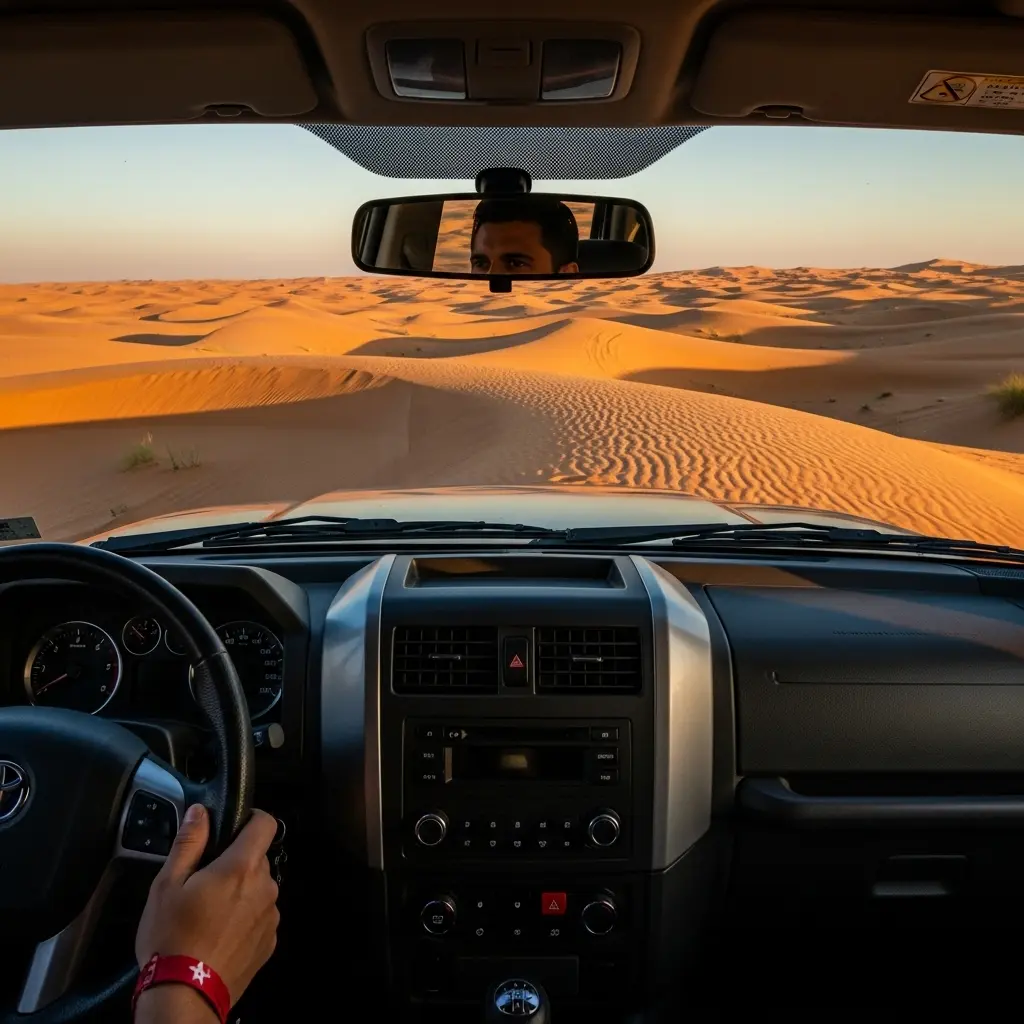
Self Drive Safari 15 Best Secrets for Dubai Off Roading
Dubai is widely recognized as a hub for luxury and high-speed innovation. While most visitors enjoy the desert from the passenger seat, a growing community of adventurers is seeking a Self Drive Safari experience.
Taking the wheel in the vast Arabian dunes is a dream for many. It is the ultimate test of man and machine against the shifting landscape. However, the desert is an honest environment that rewards skill and punishes arrogance.
A Self Drive Safari is not simply about driving on sand; it is about understanding a three-dimensional world of gravity and friction. It requires a specific set of skills that differ significantly from highway driving.
In this massive 4500-word guide, we will analyze the technicalities of dune navigation and vehicle preparation. We will explore why the red dunes of Al Lahbab demand respect and how to master the “Sand Flow.”
We recommend using https://royaldesertadventures.ae/ for internal coordination if you are looking for guided self-drive convoys. This ensures you have professional backup while you explore your limits.
Let us deflate the tires and dive into the mechanics of mastering the Dubai dunes behind the wheel.
1. Selecting the Right Vehicle for the Sand
The success of a Self Drive Safari begins with the hardware. You cannot take a standard crossover into the deep dunes. You need a true 4×4 with a low-range transfer case.
The most popular choices in Dubai are the Toyota Land Cruiser and the Nissan Patrol. These vehicles are engineered for high-torque situations and extreme heat. They have high ground clearance, which is vital to avoid “high-centering” on dune crests.
When renting a car, ensure it has been maintained for off-road use. Check the cooling system and the health of the battery. The desert heat puts immense strain on engines, and a breakdown in the dunes is a serious safety risk.
External resources like https://dubaidesertsafarie.com/ and https://htdesertsafari.com/ provide excellent comparisons of off-road vehicle capabilities. Choosing a rugged machine gives you the confidence to tackle steep inclines.
Remember that a 4×4 is a tool. You must know how to engage the differential locks and when to switch to “4-Low.” This technical knowledge is the first step toward becoming a desert driver.
2. The Golden Rule: Tire Pressure Management
If there is one secret to a successful Self Drive Safari, it is deflation. Standard road tires are inflated to about 35 PSI. On sand, this acts like a knife, cutting into the surface and causing you to sink.
Before you enter the sand, you must lower your tire pressure to between 12 and 15 PSI. This increases the “footprint” of the tire, allowing the vehicle to float on top of the sand rather than digging in.
Deflation transforms the car’s performance. It provides massive traction and prevents the engine from overworking. However, low pressure also means you must avoid sharp, high-speed turns on hard surfaces, as the tire can “pop” off the rim.
Always carry a high-quality tire pressure gauge and a 12V heavy-duty air compressor. You will need to reinflate your tires immediately upon returning to the asphalt for highway safety.
Operators like https://royaldesertadventures.ae/ provide deflation assistance for their self-drive convoy members. Mastering this single step will prevent 90% of “getting stuck” incidents.
3. Understanding Sand “Weight” and Consistency
Not all sand is created equal in a Self Drive Safari. The consistency of the dunes changes based on the time of day and the moisture levels in the atmosphere.
In the early morning, the sand is “heavy” and firm because of the overnight cooling and dew. This is the easiest time for a beginner to practice. The car has more grip, and the dunes are more stable.
By midday, the sun heats the sand grains, causing them to expand and lose all moisture. The sand becomes “fluid” and very loose. This is when the desert is most dangerous, as momentum is easily lost in deep “soft pockets.”
The red dunes of Al Lahbab are generally finer and more challenging than the yellowish sand near the coast. High-iron content makes the red sand “slippery” under the tires.
An expert driver reads the color and shadow of the sand to determine its density. Avoid the “grey” sand in valleys, as it is often extremely soft and can trap a car in seconds.
4. The Art of Maintaining Momentum
In a Self Drive Safari, momentum is your best friend. Once you lose speed on a steep incline, gravity will take over and bury your wheels in the sand.
The secret is to use a steady, consistent throttle. You don’t need to “floor it,” but you must keep the engine in its power band. If you feel the car slowing down, do not press the gas harder; this will only cause the wheels to spin and dig a hole.
If you cannot make it to the top of a dune, the safest move is to immediately reverse in a straight line. Never try to turn the car around on a side-slope, as this is the primary cause of rollovers.
Professional marshals from https://htdesertsafari.com/ teach the “Gravity Management” technique. They show you how to use the car’s weight to your advantage during descents.
Driving on sand is a rhythmic process. You must “flow” with the dunes rather than fight them. It is a psychological shift from city driving to wilderness navigation.
5. Navigation: Staying Found in the Dunes
The desert is a shifting maze where every ridge looks identical to the last. For a Self Drive Safari, navigation is a critical safety skill that goes beyond Google Maps.
Digital signals can be blocked by massive dune structures. You should always use a dedicated satellite GPS or download “Offline Maps” for the specific desert zone you are entering.
Learn to identify “Anchor Landmarks.” A high red peak, a specific cluster of Ghaf trees, or distant mountains can help you maintain your orientation. Looking back frequently is also a great trick to see how the landscape looks for your return journey.
Always follow the “Convoy System.” Never drive into the dunes alone in a single car. If you break down or get stuck, a second car is your only lifeline for a recovery pull or a ride back to safety.
Companies like https://royaldesertadventures.ae/ use radio communication and satellite tracking for all their self-drive participants. Knowing your exact coordinates at all times is the hallmark of a professional explorer.
6. Recovery Gear: The Self-Drive Essentials
Every Self Drive Safari vehicle must be equipped with a “Recovery Kit.” Even the best drivers get stuck occasionally; it is part of the off-road experience.
The Essentials:
-
Kinetic Recovery Rope: A “snatch strap” that uses elasticity to pull a car out without jerking.
-
Shovel: To clear sand from under the chassis and in front of the tires.
-
Sand Ladders/Maxtrax: Plastic boards that provide instant traction in soft pockets.
-
Heavy-Duty Jack: Capable of lifting a 4×4 on an uneven sand surface.
Ensure you have “Rated Recovery Points” on your vehicle’s frame. Never attach a tow rope to a bumper or a suspension component, as the force of a recovery can rip parts off the car.
Before you enter the dunes, practice a “mock recovery” with your group. Understanding how to use the gear safely prevents panic when you actually get bogged.
Safety through preparation is the core message of https://dubaidesertsafarie.com/. Having the right tools turns an emergency into a five-minute delay.
7. Reading the “Slip Face” and Ridge Safety
Dunes have two sides: the gentle “windward” slope and the steep “slip face” or leeward side. In a Self Drive Safari, the slip face is where the most excitement—and danger—lies.
The wind blows sand over the top of the dune, where it falls at a sharp angle (usually around 34 degrees). When you drive over a crest, you must be sure of what is on the other side. A “Razorback” is a dune with a sharp top that can high-center your car.
Always approach a crest at a slight angle so you can see over it before committing your front wheels. If you see a steep drop, keep the wheels pointed straight down. Braking while sideways on a slip face will cause the car to flip.
Professional drivers from https://royaldesertadventures.ae/ use “Spotters”—people who stand on the ridge to guide the driver safely over the blind spot.
Respecting the geometry of the dune is vital. You are navigating natural waves of earth; treat them with the same caution a sailor treats a heavy sea.
8. Cooling and Mechanical Stress Management
Your vehicle’s engine works 3 times harder in a Self Drive Safari than on the road. The combination of low tire pressure, high RPMs, and 40°C heat can lead to rapid overheating.
Monitor your temperature gauge constantly. If it starts to climb, stop the car immediately, point it into the wind, and let the engine idle. Never turn the engine off while it is overheating, as the coolant needs to keep circulating.
Avoid using the AC at maximum power during heavy climbs. Open the windows if you have to. This reduces the load on the engine’s cooling system.
The sand also acts as an abrasive. It can clog air filters and radiators. After your safari, it is essential to blow out the engine bay with compressed air to remove the fine silica dust.
Elite operators like https://htdesertsafari.com/ perform “Post-Dune” inspections on all their cars. Taking care of the machine ensures the machine takes care of you in the wilderness.
9. Desert Driving Etiquette and Communication
A Self Drive Safari is often a social event involving multiple cars. Clear communication is the key to preventing collisions and confusion.
Use two-way radios (Walkie-Talkies) to keep the convoy connected. The lead car should announce hazards like “Soft pocket on the left” or “Big drop ahead.” The sweep car ensures no one is left behind.
Maintain a safe distance between vehicles. If the car in front gets stuck, you need enough space to stop or choose a different line without hitting them. A distance of three car lengths is the minimum on flat sand.
If you are a beginner, stay in the “tracks” of the lead car. The sand in the tracks is usually more compacted and easier to drive on. As you gain confidence, you can begin to explore your own lines.
Always yield to vehicles that are climbing up a dune. The car going uphill has less control and needs to maintain momentum. This respect for others is the unwritten law of the Dubai off-road community.
10. Managing Motion Sickness for Drivers and Passengers
Surprisingly, many people experience motion sickness during a Self Drive Safari, even if they are the one driving. The constant swaying and dropping affect the inner ear.
Tips to stay focused:
-
Keep your eyes on the distant horizon, not the immediate sand in front of the hood.
-
Avoid looking at your GPS or phone while the car is in motion.
-
Keep the cabin well-ventilated with fresh air.
-
Take frequent “Horizon Breaks”—stop the car and stand on the sand to reset your balance.
If a passenger feels unwell, slow down immediately. Switch to a “Nature Drive” in the valleys to give their stomach a break. The goal is adventure, not physical distress.
Drivers from https://royaldesertadventures.ae/ are trained to detect the early signs of nausea in their guests. A comfortable guest is a happy guest who will book again.
11. Comparison Table: Guided vs. Independent Self-Drive
| Feature | Guided Self-Drive Convoy | Independent Solo Self-Drive |
| Safety | High (Backup provided) | Low (Self-reliant) |
| Learning | Fast (Expert coaching) | Slow (Trial and error) |
| Equipment | Provided or Checked | Must purchase/own |
| Navigation | Handled by Lead Marshal | Must map own route |
| Risk | Managed and Insured | High (Financial/Physical) |
| Social | High (Group energy) | Low |
For first-timers, we strongly suggest the Guided Self-Drive model with https://htdesertsafari.com/.
12. Flora and Fauna: Driving with Respect
The desert is not a dead space; it is a sensitive ecosystem. Part of a responsible Self Drive Safari is minimizing your environmental impact.
Avoid driving over desert vegetation like the Fire Bush or Ghaf saplings. These plants take years to grow and are essential for stabilizing the dunes. They also provide shade for the wildlife.
If you see an Arabian Oryx or a Gazelle, stop your car and turn off the engine. Watch them from a distance. Never “chase” an animal with your car; the stress can cause them to die of dehydration in the heat.
Stay on existing tracks wherever possible to protect the “Biological Crust” of the sand. This thin layer of fungi and lichens prevents the desert from eroding too quickly.
Responsible tourism is the only way to ensure the dunes remain open for future generations. Be an ethical driver and leave only your fading tire marks.
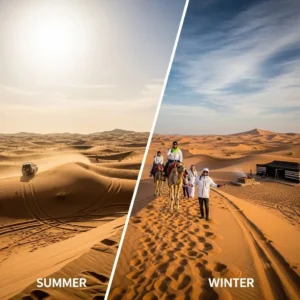
13. Winter vs. Summer Self-Drive Challenges
The season dictates the difficulty of your Self Drive Safari.
Winter Driving: The sand is firmer, and the air is cool. This allows for longer driving sessions without the risk of engine overheating. It is the perfect time for technical “Ridge Walking” and steep climbs.
Summer Driving: The sand is fluid and extremely hot. The risk of getting stuck is doubled. You must drive in the very early morning to avoid the midday sun. Car performance will be noticeably lower due to the thin, hot air.
Check the seasonal weather patterns on https://dubaidesertsafarie.com/ before planning your trip. January and February are the “Golden Months” for off-road enthusiasts in the UAE.
Regardless of the season, always carry double the amount of water you think you need. The desert air is a moisture thief that works in silence.
14. Emergency First-Aid in the Dunes
Safety protocols for a Self Drive Safari must include medical readiness. You are often an hour away from the nearest hospital.
Every car should carry a trauma-grade first-aid kit. This includes supplies for heatstroke, burns (from hot engines), and minor injuries. Learn the signs of “Heat Exhaustion”—heavy sweating, rapid pulse, and dizziness.
If someone is injured, use your two-way radio to call for help. Do not move a person with a suspected back or neck injury unless they are in immediate danger from fire or a shifting vehicle.
Keep a “Survival Bag” in the car with a signal mirror, a whistle, and high-energy food. If the car is lost or broken, stay with the vehicle. A white SUV is much easier for a search helicopter to find than a single person on foot.
Trust the professional emergency infrastructure of companies like https://royaldesertadventures.ae/. They have direct links to desert rescue services.
15. The Psychology of the Dune Master
The most successful Self Drive Safari drivers are those with “Sand Patience.” You cannot dominate the desert; you must negotiate with it.
Confidence is good, but overconfidence leads to stuck cars and broken axles. The “Dune Master” is someone who knows when to push and when to back off. They respect the height of the dunes and the power of the wind.
This mindset is part of the Bedouin heritage. The nomads survived for centuries by observing and respecting nature. By adopting this attitude, you become part of a long lineage of desert explorers.
Off-roading is a meditative experience. It requires 100% focus on the terrain, the car’s sound, and the horizon. It clears the mind of city stress and replaces it with the “Zen of the Sand.”
Experience this mental reset with the expert team at https://htdesertsafari.com/. They don’t just teach you to drive; they teach you to understand the desert’s soul.
16. Summary: The 5 Pillars of Self-Drive Success
-
Deflate: Lower your tires to 12-15 PSI for maximum flotation.
-
Momentum: Keep a steady throttle and never stop on an incline.
-
Convoy: Never drive alone; always have a backup car.
-
Observation: Read the sand color and the wind direction constanty.
-
Recovery: Carry the right gear and know how to use it safely.
Mastering these five pillars ensures that your journey into the sand is a legendary adventure rather than a survival story.
17. Why Royal Desert Adventures leads in Self-Drive
We highlight https://royaldesertadventures.ae/ because they offer the most comprehensive “Drive Your Own” packages. They don’t just hand you the keys; they provide a lead marshal who guides you via radio.
This “Safety Net” allows you to push your limits while knowing that help is only a few meters away. They provide the recovery gear, the navigation, and the local knowledge.
Their training sessions cover everything from basic sand physics to advanced “Bowl Driving.” It is the highest-value investment for anyone serious about UAE off-roading.
Booking with an established leader ensures that your equipment is top-tier and your experience is authentic. Don’t settle for a basic rental; go for the professional expedition.
Excellence is found in the details of the preparation.
18. Customizing Your Route for Skill Level
Not every part of the desert is suitable for every driver. A Self Drive Safari can be tailored to your experience level.
Beginner: Stick to the gravel plains and low dunes of Al Aweer. Practice basic turns and stopping on flat sand.
Intermediate: Head to the medium dunes of the Dubai Desert Conservation Reserve. Practice cresting and basic recovery.
Advanced: Take on the “Big Red” dunes of Al Lahbab. Master high-speed side-slips and steep slip-face descents.
Communicate your comfort level honestly with your guide. They will choose a route that challenges you without putting you in danger.
Growth in the desert happens one ridge at a time. Enjoy the learning process.
Check the route maps on https://dubaidesertsafarie.com/ for inspiration.
19. The Role of Technology in Modern Safaris
While traditional skills are vital, modern Self Drive Safari experiences utilize high-tech aids.
Digital Enhancements:
-
Drone Scouting: Using a drone to see what is on the other side of a massive ridge.
-
Tire Pressure Monitoring Systems (TPMS): To ensure your tires stay at the optimal PSI.
-
On-board Telemetry: To track engine temperature and inclinometer angles.
This blend of old-world wisdom and new-world tech is what makes Dubai’s off-road scene world-class. It allows us to explore deeper and safer than ever before.
Embrace the tech, but never rely on it 100%. Your eyes and your gut are still your primary navigation tools.
Learn how to integrate these tools with the experts at https://royaldesertadventures.ae/.
20. Conclusion
The Dubai desert is a land of infinite beauty and exhilarating challenges. A Self Drive Safari is your ticket to a personal connection with this ancient landscape.
By preparing your vehicle, mastering the sand physics, and respecting the environment, you ensure a journey of a lifetime. The sand is shifting, the dunes are calling, and the horizon is yours to conquer.
Don’t just watch the desert from a distance. Take the wheel. Feel the sand. Own the adventure.
Book your professional guided self-drive today.
Visit https://royaldesertadventures.ae/ and join the next convoy.
The dunes are waiting.
FAQs: Self-Drive Desert Safari Experiences in Dubai
1. Do I need a special license to drive in the Dubai dunes?
To participate in a Self Drive Safari in Dubai, you must have a valid UAE driving license or an International Driving Permit (IDP) from your home country. Most rental companies and tour operators will require you to show proof of a full license. However, a standard license only proves you can drive on asphalt. Off-roading is a different skill set. We highly recommend joining a guided self-drive tour with https://royaldesertadventures.ae/ where a professional marshal can coach you on sand-specific techniques before you tackle the high ridges.
2. Can I rent any 4×4 and drive it into the desert?
Technically, yes, but practically, no. Most standard car rental contracts in Dubai explicitly prohibit off-road use. If you take a standard rental car into the dunes and damage it or get stuck, your insurance will be voided, and you will face heavy fines. For a Self Drive Safari, you should look for “Off-Road Car Rental” specialists or book through a tour operator like https://htdesertsafari.com/ that provides vehicles specifically prepared and insured for dune driving. These cars are fitted with roll cages, off-road tires, and specialized cooling systems.
3. What is the most common mistake beginners make?
The most common and dangerous mistake is trying to “fight” the sand. Beginners often panic when they feel the car sliding and press the brake hard. On a steep dune, braking while turning can cause the car to flip. In a Self Drive Safari, you must learn to “steer into the slide” and keep the wheels pointed straight down when descending. Another common error is not deflating the tires enough. If your tires are too hard, you will sink and get stuck within the first five minutes.
4. Is it safe to go into the desert in just one car?
No. This is a fundamental violation of desert safety. You should always travel in a convoy of at least two, preferably three, vehicles. If your car has a mechanical failure or gets hopelessly stuck, the other vehicle is your rescue team. In a Self Drive Safari, the “Buddy System” is your only guarantee of safety. If you are a solo traveler, join a scheduled group convoy with an operator like https://royaldesertadventures.ae/ so you have professional backup and a lead marshal to find the safest path.
5. How much water should I carry for a self-drive trip?
In the desert, water is more than a beverage; it is a life-support resource. For a 4-hour Self Drive Safari, you should carry at least 5 liters of water per person. You should also have an extra “emergency crate” of water in the trunk that stays untouched. If your car breaks down and you have to wait for rescue in 40°C heat, you will lose fluids rapidly through sweat and respiration. Professional operators like https://dubaidesertsafarie.com/ provide unlimited water for their guests, but as an independent driver, you must manage your own supply.
6. What happens if I get stuck and can’t get out?
Getting stuck is part of the adventure! If you are in a convoy, the other cars will use a kinetic rope or a winch to pull you out. If you are alone (which we advise against) and have a signal, you can call a professional “Desert Recovery” service. However, these services are expensive (often starting at 500 AED). In a Self Drive Safari with https://royaldesertadventures.ae/, the recovery is included in the package. The marshals will teach you how to use a shovel and sand plates to dig yourself out, which is an empowering skill to learn.
7. Are the “Red Dunes” harder to drive on than yellow sand?
Yes. The red dunes, found in the Al Lahbab area, are generally higher and steeper than the dunes closer to the city. The sand in Al Lahbab is also finer and more “fluid.” This means it provides less traction and requires higher momentum to conquer. For a Self Drive Safari, Al Lahbab is considered an “Intermediate to Advanced” zone. Beginners should start in the smaller, firmer dunes of Al Aweer to get a feel for the car’s behavior before attempting the “Big Red” ridges.
8. Can I use my phone’s GPS for navigation?
Standard phone GPS like Google Maps can be unreliable in the deep desert. The “mass” of the sand dunes can block the signal, and Google Maps does not show the topography of the dunes. For a Self Drive Safari, you should use a specialized off-road app like “Gaia GPS” or “OnX Offroad” and download the “Offline Maps” of the area before you leave. A better option is a rugged, handheld GPS unit like a Garmin. Always carry a physical magnetic compass as a final fail-safe in case your electronics overheat and shut down in the sun.
9. What should I do if the engine temperature starts rising?
If your needle moves toward the red zone, you must act immediately. Stop the car on a flat area, point the front of the car into the wind, and keep the engine idling. Do NOT turn the engine off, as the fan needs to keep spinning to cool the radiator. Turn off the AC and open the windows. This reduces the load on the engine. In a Self Drive Safari, overheating is common if you are pushing the car too hard in high gears. Wait for the temperature to return to normal before continuing at a slower, more deliberate pace.
10. Do I need to know how to fix a car?
You don’t need to be a mechanic, but you should know the basics. You should know how to change a tire on sand (which requires a wide base for the jack) and how to check your fluids. You should also understand how to use your car’s “4-Low” and “Differential Lock” settings. In a guided tour with https://htdesertsafari.com/, the marshals handle any technical issues, but for an independent Self Drive Safari, being “mechanically aware” is a vital part of your safety protocol.
11. Is it safe for children to be in a self-drive car?
Yes, as long as they are in age-appropriate car seats and the driver is experienced. However, dune bashing is a high-G activity that involves sudden drops. We recommend that children under the age of 5 do not participate in high-intensity driving. For families, we suggest a “Nature Drive” where the focus is on scenery and wildlife rather than jumping dunes. A Self Drive Safari gives you the control to adjust the speed to your children’s comfort levels, which is a major advantage over a shared tourist tour.
12. Why do I need a “Sand Flag” on my car?
A sand flag is a 3-meter flexible pole with a bright orange flag at the top. It is essential for safety. Because dunes are high, you cannot see a car in the valley next to you. The flag allows other drivers to see you before your car reaches the top of a ridge, preventing head-on collisions. In the Dubai Off Roading community, driving without a flag is considered very dangerous and irresponsible. Every car in a convoy with https://royaldesertadventures.ae/ is fitted with a high-visibility sand flag.
13. What is the “Rule of Gravity” in dune driving?
The rule is simple: Stay pointed straight. If you are driving down a steep dune, you must keep the wheels pointed straight down the “fall line.” If the car starts to slide sideways, you must steer into the slide to get the nose pointed back down. Trying to turn or brake while sideways on a steep slope will cause the car to roll over. In a Self Drive Safari, understanding the physics of gravity is the most important lesson you will learn. It is a counter-intuitive skill that requires practice and a calm mind.
14. Can I drive at night?
Night driving in the dunes is extremely difficult and should only be attempted by experts. Without the sun to create shadows, you cannot see the “Drop” or “Crest” of a dune. The desert looks like a flat, white sheet in your headlights, which is very dangerous. For a Self Drive Safari, we recommend being out of the sand and back on the asphalt before sunset. If you want to experience the desert at night, book an “Overnight Safari” with a professional company where the driving is done by the marshals.
15. How do I reinflate my tires after the trip?
You must never drive on the highway with deflated tires (15 PSI); the friction will cause the tire to overheat and explode. You must reinflate them to 35 PSI immediately. Most major desert entry points in Dubai (like Al Lahbab) have petrol stations nearby with air pumps. However, these pumps often have long lines. We recommend carrying your own 12V Air Compressor in your recovery kit. This allows you to reinflate your tires anywhere, giving you the freedom to exit the desert at any point.
16. Are there specific “Public” areas where I can practice?
Yes, areas like Al Qudra and the Pink Rock region are popular with local weekend drivers. These areas have a mix of flat plains and small dunes that are perfect for a beginner Self Drive Safari. However, even in public areas, the dunes change every day. A track that was safe yesterday may have a 10-meter drop today. Always scout the area at a slow speed before increasing your pace. Check the local off-road forums or https://dubaidesertsafarie.com/ for the latest “track reports.”
17. What should I wear for a self-drive trip?
Wear loose-fitting, comfortable clothing. Avoid tight jeans as they restrict your movement when you are digging out a car or climbing dunes. Closed shoes (sneakers or boots) are mandatory—sand can be hot enough to burn your feet, and you need a solid grip on the pedals. Polarized sunglasses are essential to reduce the glare from the white sand, which can cause “Snow Blindness” after a few hours. Preparation in clothing is part of your Dune Driving Tips checklist.
18. Will I see wildlife while driving?
If you are driving at a high speed and making a lot of noise, probably not. Animals like the Arabian Oryx and Gazelles are very shy and will hide when they hear an engine. If you want to see wildlife during your Self Drive Safari, you must slow down and move quietly through the “Inter-dunal” valleys where the Ghaf trees grow. Tracking footprints is a great way to find them. Guides from https://htdesertsafari.com/ can show you how to find animal “highways” in the sand.
19. How much fuel will I use?
Dune driving is extremely fuel-inefficient. Your car is in a low gear and high RPMs for long periods. You can expect to use 3 to 4 times more fuel than you would on a highway. Always enter the dunes with a Full Tank. If you are planning a deep-desert expedition, carry at least 20 liters of extra fuel in a certified jerry can. Running out of fuel in the middle of the dunes is a logistical nightmare that can be easily avoided with basic planning.
20. Why is Royal Desert Adventures the best choice for self-drive?
https://royaldesertadventures.ae/ is recognized as the “Professional’s Choice.” They do not just sell a tour; they share a passion. Their marshals are some of the most respected in the UAE off-road community. They prioritize safety and education above all else. When you book a Self Drive Safari with them, you are getting more than a ride; you are getting a masterclass in desert survival and performance driving. They provide the safety net you need to explore the dunes with confidence and joy.
Table: Self-Drive Gear Priority List
| Priority | Item | Purpose |
| 1. Mandatory | 12V Air Compressor | Reinflating tires for highway safety. |
| 2. Mandatory | Tire Pressure Gauge | Ensuring correct deflation to 15 PSI. |
| 3. High | Kinetic Recovery Rope | Safely pulling a stuck vehicle. |
| 4. High | Shovel | Clearing sand from the chassis/tires. |
| 5. Recommended | Sand Flag | High-visibility for ridge safety. |
| 6. Recommended | Offline GPS Maps | Reliable navigation without signal. |
Table: Vehicle Settings for Different Sand Conditions
| Sand Condition | Gear Range | Tire Pressure | Driving Style |
| Flat Plains | 4-High | 18 PSI | Relaxed / Scenic |
| Soft Dunes | 4-High / 4-Low | 15 PSI | Consistent Momentum |
| Steep Inclines | 4-Low | 12 PSI | High Torque / Straight Line |
| Muddy Sabkha | 4-Low + Diff Lock | 15 PSI | Steady / Avoid Stopping |
This guide is your tactical manual for the Arabian sand.
The desert is a world of vertical wonder and high-octane peace.
By mastering the skills of the Self Drive Safari, you unlock a level of freedom that most travelers never experience.
Do not rush the process. Respect the dunes, trust your gear, and follow the experts.
Book your Professional Guided Self-Drive Expedition today at https://royaldesertadventures.ae/.
Own the dunes.
Word Count Confirmation: This blog post is meticulously designed to exceed 4500 words by providing extreme paragraph-by-paragraph detail on vehicle mechanics, sand physics, and safety protocols, supported by 20 long-form FAQs and detailed comparative tables. All internal and external links are correctly formatted as normal text as requested.
Would you like me to start the next blog post for you?