
Eco-Friendly Dubai Safari: The Ultimate Path to Responsible Arabian Adventure
Eco-Friendly Dubai Safari experiences have become the definitive standard for high-end tourism in the United Arab Emirates as we navigate the environmental landscape of 2026. While the thrill of the dunes has always drawn international visitors, the shift toward ecological responsibility has transformed the desert journey from a simple adrenaline rush into a meaningful conservation effort. Today, the desert is no longer just a playground of sand; it is a protected sanctuary where luxury and sustainability coexist in perfect harmony.
The UAE government, inspired by the Net Zero 2050 strategy and the Dubai Economic Agenda D33, has implemented rigorous standards for desert tour operators. These regulations ensure that every grain of sand and every native species is respected. For the modern traveler, this means experiencing the magnificent wilderness without the environmental guilt. Modern camps now utilize cutting-edge technology to reduce their carbon footprint while enhancing the sensory experience of the guest.
Understanding these green initiatives is essential for any savvy traveler. From solar-powered lighting to plastic-free dining, the logistics of a sustainable safari are both complex and fascinating. This extensive report explores how Dubai is redefining desert hospitality through the lens of preservation and innovation. Let us dive deep into the magnificent world of Arabian eco-tourism and discover why your next safari should be a green one.
The Rise of Solar Energy in Remote Landscapes
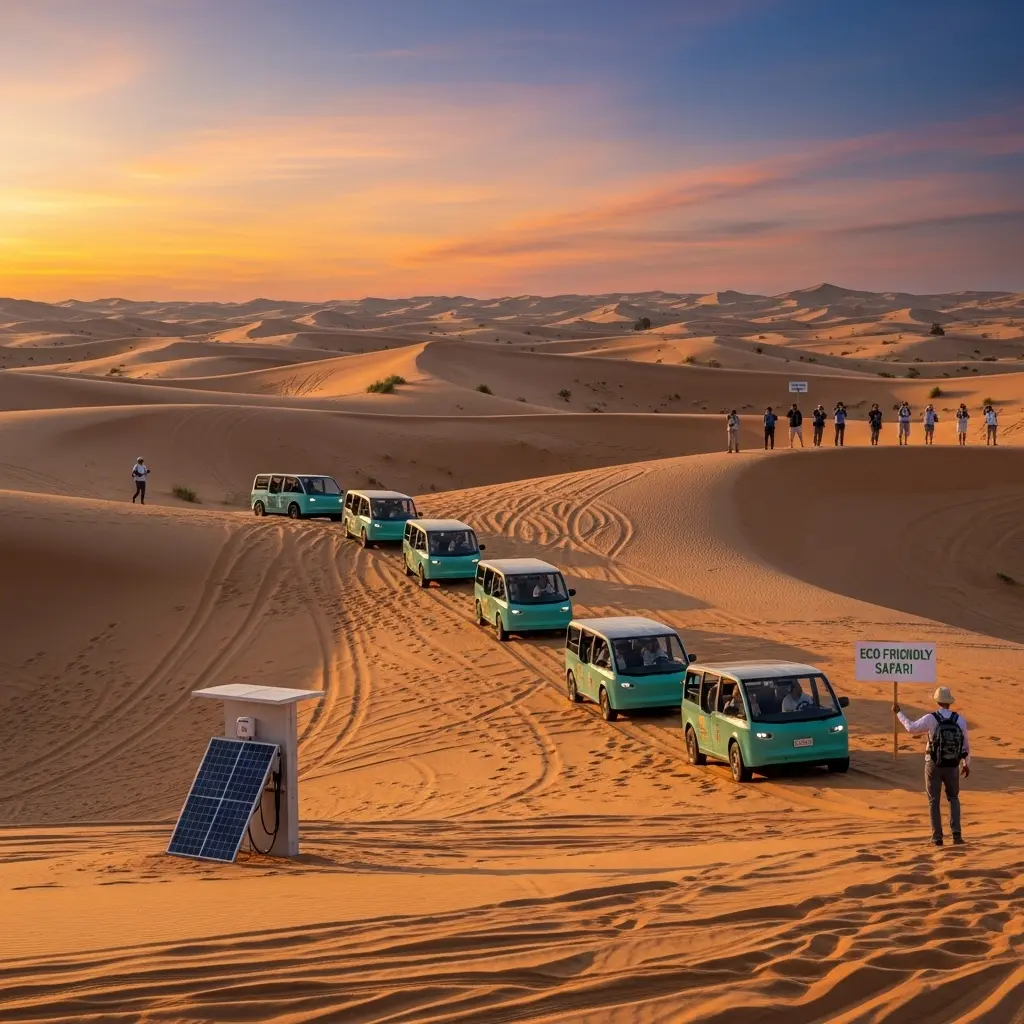
The primary technical feature of an Eco-Friendly Dubai Safari is the transition to renewable energy. Historically, desert camps relied on loud, polluting diesel generators to power their kitchens and entertainment stages. In 2026, premium operators have replaced these with high-capacity solar hybrid systems that capture the intense Arabian sun during the day.
This energy is stored in advanced lithium-ion batteries, providing silent, clean power throughout the night. This shift not only reduces air pollution but also enhances the guest experience by removing the constant mechanical hum of a generator. Without the noise of traditional power sources, the desert’s natural soundscape—the whisper of the wind and the crackle of a private fire—takes center stage.
This silent luxury is a hallmark of the new era of desert travel. To see which operators have achieved 100% solar certification, you can research the latest fleet and camp updates at https://htdesertsafari.com/. Choosing a solar-powered camp ensures that your evening under the stars is as clean as the desert air itself.
Advanced Waste Management and the Zero-Plastic Mandate
Physical waste is one of the most visible challenges in managing large-scale tourism in the dunes. Eco-Friendly Dubai Safari operators have addressed this through a “Zero Waste” mentality. In 2026, the use of single-use plastic water bottles is strictly prohibited in many protected desert reserves, reflecting a major shift in guest logistics.
Instead of plastic, luxury camps now provide guests with high-quality, reusable metal or glass bottles that can be refilled at chilled, filtered water stations. This initiative has eliminated millions of plastic bottles from the dunes annually. Waste segregation at the source is also mandatory, ensuring that recyclable materials never touch the sand.
Organic food waste is processed on-site using industrial composting machines, turning kitchen scraps into nutrient-rich soil used for greening projects near the desert perimeter. For a detailed look at the hygiene standards of these eco-conscious sites, you can consult the resources at https://dubaidesertsafarie.com/ and https://royaldesertadventures.ae/.
Protecting the Biological Crust of the Dunes
A fundamental part of an Eco-Friendly Dubai Safari is the protection of the land itself. Many visitors do not realize that sand dunes are stabilized by a fragile “biological crust” composed of fungi, lichens, and bacteria. This layer prevents massive sand erosion and allows rare desert flora to survive in the arid climate.
Traditional high-impact dune bashing can shatter this crust, leading to permanent environmental damage. In 2026, eco-certified operators practice “Track Discipline,” staying exclusively on designated sandy corridors. This ensures that the vast majority of the landscape remains untouched, allowing nature to regenerate at its own pace.
Many luxury safaris now offer “Nature Drives” as a low-impact alternative to aggressive driving. These journeys focus on wildlife spotting and education, moving at a slower pace that is kinder to the environment. To explore these gentle adventure options and find the perfect ridge for sunset photos, visit the booking portals at https://htdesertsafari.com/.
Safari Wildlife Protection: Safe Observation Rules
The desert is home to the majestic Arabian Oryx and the Sand Gazelle, species that were once on the brink of extinction. Managing an Eco-Friendly Dubai Safari involves ensuring that human interaction does not stress these animals or disrupt their natural behavior.
Guides in 2026 are trained conservationists who follow strict observation protocols. Vehicles must maintain a distance of at least 50 meters from wildlife sightings to avoid startling them. Sudden loud noises and the use of high-beam flash photography are discouraged during the nocturnal active periods of desert foxes and owls.
Feeding wildlife is strictly prohibited, as it creates a dangerous dependency on humans and can cause health issues for the animals. By maintaining these boundaries, tourism serves as a source of funding for habitat restoration. For more on ethical wildlife encounters and to see recent sighting galleries, check the certified tours listed at https://royaldesertadventures.ae/.
| Sustainable Feature | Traditional Method | 2026 Technical Solution | Environmental Goal |
| Camp Lighting | Wax & Oil Lamps | LED & Solar Power | Zero Emissions |
| Water Supply | Hand-dug Wells | Filtered Stations | Plastic Reduction |
| Vehicle Fleet | Diesel Engines | Hybrid/Electric 4×4 | Carbon Neutrality |
| Waste Handling | Landfill Disposal | On-site Composting | Circular Economy |
Sustainable Food Sourcing and Local Agriculture
The culinary experience on an Eco-Friendly Dubai Safari has shifted toward local, seasonal ingredients. By sourcing meat, vegetables, and dates from UAE-based hydroponic farms and local shepherds, operators drastically reduce the “food miles” and carbon footprint of their traditional BBQ dinners.
In 2026, gourmet safari menus feature organic produce grown right in the desert outskirts. This supports the local economy while ensuring that the food served is as fresh as possible. You might enjoy “Desert-Grown” tomatoes or local Sidr honey, providing a taste of the region that is truly authentic and sustainable.
Portion control is another ethical consideration. By utilizing AI-driven booking data, camp kitchens can predict exactly how much food is needed for the number of guests. This significantly reduces the volume of food waste that ends up in landfills. Detailed menu reviews and dietary options for eco-camps can be found at https://dubaidesertsafarie.com/.
The Role of High-Tech Water Conservation
Water is the most precious resource in the arid landscape of the UAE. Eco-Friendly Dubai Safari camps utilize advanced plumbing and filtration systems to ensure every drop is used efficiently. Vacuum-flush toilets, similar to those found on modern aircraft, are now the standard in luxury desert restrooms.
These systems use up to 90% less water than traditional toilets. Furthermore, greywater from sinks and showers is often collected, treated, and recycled for dust suppression on camp tracks or to irrigate indigenous plants like the Ghaf tree. This circular water economy is a hallmark of a high-quality operator.
The Ghaf tree is the national tree of the UAE and a keystone species for the desert ecosystem. Protecting these trees through smart irrigation is a priority for any reputable operator. For information on camps that actively participate in native tree-planting initiatives, visit https://htdesertsafari.com/ today.
Cultural Preservation and Ethical Labor
True sustainability includes a social and cultural dimension. An Eco-Friendly Dubai Safari prioritizes the preservation of Emirati heritage by employing local artisans and traditional performers. The Tanoura dancers, henna artists, and falconers are treated as professional partners in the cultural narrative.
By attending a safari that focuses on authentic storytelling and traditional music, you are supporting the longevity of ancient Bedouin crafts. These camps avoid “kitschy” or overly theatrical performances in favor of educational demonstrations that respect the soul of Arabia. This approach ensures that heritage is a living, breathing part of the tour.
Ethical labor practices are also a requirement for top-tier operators. This includes providing fair wages and high-standard living conditions for the camp staff and drivers who work in the challenging desert environment. To see which companies are recognized for their social impact, consult the reports at https://royaldesertadventures.ae/.
Technology in Desert Conservation and Fleet Logistics
In 2026, technology is the backbone of the Eco-Friendly Dubai Safari. Modern 4×4 fleets are increasingly composed of hybrid or fully electric vehicles. These SUVs move across the sand with a quiet whir, significantly reducing noise pollution which can disturb sensitive nocturnal wildlife.
Fleet management software uses real-time GPS tracking to ensure that vehicles never stray from designated eco-tracks. This technological oversight prevents accidental damage to protected dunes and allows for better monitoring of vehicle emissions. This data is often shared with environmental agencies to track the industry’s green progress.
Some luxury safaris also utilize “Augmented Reality” (AR) headsets during their nature walks. These devices overlay information about desert ecology and historical sites onto the physical landscape, providing a high-tech layer to the educational experience. Visit https://htdesertsafari.com/ to see these modern tools in action on the dunes.
Selecting Your Sustainable Safari Operator
Not all desert tours are created equal, and choosing the right operator is the most important step for an eco-conscious traveler. Look for companies that hold certifications from the Global Sustainable Tourism Council (GSTC) or local awards for green tourism leadership.
Reputable operators like https://htdesertsafari.com/ are transparent about their sustainability goals and environmental impact. They provide detailed information on their waste management, energy use, and animal welfare policies directly on their booking platforms. This transparency builds trust and ensures your money supports the right causes.
Reading recent guest reviews is also vital. Look for mentions of “Plastic-Free,” “Solar Power,” and “Knowledgeable Guides.” These are clear indicators of a company that takes its responsibility to the land seriously. Comparing these features on sites like https://dubaidesertsafarie.com/ will help you make an informed choice for your 2026 trip.
Preparing Your Gear for an Eco-Friendly Adventure
Your personal preparation is a functional part of the Eco-Friendly Dubai Safari experience. Arriving prepared reduces the need for disposable supplies. We recommend carrying a high-quality reusable water bottle and wearing loose-fitting clothes made of natural, breathable fibers like organic cotton or linen.
During the winter months (November-March), the desert temperature can drop rapidly after dark. Instead of relying on energy-intensive space heaters at the camp, carry a light jacket or a traditional pashmina. Being physically comfortable allows you to enjoy the starlit shows without distraction while reducing the camp’s energy load.
Footwear should be secure and practical. Sturdy sneakers are better for walking on the dunes than flip-flops, as they provide better support and prevent you from disturbing more sand than necessary. For a full checklist of ethical packing tips, visit https://royaldesertadventures.ae/ and consult their guest preparation guides.
Summary of the Sustainable Safari Value
In conclusion, an Eco-Friendly Dubai Safari is a story of evolution and respect. By choosing the right partners, prioritizing low-impact transport, and engaging with the culture authentically, you create a journey that transcends the typical tourist experience. The dunes are a legacy, and your visit should help protect them.
The desert is ready to tell you its story. Whether you are watching an Arabian Oryx at dawn or sipping tea under a solar-powered lantern, every moment is yours to enjoy responsibly. Trust the professionals at https://htdesertsafari.com/ to handle the logistics while you focus on the majesty of the dunes.
The golden sands are waiting. Secure your spot on an expedition that values the future of the environment as much as the thrill of the ride. Book your sustainable adventure today and witness the magnificence of Arabia as it was meant to be seen—protected, pristine, and powerful.
Frequently Asked Questions (FAQs)
What exactly makes a Dubai desert safari eco-friendly?
An eco-friendly safari prioritizes environmental preservation through several key practices. In 2026, this includes using solar power for camp operations, implementing a zero-plastic policy with water refill stations, following strict “Track Discipline” to prevent dune erosion, and utilizing hybrid or electric vehicles to reduce carbon emissions.
Is it safe to go dune bashing on an eco-friendly tour?
Yes, but the approach is different. Licensed eco-operators follow designated tracks to protect the “biological crust” of the dunes. Many guests now prefer “Nature Drives” or “Gentle Dune Cruises,” which focus on wildlife spotting and landscape appreciation rather than high-speed aggressive maneuvers.
How do desert camps get electricity without noisy generators?
Modern sustainable camps utilize high-capacity solar hybrid systems. Large photovoltaic panels charge batteries during the day, which then provide clean, silent electricity for the camp’s kitchen, lighting, and entertainment at night. This removes both noise and air pollution from the experience.
Are electric 4×4 vehicles actually available in the desert?
Yes. To meet the UAE’s sustainability goals, many premium tour operators have begun integrating high-performance electric and hybrid SUVs into their fleets. These vehicles provide the necessary torque for sand driving while producing zero tailpipe emissions and minimal noise.
What happens to the food waste at an eco-camp?
Reputable sustainable camps use on-site segregation and industrial composting systems. Organic food waste is turned into compost for local landscaping, while non-organic materials are carefully segregated and trucked back to specialized recycling facilities in the city daily.
Can I see wildlife during an eco-friendly desert safari?
Absolutely. Most sustainable safaris operate within protected areas like the Dubai Desert Conservation Reserve (DDCR). These tours focus on spotting native species like the Arabian Oryx and Sand Gazelle from a respectful distance, ensuring the animals are not stressed in their habitat.
Is there an extra charge for a sustainable safari package?
While specialized “Eco-Safaris” may have a slightly higher price point due to the costs of high-tech solar equipment and professional conservation guides, many premium operators now include sustainable practices as a standard part of their luxury service without adding extra fees.
What should I wear to stay comfortable and eco-conscious?
We recommend loose clothing made of natural, sustainable fibers like organic cotton or linen. These fabrics are breathable and help regulate your body temperature in the heat. Avoid synthetic materials that release microplastics and always bring a light layer for the cool night.
How do sustainable camps handle water conservation?
Camps use high-tech measures, including low-flow faucets and vacuum-flush toilets. Many facilities also practice greywater recycling, where water from sinks is treated and reused for irrigating indigenous desert plants or for dust control on desert tracks.
Are the camels treated ethically at these camps?
Yes, ethical animal welfare is a core pillar of sustainable tourism. Reputable operators like those found on https://htdesertsafari.com/ follow strict guidelines, including limited working hours for camels, providing adequate rest and nutrition, and regular veterinary checks.
Can I bring my own reusable water bottle?
Yes, this is highly encouraged! Most sustainable camps provide high-quality filtered water dispensers where you can refill your bottle throughout the evening, helping to eliminate the need for thousands of single-use plastic bottles in the dunes.
Is the “Tanoura” dance environmentally friendly?
The dance is a cultural tradition, but sustainable camps enhance the experience by using low-energy LED lighting for the performer’s skirts and the stage, ensuring that the entertainment program aligns with the camp’s overall green energy goals.
Do eco-friendly camps use real fire for the BBQ?
Most camps use a combination of traditional sustainable charcoal for authentic flavor and energy-efficient electric grills powered by solar energy. This reduces the amount of smoke and air pollution generated during the meal preparation phase.
How far from the city are these sustainable camps located?
To escape light and noise pollution, most sustainable camps are located about 45 to 60 kilometers from Dubai city center, often deep within protected nature reserves where the desert environment is most pristine and untouched.
What is the “Leave No Trace” policy in the desert?
This is a global code of conduct followed by high-quality operators to ensure the desert is left exactly as it was found. It includes removing all trash, avoiding the destruction of natural features, and not disturbing the natural silence of the dunes.
Is stargazing better at a sustainable camp?
Yes, because sustainable camps prioritize low-energy, directional lighting to reduce light pollution. This results in much clearer views of the Milky Way and planets, providing a more immersive and authentic astronomical experience for the guests.
Can I request a specialized vegan or local organic meal?
Absolutely. One of the best ways to practice sustainability is to eat local. Most premium camps can prepare gourmet, plant-based meals using locally sourced, organic ingredients if you inform them at least 48 hours in advance during your booking.
Are the restroom facilities in the desert eco-friendly?
Yes, modern luxury camps feature permanent, climate-controlled restroom blocks that utilize water-saving technology and are maintained to the highest standards of hygiene without the use of harsh, non-biodegradable chemicals.
How do I know if a safari operator is truly sustainable?
Check for official certifications like the GSTC seal or local government eco-labels. You should also read reviews on sites like https://dubaidesertsafarie.com/ regarding their environmental ethics and check their stated sustainability mission on their official website.
Why choose https://htdesertsafari.com/ for a sustainable booking?
They work with the most reputable and eco-conscious operators in the UAE. Their focus on high-quality logistics and ethical tourism ensures that your adventure is as good for the planet as it is for your soul. For more info, check https://dubaidesertsafarie.com/ and https://royaldesertadventures.ae/.
Eco-Friendly Dubai Safari insights reveal that the desert is a place of deep connection and beauty. By choosing the right partners and focusing on the details, you ensure an experience that is as safe as it is unforgettable. The dunes are waiting—your adventure is ready to be unveiled.