
Desert Safari Practices: A Global Framework for Ethical Arabian Exploration
Desert Safari Practices have become the defining standard for tourism in the United Arab Emirates as we navigate the complexities of 2026. For decades, the desert was viewed primarily as a vast playground for motorized thrills. However, a modern understanding of environmental science and cultural preservation has shifted the focus toward a more disciplined and respectful approach. The dunes are not just sand; they are a fragile, living ecosystem that requires proactive protection.
When you venture into the golden expanse of the UAE, your behavior directly impacts the longevity of this natural wonder. Responsible tourism is not about reducing the fun; it is about elevating the quality of the journey. By following high-standard Desert Safari Practices, you contribute to the survival of native wildlife, the preservation of Bedouin traditions, and the overall health of the planet.
This extensive report dives deep into the logistical and ethical strategies needed to master your desert expedition. We explore everything from vehicle emission controls to the sacred codes of Arabian hospitality. Let us navigate the sands together and uncover why ethical travel is the ultimate form of luxury in the modern world.
The Science of Dune Preservation and Track Discipline
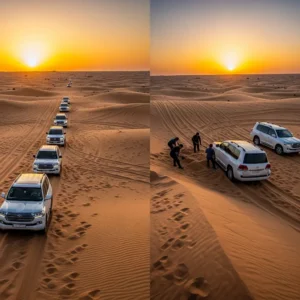
The most fundamental of all Desert Safari Practices is track discipline. Many visitors do not realize that the surface of the desert is held together by a “biological crust.” This invisible layer of fungi, lichens, and bacteria prevents the sand from blowing away and allows rare desert plants to take root.
When 4×4 vehicles roam randomly across the dunes, they shatter this crust, leading to accelerated erosion and the destruction of seed banks. In 2026, professional operators follow strictly designated paths. This ensures that the majority of the desert remains “untouched,” allowing the natural cycle of the dunes to continue without human interference.
Staying on the tracks also protects the underground burrows of nocturnal creatures. Many desert reptiles and small mammals sleep just inches below the surface during the heat of the day. By adhering to professional driving routes, you ensure that your adrenaline rush doesn’t result in the destruction of a hidden habitat.
Strategic Logistics of Eco-Friendly Fleet Management
A significant portion of Desert Safari Practices involves the technology used for transport. The UAE has set ambitious goals for carbon neutrality, and the tourism sector is leading the charge. In 2026, the transition from traditional combustion engines to hybrid and electric 4x4s is well underway.
Modern luxury fleets now prioritize vehicles that offer maximum torque with minimum emissions. These SUVs are equipped with high-tech sensors that monitor fuel efficiency in real-time. Logistical planning also plays a role; AI-driven dispatch systems ensure that pickup routes are optimized to reduce the total mileage driven per guest.
Choosing an operator with a “Green Fleet” is a powerful way to vote with your wallet. It supports the heavy investment required to maintain high-performance, low-impact vehicles in the harsh desert heat. For a look at the latest sustainable fleet options, you can consult the resources at https://royaldesertadventures.ae/.
Wildlife Protection: Respecting the True Owners of the Sand
Safari Wildlife Protection is a core pillar of ethical Desert Safari Practices. The desert is home to the majestic Arabian Oryx, the playful Sand Gazelle, and the elusive Desert Fox. These animals are highly adapted to the silence and solitude of the dunes, and human intrusion must be managed with extreme care.
Licensed operators in Dubai now utilize “Quiet Zones” where vehicle noise is kept to a minimum. When a wildlife sighting occurs, the driver is trained to maintain a distance of at least 50 meters. Never attempt to approach or feed desert animals. Human food can be toxic to native species and disrupts their natural foraging instincts.
By maintaining a respectful distance, you allow these species to thrive in their natural environment. This “observation only” approach is the only way to ensure that future generations can still see these creatures roaming the wild. To research the most ethical wildlife tours, check out the verified listings at https://dubaidesertsafarie.com/.
Waste Management and the Zero-Plastic Mandate
Physical waste is one of the most visible challenges in Desert Safari Practices. In 2026, top-tier camps have implemented a strict zero-plastic mandate. The thousands of single-use water bottles that once cluttered the dunes have been replaced by high-capacity filtration stations and reusable glass or metal containers.
The logistics of “Leave No Trace” extend to every aspect of the desert camp. All non-organic waste is segregated on-site and trucked back to specialized recycling facilities in the city every morning. Organic waste is often composted using industrial-grade machines, turning food scraps into nutrients for local desert-tolerant landscaping.
As a guest, you can contribute by being mindful of your own footprint. If you see litter in the sand, picking it up is a noble gesture that reflects the spirit of a responsible traveler. For a detailed look at how luxury camps manage their hygiene and waste protocols, visit https://htdesertsafari.com/.
| Ethical Category | Standard Expectation | High-Standard Practice (2026) | Impact |
| Water Supply | Plastic Bottles | Filtered Water Stations | 80% Less Plastic |
| Power Source | Diesel Generators | Solar Hybrid Systems | Zero Noise Pollution |
| Animal Contact | Petting/Feeding | Observation from Distance | Protected Instincts |
| Driving Style | Off-track thrills | Designated Eco-Tracks | Prevent Soil Erosion |
The Move Toward Solar-Powered Arabian Camps
Technical innovation has transformed the energy footprint of Desert Safari Practices. Historically, desert camps relied on loud and smoky diesel generators. Today, the focus has shifted toward renewable energy. High-end camps are now fitted with discreet photovoltaic arrays that capture the intense Arabian sun during the day.
This energy is stored in high-capacity lithium batteries to power the kitchen, lighting, and sound systems throughout the evening. This silent energy source significantly improves the guest experience, allowing the natural sounds of the desert—the wind and the crackle of the fire—to take center stage.
Solar power also drives the modern cooling systems used in the summer months. By utilizing renewable energy for air-cooled majlis areas, operators can provide luxury comfort without the environmental cost of traditional air conditioning. To compare the green certifications of various camps, visit industry sites like https://dubaidesertsafarie.com/.
Sustainable Culinary Practices and Local Sourcing
The BBQ buffet is the centerpiece of the night, and managing its Desert Safari Practices requires a focus on local sourcing. By purchasing meat, vegetables, and dairy from UAE-based hydroponic farms and local shepherds, operators reduce the “carbon miles” of your meal.
Supporting local agriculture also ensures the highest level of food safety and freshness. In 2026, many gourmet safari menus feature “Farm-to-Table” concepts, highlighting traditional ingredients like camel milk, organic dates, and locally caught seafood. This supports the local economy while providing a superior taste profile.
Furthermore, responsible operators use data from digital booking systems to manage portion control. This minimizes food waste, which is a major ethical concern in large-scale tourism. For a look at the most sustainable and gourmet catering options in Dubai, check out the menu details at https://royaldesertadventures.ae/.
Professional Conduct and Driver Ethics
The human element is perhaps the most influential part of Desert Safari Practices. Your driver is not just a pilot; they are an environmental guardian. Professional drivers undergo specialized training in “Sensitive Terrain Navigation,” learning how to read the sand to minimize vehicle impact.
Ethics also extend to social interaction. A professional driver respects your privacy and the peace of the desert. They avoid aggressive driving maneuvers that can cause distress to passengers or unnecessary wear on the vehicle. Their goal is to provide a smooth, educational, and safe journey into the heart of Arabia.
Punctuality is another form of professional ethics. By being ready at your hotel lobby five minutes before the scheduled pickup, you ensure the vehicle doesn’t idle in traffic, further reducing emissions. For the most reliable and ethical transfers in the city, visit https://htdesertsafari.com/ and explore their driver profiles.
Cultural Etiquette: Respecting the Bedouin Soul
Dubai Safari Etiquette is a subset of responsible Desert Safari Practices. The desert is a place of deep spiritual and historical significance for the Emirati people. Respecting local customs is not just a polite gesture; it is a fundamental part of being a global citizen.
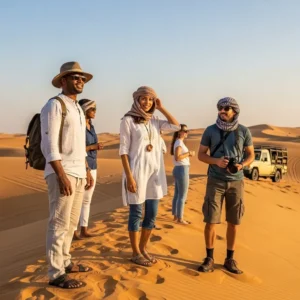
Dress modestly when visiting the camp. Covering your shoulders and knees is a sign of respect for the local staff and the traditional setting. When interacting with performers during the Tanoura or belly dance shows, maintain a respectful distance and avoid being disruptive.
Accepting the welcome Gahwa (Arabic coffee) with your right hand and showing patience in the buffet line are small actions that build a bridge of mutual respect between you and your hosts. A responsible traveler is one who seeks to understand the culture rather than just consume it as entertainment. To learn more about cultural heritage, visit https://royaldesertadventures.ae/.
Managing Noise Pollution in a Silent Landscape
One of the most valuable resources of the Arabian dunes is silence. Desert Safari Practices in 2026 place a heavy emphasis on noise management. Excessive noise from high-revving engines, loud music, or shouting can have a detrimental effect on nocturnal desert animals that rely on their acute hearing for survival.
Reputable camps enforce “Quiet Hours” during the stargazing portion of the evening. This allows guests to experience the desert in its rawest form—as a place of profound peace and meditation. It also reduces the “acoustic footprint” of the tourism industry on the surrounding wilderness.
As a guest, you can contribute by keeping your electronic devices on silent and using headphones if you need to listen to music or make a call. Letting the natural soundscape be your soundtrack is a key part of the ethical desert experience. For tours that prioritize tranquility, check the packages at https://htdesertsafari.com/.
Digital Gear and Responsible Social Media
Technology is a double-edged sword when it comes to Desert Safari Practices. While we all want to capture the perfect sunset, we must do so responsibly. Drone usage is strictly regulated in the UAE, especially in conservation reserves where it can disturb nesting birds of prey.
Always check with your guide before launching any aerial equipment. If you are using a professional camera, avoid changing lenses in the open air, as the fine sand can damage your sensor and the dust you disturb can affect the micro-environment. Using long-exposure techniques for stargazing instead of high-powered flashes is also an ethical choice.
When posting on social media, use your platform to highlight the beauty of the desert and the importance of its preservation. Encouraging others to follow responsible practices helps create a global culture of sustainable tourism. For advanced photography and tech tips in the sand, visit https://dubaidesertsafarie.com/.
Protecting Indigenous Flora: The Ghaf and the Sidr
Safari Guest Logistics must account for the protection of desert plants. The Ghaf tree is the national tree of the UAE and is a keystone species. Its deep roots stabilize the dunes and provide a habitat for hundreds of desert creatures.
One of the vital Desert Safari Practices is ensuring that guests do not climb on or damage these slow-growing trees. Even the smaller desert shrubs are essential for preventing sandstorms and erosion. Walking on designated paths within the camp ensures that these plants are not trampled.
Many operators now include “Nature Walks” where expert guides explain the medicinal and survival uses of desert plants. This educational focus turns a sightseeing trip into a profound lesson in biology and history. To find the best eco-tours focused on desert flora, check out the listings at https://royaldesertadventures.ae/.
The Economics of Ethical Tourism in Dubai
The price of a desert safari can vary based on its commitment to Desert Safari Practices. Budget tours often cut costs by using older vehicles, lower-quality food, and camps with minimal waste management systems. While cheaper, these tours carry a much higher environmental cost.
A premium or “Eco-Luxury” safari, typically costing between 500 and 1,000 AED, is a much better investment for the conscious traveler. This price reflects the cost of high-tech solar power, ethical labor practices for the staff, and the maintenance of a modern, clean fleet.
When you choose a responsible operator, you are supporting the UAE’s transition to a sustainable economy. You are paying for the peace of mind that comes with knowing your adventure is protecting the land you are visiting. To compare the value and impact of different operators, consult the verified reports at https://dubaidesertsafarie.com/.
Seasonal Logistics and Guest Preparedness
Your personal preparation is a functional part of Desert Safari Practices. Arriving prepared reduces the need for disposable supplies and ensures your safety. During the winter peak (November-March), the weather is perfect for outdoor activity, but you must be prepared for the cold.
We recommend a “layering” approach to your wardrobe. Wear light, breathable cotton for the day, but always carry a high-quality fleece or pashmina for the post-sunset drop in temperature. Being physically comfortable allows you to enjoy the cultural shows without needing the heavy energy load of space heaters.
Footwear should be secure and practical. Sturdy sneakers are better for the dunes than flip-flops, as they provide better support and prevent you from disturbing more sand than necessary. For a full checklist of ethical packing tips, visit https://htdesertsafari.com/ and talk to their specialized travel planners.
The Role of Private Safaris in Site Conservation
Booking a private vehicle is one of the smartest Desert Safari Practices for reducing your impact. In a private safari, you skip the multiple hotel pickups, which can save up to two hours of engine idling and unnecessary city mileage. You move directly from your lobby to the desert gate.
A private car also allows you to dictate the intensity of the drive. If you prefer a slow “Dune Cruise” focused on wildlife and landscapes rather than high-speed turns, your driver will accommodate you. This gentle driving style is much kinder to the desert surface and reduces the noise generated by the vehicle.
For families or small groups, the private tier is a luxury that aligns perfectly with ethical values. It provides an intimate environment where you can learn more from your guide and enjoy the dunes in total peace. To explore bespoke private itineraries, visit https://royaldesertadventures.ae/ and see their exclusive camp setups.
Safety Regulations and Insurance Standards
In 2026, safety and ethical standards are synonymous in the Dubai tourism sector. High-standard Desert Safari Practices require that every vehicle is fitted with a reinforced roll cage and undergoes rigorous quarterly inspections by the RTA.
Drivers must hold specialized desert licenses and be certified in first-aid and emergency response. Before the dune bashing starts, a professional driver will provide a full safety briefing. Keeping your seatbelt fastened at all times is not just a rule; it is a sign of respect for the professional standards of your host.
Verify that your operator carries comprehensive insurance for all passengers. Reputable companies like https://htdesertsafari.com/ are transparent about their safety protocols and insurance coverage. Knowing you are in a professional and secure environment allows you to fully immerse yourself in the desert magic.
Preparing Your Body for an Ethical Adventure
The physical demands of the desert require respect. To follow ethical Desert Safari Practices, you should ensure your own health is optimized for the trip. Avoid eating a heavy meal immediately before your pickup to reduce the risk of motion sickness.
Hydration is the most critical factor. The dry desert air evaporates moisture from your skin before you even realize you are sweating. Drink at least one liter of water in the two hours leading up to your trip. Use the refilling stations at the camp instead of asking for new bottles. Small individual actions collectively make a massive difference.
If you have pre-existing back or neck problems, or if you are pregnant, the ethical choice is to skip the dune bashing segment. Most operators offer a “Direct to Camp” transfer in a standard road vehicle, allowing you to enjoy the BBQ dinner and shows without putting your health at risk. For more on health and safety, check https://dubaidesertsafarie.com/.
The Future of Stargazing and Celestial Heritage
As urban sprawl increases, “Dark Sky” preservation has become a major focus of Desert Safari Practices. The desert is one of the last places in the UAE where the Milky Way is visible in its full glory. Ethical operators use “Red Light” technology at their stargazing stations.
Red light does not interfere with human night vision or disrupt the biological rhythms of nocturnal desert animals. Professional astronomy guides use high-powered telescopes to show guests the planets while explaining how the Bedouin navigated by the stars for millennia.
This connection to the cosmos provides a profound sense of perspective. It reminds us that we are part of a much larger system that requires our protection. For information on the best nights for stargazing based on the 2026 lunar calendar, consult the experts at https://htdesertsafari.com/.
Comparing Camp Amenities: Shared vs. Boutique
When researching your trip, pay close attention to the camp’s infrastructure. Shared camps are large and vibrant, but they often struggle with higher levels of waste and noise. Boutique or “Exclusive” camps are much smaller, often catering to only 20-30 guests.
Boutique camps typically offer a higher standard of Desert Safari Practices, with better restroom facilities, gourmet local food, and a more intimate atmosphere. Because they host fewer people, their impact on the surrounding sand is significantly lower.
Websites like https://dubaidesertsafarie.com/ provide excellent comparisons of these different camp styles. You can read reviews specifically focusing on the “Environmental Standard” and “Service Quality” to ensure your choice aligns with your personal values and expectations.
Why 2026 is the Year for Responsible Tourism
The global travel trend in 2026 is moving away from mass-market tourism toward “Meaningful Immersion.” Desert Safari Practices have evolved to meet this demand. Today, a safari is an educational, cultural, and environmental journey that respects the soul of Arabia.
The UAE government has invested heavily in desert conservation reserves, creating a world-class model for sustainable tourism. By participating in these tours, you are supporting a future where nature and luxury can coexist. You aren’t just a tourist; you are a partner in the preservation of the sands.
Trust the professionals to handle the details. Book with an operator that prioritizes the land as much as the guest. Secure your spot today at https://htdesertsafari.com/ and get ready for a magnificent story in the sand that you can be proud to tell.
Summary of the Responsible Safari Blueprint
In conclusion, Desert Safari Practices reveal that the desert is a place of deep connection and enduring beauty. By choosing the right partners, prioritizing track discipline, and respecting the local culture, you ensure an adventure that is as safe as it is unforgettable.
The desert is ready to tell you its story. Whether you are holding a falcon at sunset or watching the stars from a solar-powered camp, every moment is a masterclass in hospitality and respect. Plan your journey with care, arrive with an open mind, and get ready for the trip of a lifetime.
The golden dunes are waiting. Answer the call with the grace and responsibility of a true desert traveler. Your ethical Arabian adventure starts tonight.
Frequently Asked Questions (FAQs)
What are the most important Desert Safari Practices I should know?
The most important practices include staying on designated 4×4 tracks to prevent dune erosion, respecting a safe distance from wildlife, minimizing noise pollution, following the “Right Hand Rule” for etiquette, and adhering to a zero-plastic policy by using reusable water containers.
Is it safe to see wildlife during the safari?
Yes, it is perfectly safe for both the guests and the animals. Professional guides are trained to maintain a respectful distance. You should never attempt to feed or touch desert wildlife, as this disrupts their natural instincts and diet.
Are electric 4x4s actually available for desert safaris in 2026?
Yes, many premium tour operators have begun integrating high-performance electric and hybrid SUVs into their fleets. These vehicles are quieter and produce zero tailpipe emissions, making them a centerpiece of modern, responsible Desert Safari Practices.
How do desert camps get their power without noisy generators?
Many luxury camps have transitioned to solar hybrid systems. They use large photovoltaic panels during the day to charge high-capacity batteries, which then provide silent, clean energy for the camp’s kitchen, lighting, and entertainment at night.
What should I wear to be respectful of the local culture?
“Modest Casual” is the standard. We recommend loose cotton or linen clothing that covers the shoulders and the knees. This respects local sensibilities and provides the best protection from the intense desert sun and fine sand.
Can I help with desert conservation during my trip?
Absolutely. You can help by using the refilling stations for water, taking your trash back to the camp, staying on marked paths, and choosing tour operators that are certified for their sustainability practices and support for local wildlife reserves.
Why is track discipline so important in the dunes?
Sand dunes are stabilized by a fragile “biological crust.” When vehicles drive randomly across the sand, they break this crust, leading to increased erosion and the loss of native plant life. Following fixed tracks allows the desert to maintain its natural structure.
Is there a limit to how many vehicles can enter the desert?
In protected areas like the Dubai Desert Conservation Reserve (DDCR), guest and vehicle numbers are strictly capped daily to prevent over-tourism and minimize the environmental impact on native species like the Arabian Oryx.
What happens to the food waste from the BBQ buffet?
Reputable camps use on-site segregation and industrial composting for organic waste. This compost is often reused in local greening projects. Non-organic waste is trucked back to the city daily for professional recycling.
How do I know if a safari operator is truly responsible?
Look for certifications from organizations like the Global Sustainable Tourism Council (GSTC) or local government awards for green tourism. Reading reviews on sites like https://dubaidesertsafarie.com/ regarding their environmental ethics is also very helpful.
Can I bring my own reusable water bottle?
Yes, this is highly encouraged! Most camps have filtered water dispensers where you can refill your bottle throughout the evening. This simple action helps eliminate the need for single-use plastic bottles.
Is the “Tanoura” dance a religious performance?
The Tanoura has Sufi origins and is a form of spiritual meditation. While it is presented as entertainment at the camp, it should be treated with the same respect you would show to any professional theater or cultural performance.
How much should I tip the driver if I want to be fair?
Tipping is not mandatory but is a kind way to show appreciation for the driver’s hard work and safety skills. A tip of 20-50 AED is considered a standard and generous gesture in the Dubai tourism industry.
What is the “Right Hand Rule” in Arabian etiquette?
In Middle Eastern culture, the right hand is used for all “clean” tasks, such as eating, drinking, and shaking hands. The left hand is traditionally reserved for personal hygiene. Following this rule is a major sign of cultural respect.
Are the camels treated ethically on these safaris?
Licensed operators like those on https://htdesertsafari.com/ must follow strict animal welfare guidelines. This includes limited working hours, providing shaded resting areas, regular veterinary checks, and ensuring the animals are well-fed and hydrated.
What happens if it rains in the desert during my safari?
Rain is rare in Dubai, but if it occurs, the operator will monitor the weather closely. If conditions become unsafe for dune bashing or camp shows, they will contact you to reschedule or provide a full refund. Safety is always the primary ethical concern.
Is shisha smoking environmentally harmful?
While it is a traditional social activity, shisha areas are typically placed in well-ventilated outdoor zones to ensure smoke does not affect non-smoking guests or the surrounding air quality. Responsible camps also ensure the charcoal is disposed of safely.
How far from the city do responsible safaris go?
To escape light and noise pollution, responsible safaris often travel 45 to 60 minutes away from the city center, deep into protected desert reserves where the natural environment is most pristine.
Can I request a specialized vegan or gluten-free meal?
Yes. Arabian cuisine is naturally inclusive with many pulse-based appetizers. If you inform your operator like https://htdesertsafari.com/ at least 48 hours in advance, they can ensure a gourmet, dietary-specific meal is prepared without waste.
Why choose https://htdesertsafari.com/ for an ethical booking?
They work with the most reputable and eco-conscious operators in the UAE. Their focus on high-quality logistics and ethical tourism ensures that your adventure is as good for the planet as it is for your soul. For more info, visit https://dubaidesertsafarie.com/ and https://royaldesertadventures.ae/.
Desert Safari Practices reveal that the desert is a place of deep connection and beauty. By choosing the right partners and focusing on the details, you ensure an experience that is as safe as it is unforgettable. The dunes are waiting—your adventure is ready to be unveiled.
Would you like me to help you create a specific eco-friendly itinerary for your 2026 trip to