
Traditional Bedouin Lifestyle Experience 15 Ancient Secrets of the Desert
The sand of the Arabian Peninsula holds secrets.
It holds stories that are thousands of years old.
Before the skyscrapers touched the clouds.
Before the supercars roared on Sheikh Zayed Road.
There was a different kind of life here.
It was a life of silence.
It was a life of resilience.
This was the life of the Bedouin.
To understand modern Dubai, you must understand its roots.
You must look back at where it all began.
A Traditional Bedouin Lifestyle Experience in the Desert is not just a tour.
It is a time machine.
It transports you back to an era of simplicity.
It teaches you about survival in one of the harshest environments on Earth.
It teaches you about the boundless generosity of the desert people.
In 2026, finding this authenticity is a treasure.
Many tours offer a glimpse.
But few offer the soul.
We are going to take you on a deep journey.
We will explore the tents they lived in.
We will taste the coffee they brewed.
We will walk in their footsteps across the dunes.
If you are ready to disconnect from the modern world.
If you are ready to connect with history.
This guide is for you.
Let us uncover the ancient ways of the desert.
For the most authentic experience, book with https://royaldesertadventures.ae/.
Who Were the Bedouins?
The word “Bedouin” comes from the Arabic word “Badawiyin”.
It means “people of the desert”.
They were nomadic tribes.
They moved across the sands of Arabia, North Africa, and the Levant.
They did not build permanent stone houses.
They did not stay in one place.
They followed the water.
They followed the grazing lands for their animals.
Their life was dictated by nature.
If it rained in the north, they moved north.
If the wells dried up, they moved on.
This constant movement created a unique culture.
They owned very few material possessions.
Everything they owned had to be carried on a camel.
This meant they valued things differently.
They valued poetry over gold.
They valued honor over palaces.
A Traditional Bedouin Lifestyle Experience in the Desert allows you to see this mindset.
It strips away the clutter of modern life.
It focuses on what is essential.
Family.
Community.
Survival.
The Bayt Al Sha’ar: The House of Hair
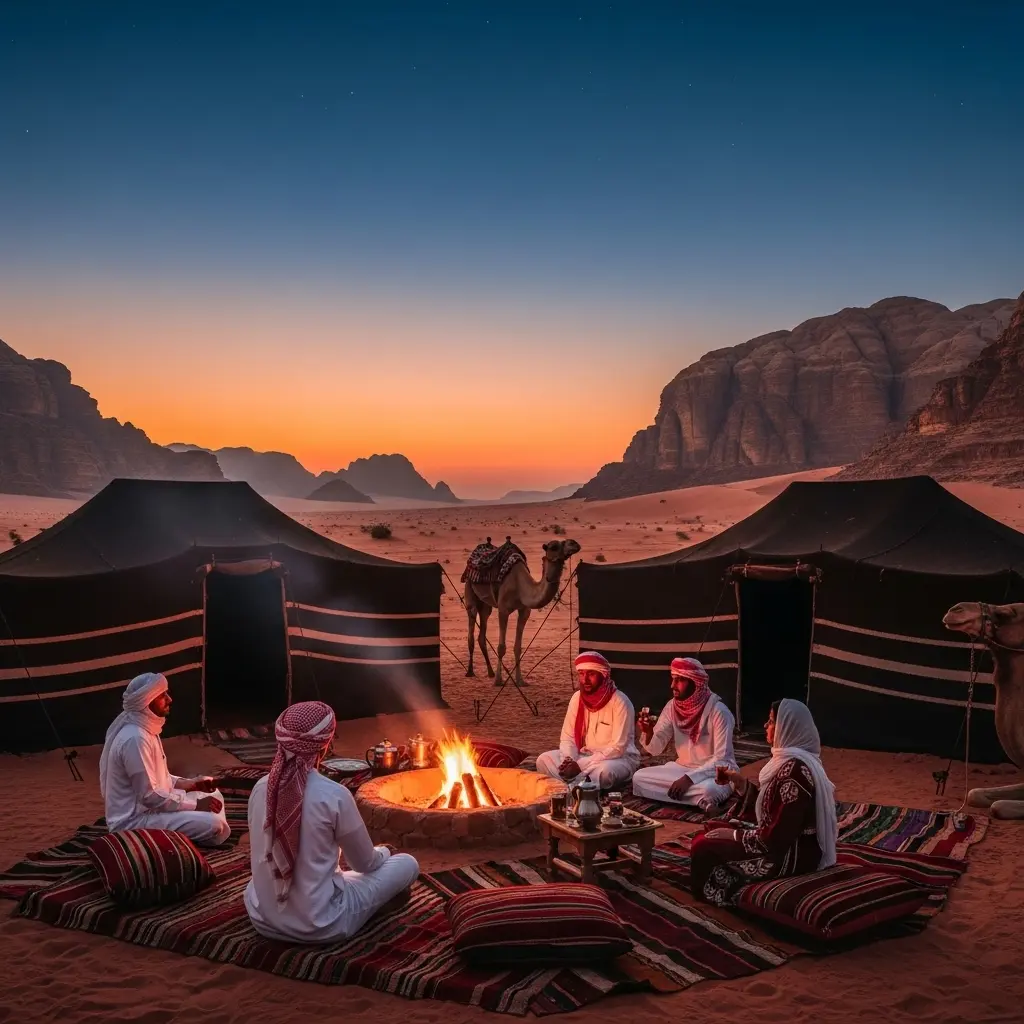
The most iconic symbol of Bedouin life is the tent.
It is called “Bayt Al Sha’ar”.
This translates to “House of Hair”.
Why hair?
Because it was woven from the hair of goats and sheep.
The women of the tribe were the architects.
They sheared the animals.
They spun the wool into yarn.
They wove the yarn into long strips of cloth.
They sewed the strips together to make the tent.
This material was ingenious.
It was black, which absorbed the heat during the day.
But the weave was loose.
It allowed the breeze to pass through.
It kept the interior cool.
When it rained, the fibers swelled up.
The weave became tight.
It became waterproof.
It was the perfect mobile home.
It could be packed up in an hour.
In a Traditional Bedouin Lifestyle Experience in the Desert, you sit in these tents.
You feel the texture of the fabric.
You see the layout.
The tent was divided into sections.
One section for men and guests (the Majlis).
One section for women and cooking (the Mahram).
Understanding this architecture helps you understand their social structure.
The Sacred Ritual of Hospitality
If you are lost in the desert, you will die without help.
The Bedouins knew this.
Therefore, hospitality was not just polite.
It was a law of survival.
If a stranger appeared at a tent, they were welcomed.
No questions asked.
They were given food and water for three days.
Only after three days could the host ask, “Who are you?”
This tradition lives on today.
When you arrive at a desert camp, you are the guest.
You are greeted with “Gahwa”.
This is Arabic coffee.
It is served in a small cup called a “Finjan”.
The coffee is golden, not black.
It is spiced with cardamom and saffron.
It is bitter and aromatic.
It is always served with dates.
The dates provide sugar and energy.
The coffee provides warmth and stimulation.
This pairing is nutritional perfection for a tired traveler.
The host holds the pot (Dallah) in their left hand.
They serve the cup with their right hand.
You drink one, two, or three cups.
When you are finished, you shake the cup.
This signal tells the host you are satisfied.
In a Traditional Bedouin Lifestyle Experience in the Desert, you participate in this.
It is a moment of connection.
It bridges the gap between stranger and friend.
Experience this warmth with https://dubaidesertsafarie.com/.
The Camel: The Lifeline of the Tribe
To the Bedouin, the camel is not an animal.
It is a gift from God.
They call it “Ata Allah”.
Without the camel, humans could not survive the deep desert.
The camel provided transport.
It could carry heavy loads for days without water.
It provided milk.
Camel milk is rich in vitamins.
It kept the Bedouins healthy when food was scarce.
It provided wool for the tents and clothes.
It provided leather for shoes and bags.
It even provided meat for weddings and feasts.
In a Traditional Bedouin Lifestyle Experience in the Desert, you meet these creatures.
You don’t just look at them.
You ride them.
Riding a camel connects you to the history of trade.
You imagine the caravans carrying spices and silk.
You feel the swaying motion.
Bedouins had over 160 words for “camel”.
They described every age, color, and temperament.
This shows how vital the animal was.
Today, we treat them with respect.
We learn about their amazing biology.
Their feet act like snowshoes on the sand.
Their nostrils close to keep out dust.
They are the ultimate survival machines.
Falconry: Hunting for Survival
Today, falconry is a sport.
But in the past, it was about dinner.
The desert has very little protein.
Bedouins could not grow crops.
They needed meat.
During the winter migration, falcons flew over Arabia.
The Bedouins would trap them.
They would train them with patience and trust.
The falcon became a hunting partner.
It would fly high and spot prey.
It would catch the Houbara Bustard (a large bird).
Or it would catch a desert hare.
The Bedouin would share the meat with the falcon.
This partnership was crucial.
At the end of the season, they would release the bird.
They let it fly back to the wild to breed.
This ensured the cycle of nature continued.
In a Traditional Bedouin Lifestyle Experience in the Desert, you see this art.
You watch the falcon fly.
You see its incredible speed.
You hold it on your arm.
You look into its fierce eyes.
It is a connection to the wild spirit of the desert.
It is heritage in motion.
The Desert Diet: Food from the Earth
What did they eat?
There were no supermarkets.
The diet was simple but nutritious.
Dates were the staple.
They last for years without spoiling.
Milk was the main drink.
Fresh camel milk or goat milk.
Or fermented milk (Laban).
Meat was rare.
Slaughtering an animal was a big decision.
It was reserved for guests or celebrations.
Rice and wheat were obtained through trade.
They traded wool and livestock for grains at the oasis towns.
Cooking was done over an open fire.
A Traditional Bedouin Lifestyle Experience in the Desert recreates this cuisine.
You might taste “Harees”.
This is wheat and meat cooked slowly until it blends.
It is savory and hearty.
You might taste “Thareed”.
This is a vegetable stew served over thin bread.
The bread soaks up the gravy.
You will definitely taste “Luqaimat”.
These are sweet dumplings.
Fried dough covered in date syrup.
They are delicious.
The food is communal.
It is served on large platters.
Everyone eats together from the same dish.
This reinforces the bond of the tribe.
Check authentic menus at https://hafiztourism.com/.
Clothing: Form Follows Function
The traditional dress looks stylish.
But it was designed for survival.
Men wear the “Kandura”.
It is a long white robe.
White reflects the sun’s heat.
The loose fit allows air to circulate around the body.
It keeps the skin cool.
On their head, they wear the “Ghutra” and “Agal”.
The Ghutra is the scarf.
It protects the head from the sun.
It can be wrapped around the face during a sandstorm.
The Agal is the black rope that holds it in place.
Historically, the Agal was used to tie the camel’s legs at night.
Women wear the “Abaya” and “Burqa”.
The Abaya is a loose cloak.
The Burqa (a face mask, distinct from the Afghan version) was metallic.
It protected the face from the harsh sun and sand.
It mimicked the features of a falcon.
In a Traditional Bedouin Lifestyle Experience in the Desert, you can try these clothes.
You feel the fabric.
You realize how practical they are.
You understand why they are still worn today.
It is a badge of identity.
Water: The Most Precious Resource
Water dictated everything.
Bedouins were experts at finding it.
They knew the landscape intimately.
They knew which plants indicated groundwater.
They knew where the rain would collect in the wadis.
They dug wells by hand.
Sometimes 20 meters deep into the rock.
Every drop was sacred.
They carried water in goat-skin bags called “Qirbah”.
These bags kept the water cool by evaporation.
In a Traditional Bedouin Lifestyle Experience in the Desert, you learn this respect.
You see the old wells.
You learn about the falaj irrigation systems in the oasis.
It teaches us a lesson about sustainability.
In our modern world of endless taps, we forget the value of water.
The Bedouin never forgot.
Tracking and Navigation
The desert has no road signs.
It shifts every day with the wind.
How did they find their way?
They used the stars.
The night sky was their map.
They knew the positions of the stars in every season.
They also used the dunes.
The shape of the dune tells you the direction of the prevailing wind.
They were master trackers.
They could look at a footprint in the sand.
They could tell you what animal it was.
They could tell you when it passed.
They could even tell if a camel was carrying a heavy load just by its footprint.
Or if a person was running or walking.
This skill was vital for hunting and security.
Guides at https://royaldesertadventures.ae/ share these secrets.
You can try to identify tracks yourself.
It opens your eyes to the details of the sand.
The Saluki: The Hunter Dog
Falcons hunted from the air.
Salukis hunted from the ground.
The Saluki is one of the oldest dog breeds in the world.
They are tall, thin, and fast.
They look like greyhounds with long hair on their ears.
Bedouins treated Salukis as family.
They were allowed inside the tent.
They were not considered unclean like other dogs.
They worked with the falcons.
The falcon would spot the prey.
The Saluki would chase it down.
They are incredibly fast runners.
In a Traditional Bedouin Lifestyle Experience in the Desert, you might meet a Saluki.
They are gentle and noble dogs.
Seeing them run across the dunes is poetry in motion.
It adds another layer to the heritage story.
Poetry and Storytelling
The desert nights are long and dark.
There was no TV.
There were no books.
So, the Bedouins mastered the spoken word.
Poetry was their history book.
They memorized thousands of lines.
They told stories of great battles.
They told stories of love and loss.
They told stories of their ancestors.
This oral tradition preserved their culture.
The “Nabati” poetry is the dialect of the desert.
It is still popular in the UAE today.
Around the campfire, stories were the entertainment.
In a Traditional Bedouin Lifestyle Experience in the Desert, you gather around the fire.
You listen to the guide tell these stories.
It stimulates the imagination.
It brings the history to life.
Medicinal Plants of the Desert
The desert looks barren.
But it is a pharmacy.
Bedouins knew the healing properties of every plant.
The “Ghaf” tree leaves were used for toothaches.
The “Desert Gourd” (Hanzal) was used for joint pain.
The “Arta” plant was used to stop bleeding.
They treated snake bites and broken bones with nature.
This knowledge was passed down through generations.
They lived healthy lives despite the hardship.
During a nature walk in the safari, you see these plants.
You might overlook them as weeds.
But the guide explains their power.
It shows the deep connection between the people and the land.
They did not fight nature.
They used it.
The Role of Women
Bedouin women were strong.
They were the backbone of the tribe.
While the men were often away hunting or herding, the women ran the camp.
They raised the children.
They cooked the food.
They wove the tents.
They gathered firewood.
They were skilled artisans.
Their weaving (Sadu) is now UNESCO recognized.
They used bright colors in their weaving.
Red, black, green, white.
These patterns told stories of the tribe.
In a Traditional Bedouin Lifestyle Experience in the Desert, you see Sadu weaving.
You appreciate the skill and labor involved.
You honor the contribution of the women to this history.
From Past to Present
The discovery of oil changed everything.
The Bedouins moved to the cities.
They traded camels for Land Cruisers.
They traded tents for villas.
But the heart remains.
Emiratis are proud of their Bedouin roots.
They still go camping in the winter.
They still breed camels and falcons.
They still keep the Majlis tradition alive in their homes.
A Traditional Bedouin Lifestyle Experience in the Desert is a bridge.
It connects the modern visitor to the ancient soul.
It explains why Dubai is the way it is.
The hospitality you feel in a 5-star hotel?
It comes from the Bedouin tent.
The ambition to build the impossible?
It comes from surviving the impossible desert.
Why Choose Royal Desert Adventures?
We respect the heritage.
We do not offer a fake, plastic version of culture.
We offer the real thing.
We work with local guides.
We use authentic campsites.
We focus on education as much as entertainment.
Our Traditional Bedouin Lifestyle Experience in the Desert is curated with care.
We want you to leave with understanding.
We want you to feel the spirit of the sands.
We are the guardians of these stories.
And we invite you to hear them.
Conclusion
The desert is silent, but it speaks.
It speaks of a time when life was hard but pure.
A Traditional Bedouin Lifestyle Experience in the Desert allows you to listen.
It is an antidote to the rush of modern life.
It grounds you.
It teaches you gratitude.
It shows you the beauty of simplicity.
When you drink the coffee, taste the history.
When you touch the sand, feel the ancestors.
This is the most important journey you can take in Dubai.
It is a journey into the heart of the nation.
Do not miss it.
Book your heritage adventure today.
Visit https://royaldesertadventures.ae/ to secure your place in history.
Check cultural packages at https://dubaidesertsafarie.com/ and https://hafiztourism.com/.
The fire is lit.
The coffee is brewing.
The desert is waiting for you.
Ahlan Wa Sahlan.
Welcome.
Bedouin Vocabulary Guide
| Word | Meaning | Context |
| Bedouin | Desert dweller | Nomadic people of Arabia |
| Gahwa | Arabic Coffee | Served as a welcome drink |
| Majlis | Sitting place | Social area in the tent |
| Dallah | Coffee Pot | Symbol of hospitality |
| Finjan | Small Cup | Used to drink Gahwa |
| Kandura | Men’s Robe | Traditional white dress |
| Abaya | Women’s Cloak | Traditional black dress |
| Sadu | Weaving | Traditional textile art |
| Wadi | Valley | Dry riverbed |
20 FAQs with Long Answers
1. What makes the Traditional Bedouin Lifestyle Experience different from a regular safari?
A regular safari focuses on modern thrills like dune bashing, loud music, and international buffet food. A Traditional Bedouin Lifestyle Experience in the Desert focuses on heritage, history, and authenticity. It often uses vintage vehicles or camels for transport. The camp is a traditional eco-friendly setup without electricity (using lamps). The food is authentic Emirati cuisine. The entertainment is traditional performances like Yola, not belly dancing. It is a quiet, educational, and immersive journey into the past rather than a party.
2. Is dune bashing included in the traditional experience?
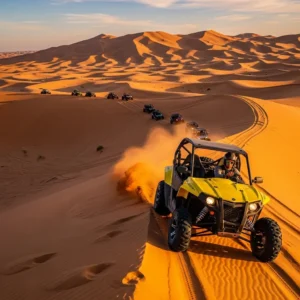
Typically, no. Extreme dune bashing is a modern sport and not part of the traditional Bedouin lifestyle. To maintain the authenticity and peaceful atmosphere, these tours usually involve a “nature drive” or “wildlife drive” in vintage Land Rovers or camels. This allows you to observe the desert flora and fauna gently. If you want dune bashing, you should book a standard adventure safari or a combo package that includes both.
3. What kind of food will be served?
The food is a highlight of the Traditional Bedouin Lifestyle Experience in the Desert. Instead of a generic BBQ, you will taste dishes that Bedouins actually ate or evolved into Emirati cuisine. Expect Harees (slow-cooked wheat and meat), Thareed (vegetable stew with bread), Ouzi (whole roasted lamb with rice), and grilled meats seasoned with local spices. Dessert includes Luqaimat (sweet dumplings) and fresh dates. It is a culinary discovery.
4. Can we sleep in the Bedouin tents?
Yes, many traditional experiences offer an overnight option. You can sleep inside the woven goat-hair tents (“Bayt Al Sha’ar”) or traditional stone dwellings. The bedding is usually a comfortable mattress on the floor with heavy blankets, as nights can be cold. Sleeping in the silence of the desert, exactly as the nomads did, is a profound experience. You wake up to a traditional breakfast.
5. Is this experience suitable for children?
Yes, it is fantastic for children. It is a living history lesson. They can learn about desert animals, ride camels, see falcons up close, and play in the sand. It is much more engaging than a museum. The absence of loud music and chaotic dune bashing makes it safer and more relaxed for younger kids. They also love the sweet Luqaimat dessert!
6. What should I wear for a traditional safari?
Modest, comfortable clothing is recommended to respect the culture and the environment. Long trousers and linen shirts are ideal. It protects you from the sun and sand. Since you will be sitting on cushions on the floor (Majlis style), loose clothing helps. Bring a jacket for the evening as the desert gets cold. You will also have the chance to try on traditional Kanduras and Abayas for photos.
7. Are there bathrooms at the traditional camp?
Yes, even though the camp looks ancient and authentic, modern hygiene standards are maintained. There are clean, private restroom facilities available, usually designed to blend in with the rustic surroundings. You do not have to worry about digging a hole in the sand! There are sinks with running water for washing up before meals.
8. Will I see any wildlife?
Yes, because these tours often take place in the Dubai Desert Conservation Reserve (DDCR) or similar protected areas, wildlife sightings are common. Without the noise of dune bashing cars, animals are less scared. You might see the Arabian Oryx (the national animal), Sand Gazelles, and various birds. The guide will help you spot tracks and burrows of smaller creatures like lizards and foxes.
9. Is alcohol served at the traditional camp?
Usually, no. To maintain the authenticity of the Bedouin culture (which is Islamic and does not consume alcohol), traditional heritage camps often do not serve alcohol. The focus is on Arabic coffee, tea, and camel milk. However, some operators might have a private area for it or serve it upon request, but it is not the norm. It is best to check the specific policy of the operator like https://royaldesertadventures.ae/ before booking.
10. How do we get to the camp?
You are picked up from your hotel in Dubai. Depending on the package, you might transfer to a vintage 1950s Land Rover at the desert gate. These open-top cars were the first motorized vehicles used by Bedouins in the 1950s and add to the historical feel. You then drive gently through the reserve to the Bedouin camp setup.
11. Can I try falconry myself?
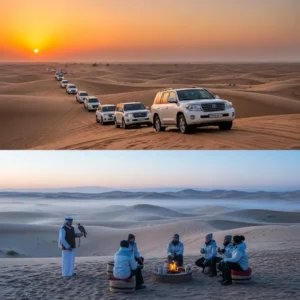
Yes, there is usually an interactive falconry session. A professional falconer will show you how to hold the bird on a gloved hand. You can take photos and look into the bird’s eyes. You will watch a demonstration of the bird flying and swooping for a lure. It is a safe and closely supervised interaction with these majestic predators.
12. What is the “Yola” dance?
Yola is a traditional Emirati folk dance performed by men. It involves spinning and throwing a rifle (or a stick mimicking a rifle) into the air and catching it, all to the rhythm of drums. It celebrates bravery and victory. In a Traditional Bedouin Lifestyle Experience in the Desert, this is the main entertainment, replacing the non-Emirati belly dance found in commercial safaris.
13. Is camel milk safe to drink?
Yes, the camel milk served at tourism camps is pasteurized and safe to drink. It is highly nutritious, containing more Vitamin C than cow’s milk and less fat. It has a slightly salty, rich taste. Trying it is part of the cultural immersion. Bedouins survived on it for months at a time.
14. Is the henna painting free?
In most traditional safari packages, a small henna design on the hand is included for free for women and children. If you want a more elaborate or full-arm design, the artist might charge a small extra fee. It is a natural plant dye and a beautiful, temporary souvenir of your trip.
15. How long does the experience last?
An evening heritage safari usually lasts about 7 hours. Pick up is around 2:30 PM – 3:00 PM, and you return around 9:30 PM – 10:00 PM. This gives you time for the nature drive, sunset, cultural activities, dinner, and stargazing. Overnight options extend until the next morning around 9:00 AM.
16. Do I need to tip the staff?
Tipping is not mandatory but is highly appreciated in Dubai culture. If you feel the guides, drivers, and camp staff provided an excellent Traditional Bedouin Lifestyle Experience in the Desert, a tip is a kind way to show gratitude. Bedouin culture is about generosity, and reciprocating that generosity is a nice gesture.
17. Is there electricity at the camp?
Authentic heritage camps often operate “off the grid” to simulate the past. They use solar power or generators for essential operations but rely on lamps, torches, and firelight for ambience. There might not be charging points for phones inside the main tent, so bring a power bank. This lack of bright electric light enhances the stargazing experience.
18. What language is the tour conducted in?
The tours are primarily conducted in English. The guides are fluent and highly knowledgeable about history and culture. Audio guides or specialized guides in other languages (German, French, Spanish, Chinese) might be available upon request or for private groups.
19. Can I book a private traditional safari?
Yes, you can book a private vehicle or an entire private camp set up for your group. This is popular for families, corporate retreats, or couples wanting privacy. You get your own guide, private dining area, and personalized attention. You can customize the activities to focus more on what you like, such as falconry or astronomy.
20. Why should I book with Royal Desert Adventures?
Booking with https://royaldesertadventures.ae/ ensures you are getting a legitimate, high-quality cultural experience. We don’t cut corners on authenticity. We use proper heritage campsites, serve high-quality traditional food, and employ guides who are passionate about the history of the UAE. We ensure that your Traditional Bedouin Lifestyle Experience in the Desert is respectful, educational, and unforgettable.