

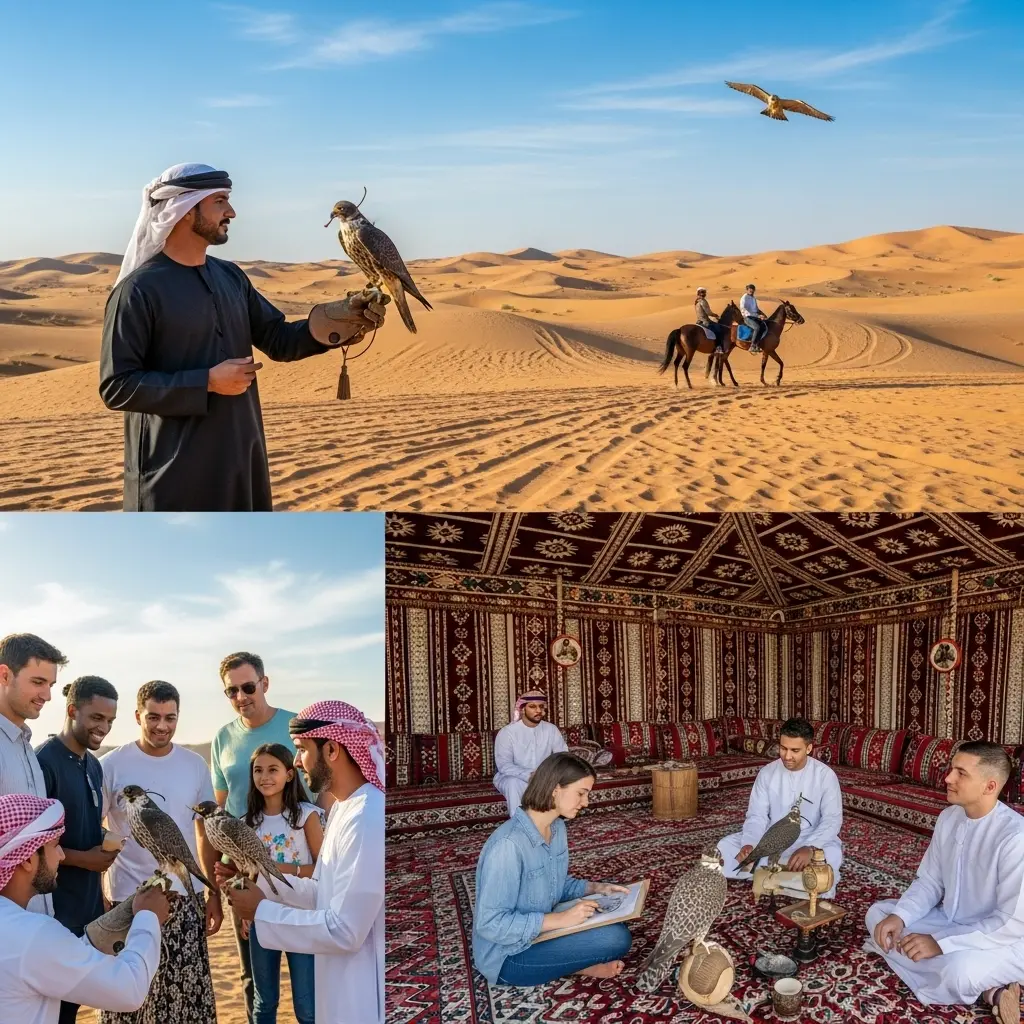
Dubai Desert Safari with Falconry: Discover the Beauty of Emirati Heritage
A Dubai desert safari is an exciting way to escape the busy city and discover the natural beauty of the Arabian Desert. While many visitors look forward to dune bashing, camel rides and sunset photography, there is another experience that offers something different: traditional falconry.
Falconry has a special place in Emirati heritage. For generations, falcons have been associated with desert life, traditional hunting practices and the relationship between people and nature. Watching a trained falcon in action gives visitors an opportunity to understand a fascinating part of the UAE’s cultural history.
A Dubai desert safari with falconry can be particularly appealing to travellers who enjoy wildlife, photography and cultural experiences. Rather than focusing only on adventure activities, this experience introduces you to one of the region’s most recognised traditions.
In this guide, Royal Desert Adventures explores what falconry involves, what you may see during a demonstration, how to prepare and what to check before booking.
1. What Is Falconry?
Falconry is the traditional practice of working with trained birds of prey. Falcons are known for their speed, sharp eyesight and impressive ability to pursue prey.
In the Arabian Peninsula, falconry developed as an important part of traditional desert life. Falcons were valued for their hunting abilities, and the knowledge of handling and training them was passed down through generations.
Today, falconry is also presented as a cultural experience for visitors. A demonstration can introduce guests to the birds, their characteristics, the equipment used by falconers and the relationship between a bird and its handler.
The experience is not simply about seeing a beautiful bird. It is an opportunity to learn about a tradition that remains an important part of Emirati identity.
2. What Happens During a Dubai Falconry Experience?
The exact programme depends on the tour operator and the type of safari you book. Some experiences focus mainly on falconry, while others combine a demonstration with a broader desert excursion.
A typical demonstration may include:
Meeting the falcon
You may have an opportunity to see a trained falcon at close range and learn about its appearance, behaviour and abilities.
The falconer can explain the bird’s characteristics and how it is cared for.
Learning about traditional equipment
Falconry involves specialised equipment, which may include a protective glove and other handling accessories.
Your guide may explain how these items are used and why they are important.
Watching a flying demonstration
One of the most memorable parts of a falconry experience is seeing the bird fly.
Depending on the programme, a trained falcon may fly towards a handler or respond to a controlled demonstration. Follow the falconer’s instructions and remain within the designated viewing area.
Taking photographs
Some experiences allow guests to photograph a falcon at close range or pose with the bird under the handler’s supervision.
Always ask before touching or approaching the animal.
3. Why Is Falconry Important in Emirati Culture?
The desert environment shaped many traditional ways of life in the Arabian Peninsula. Before modern transport and technology, communities relied on knowledge of the land, animals and natural resources.
Falconry became part of this heritage because trained birds could assist with hunting. The relationship between falconer and bird required patience, skill and an understanding of animal behaviour.
Today, falconry is appreciated as a cultural tradition as well as a demonstration of the remarkable abilities of birds of prey.
For visitors, learning about falconry adds context to a desert safari. It helps explain why certain animals, traditions and skills remain closely connected to the UAE’s history.
4. Falconry Safari vs a Regular Desert Safari
Not every desert safari has the same focus.
A regular adventure safari may concentrate on activities such as dune bashing, sandboarding and camel riding. A falconry-focused experience places more attention on birds of prey and cultural learning.
| Experience | Main focus |
|---|---|
| Regular desert safari | Desert driving, scenery and camp activities |
| Falconry experience | Birds of prey, demonstrations and heritage |
| Heritage safari | Traditional culture, nature and local customs |
| Wildlife-focused safari | Desert habitats and animal observation |
Some operators combine several of these elements in one itinerary. Check the package description carefully to understand how much time is allocated to falconry.
5. Can You Hold a Falcon?
Some specialised experiences may allow guests to hold a trained falcon while wearing a protective glove and following the handler’s instructions.
However, this is not guaranteed on every tour.
The decision may depend on the bird, the demonstration format, animal welfare considerations and the operator’s rules.
If holding a falcon is important to you, ask the tour provider before booking. Never attempt to handle, feed or approach a bird without permission from its handler.
A respectful experience should put the animal’s welfare first.
6. Is a Falconry Desert Safari Suitable for Families?
A falconry demonstration can be interesting for families because it offers children and adults an opportunity to learn about birds of prey.
Children may enjoy seeing the bird up close and watching it fly. It can also introduce younger visitors to wildlife and traditional cultural practices.
Parents should check the age requirements and supervision arrangements with the operator.
Explain to children that a falcon is a trained wild bird, not a domestic pet. They should remain calm, avoid sudden movements and follow all instructions.
Families should also consider the wider safari itinerary. If the package includes dune bashing, check whether the vehicle ride is suitable for every member of the group.
7. What Should You Wear?
Comfortable clothing is best for a desert experience.
Consider these practical suggestions:
- Wear lightweight clothing suitable for the weather.
- Choose comfortable footwear for walking on sand.
- Bring sunglasses for bright conditions.
- Apply sunscreen before going outdoors.
- Carry a light jacket during cooler evenings.
- Avoid loose accessories that could become uncomfortable in the wind.
If you plan to take photographs, choose clothing that allows you to move comfortably while standing or walking.
8. Photography Tips for a Falconry Demonstration
Falcons are impressive subjects for photography, but capturing a flying bird requires patience.
Use natural light
Morning and late-afternoon light can create attractive photographs without the harsh appearance of strong midday sunlight.
Focus on the bird
Try to keep the falcon in focus rather than concentrating only on the surrounding scenery.
Capture different moments
Photographs of the bird resting on a handler’s glove, preparing for flight or returning to its handler can tell a more complete story.
Follow the photographer’s and falconer’s instructions
Do not move into restricted areas or use equipment in a way that distracts the bird.
Protect your camera
Desert sand can enter small openings in cameras and lenses. Keep equipment protected when it is not being used.
9. Can Falconry Be Combined with Other Desert Activities?
Depending on the package, falconry may be combined with other desert experiences.
These can include:
- A guided desert drive.
- Camel riding.
- Sandboarding.
- Sunset photography.
- A traditional meal.
- Cultural entertainment.
- Wildlife observation.
Some premium experiences focus more heavily on falconry and nature, while other packages include it as one part of a wider itinerary.
Do not assume every activity is included. Ask for a written list of inclusions before confirming your reservation.
10. When Is the Best Time for a Falconry Desert Safari?
The cooler months are generally more comfortable for spending time outdoors in Dubai.
From November to March, visitors often enjoy more pleasant conditions for walking, photography and outdoor demonstrations.
During warmer months, early-morning or late-afternoon experiences may be more comfortable, depending on the operator’s schedule and weather conditions.
The best time also depends on the type of experience. A morning programme may offer a different atmosphere from an evening safari with sunset views.
Confirm the operating season and exact timing with your chosen provider.
11. How to Choose a Falconry Safari Operator
Choosing the right operator is important, particularly when an experience involves animals.
Before booking, ask:
- Is a falconry demonstration included in the package?
- How long does the demonstration last?
- Is the experience guided by a knowledgeable falconer?
- Are photographs allowed?
- Is guest interaction with the bird permitted?
- What other activities are included?
- Are hotel transfers available?
- What are the cancellation and rescheduling conditions?
You should also look for clear information about animal welfare and responsible handling.
A good experience should provide useful information about the bird rather than treating it only as a photo opportunity.
12. Book Your Dubai Desert Safari with Royal Desert Adventures
If you want to explore a different side of the Arabian Desert, a falconry experience can add cultural depth to your Dubai holiday.
Watching a trained bird of prey, learning about traditional falconry and enjoying the desert scenery can create a memorable experience for visitors interested in nature and Emirati heritage.
Contact Royal Desert Adventures to explore available desert safari options and ask whether a falconry experience can be included in your preferred itinerary.
Before confirming your booking, check the demonstration arrangements, available activities, transport and package inclusions.
Frequently Asked Questions
1. What is a Dubai desert safari with falconry?
It is a desert excursion that includes a falconry demonstration or encounter with trained birds of prey. Some packages combine it with other desert activities.
2. Is falconry part of every Dubai desert safari?
No. Falconry is available on selected experiences and is not automatically included in every standard safari.
3. Can tourists hold a falcon in Dubai?
Some operators may allow supervised interaction with a trained falcon. This depends on the experience and the handler’s instructions.
4. Is falconry suitable for children?
It can be an educational experience for families, but parents should check age restrictions and supervision requirements.
5. How long does a falconry demonstration last?
The duration varies by operator and package. Ask for the expected schedule before booking.
6. Can I take photographs with a falcon?
Some experiences permit photographs under supervision. Follow the handler’s instructions and respect any restrictions.
7. What should I wear for a falconry safari?
Wear comfortable, weather-appropriate clothing, secure footwear and sun protection.
8. Is a falconry safari different from dune bashing?
Yes. Falconry focuses on birds of prey and cultural heritage, while dune bashing is an off-road driving activity. Some packages may combine both.
9. Is falconry available in the morning?
Some specialised falconry experiences operate in the morning, while others may have different schedules. Confirm availability with the operator.
10. How can I book a falconry experience?
Contact your chosen desert safari operator and confirm that a falconry demonstration is included in the package before making payment.
Final Tip: A falconry experience is an opportunity to appreciate the desert beyond its dunes. Take time to listen to the falconer, learn about the bird and enjoy this remarkable part of Emirati heritage.