
The Luminous Sands: Your Essential Guide to Capturing Dubai Desert Magic
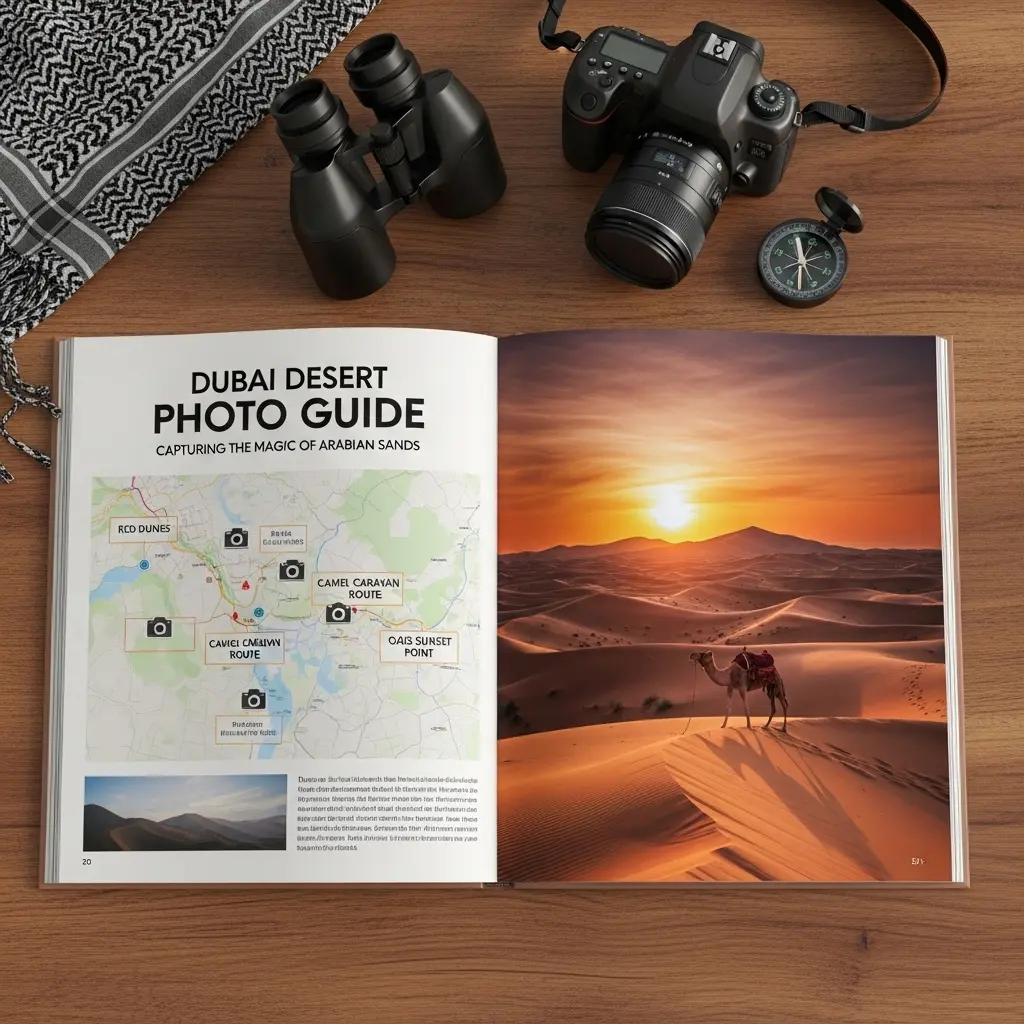
This is your essential Dubai Desert Photo Guide. It is the only resource you need.
The desert surrounding Dubai is a breathtaking, dynamic landscape. It offers unmatched opportunities for photographers.
The shifting sands, the intense light, and the cultural backdrop combine. They create a perfect subject.
You have the opportunity to truly capture desert magic. This goes beyond simple snapshots.
This comprehensive Dubai Desert Photo Guide will transform your images. You will learn the secrets of the pros.
It covers everything from gear preparation to finding the best photo spots Dubai has to offer.
Prepare to create truly memorable images during your next desert safari photography trip.
17 Ultimate Secrets to Capture Desert Magic in 2026
To achieve professional desert shots, you must understand the environment. The desert is harsh and unforgiving.
It is also incredibly rewarding to photograph. This Dubai Desert Photo Guide breaks down the complexity.
These 17 secrets will ensure you elevate your images. They turn good photos into great ones.
1. Master the Golden Hour Desert Light
The desert’s light is famous for a reason. The most important time is the golden hour desert light.
This is the hour immediately after sunrise and before sunset. The light is soft and warm.
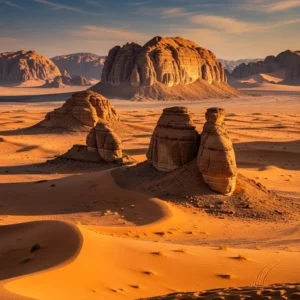
It creates long, defined shadows. These shadows highlight the texture of the Arabian sandscapes.
This light is crucial for capture desert magic. Schedule your entire shoot around it.
2. Protect Your Gear from the Dubai Sand Experience
Sand is the biggest enemy of a camera. The fine Dubai sand can destroy lenses and motors.
Always use a waterproof bag for your gear. Change lenses only inside a dust-free vehicle.
This simple step ensures your valuable equipment remains safe.
The Dubai Desert Photo Guide insists on this protection.
3. Utilize the Long Shadows
Long shadows add drama and depth to your image. They are essential for a professional desert shot.
Shoot low to the ground during the golden hour desert. This maximizes the shadow length.
The shadows help to define the rolling curves of the sandscapes. They are part of capture desert magic.
4. Focus on Arabian Sandscapes and Lines
The natural flow of the dunes provides incredible leading lines. Use them to draw the viewer’s eye.
Shoot from a low vantage point to emphasize these lines. They create depth in your images.
The patterns in the sand, created by the wind, are an element of the Dubai Desert Photo Guide.
These lines are what make the Arabian sandscapes so compelling.
5. Perfect Your Sunset Photography Dubai Exposure
The contrast between the bright sky and the darker sand can be challenging. This is especially true for sunset photography Dubai.
Use spot metering on the subject, or slightly underexpose the image. This preserves the detail in the sky.
A slightly underexposed photo retains color. You can bring up the shadow details later in editing.
This technique is a key component of the Dubai Desert Photo Guide.
6. Incorporate a Focal Point or Subject
A vast landscape needs a sense of scale. Include a subject in the foreground to provide this.
A camel, a 4×4 vehicle, or a person standing on a dune provides context. This completes the desert safari photography.
The contrast between the subject and the large landscape helps to capture desert magic.
7. Find the Best Photo Spots Dubai Offers
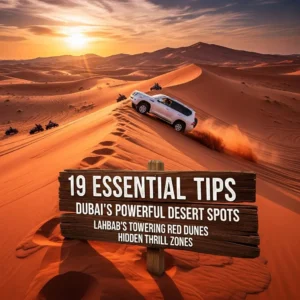
The Al Badayer “Red Dunes” area is globally famous. Its vibrant color is ideal for the ultimate photo guide.
Ask your guide to take you to untouched dunes. Fresh, wind-swept sand creates better lines.
This area offers the best photo spots Dubai desert has to offer.
Always book a reputable operator like https://royaldesertadventures.ae/ for access to prime locations.
8. Use a Telephoto Lens for Compression
A telephoto lens (e.g., 70-200mm) compresses the distance between foreground and background.
It makes the dunes appear closer together and more dramatic. This enhances the desert safari photography.
This technique creates a powerful image. It is a vital photography tip for tourists.
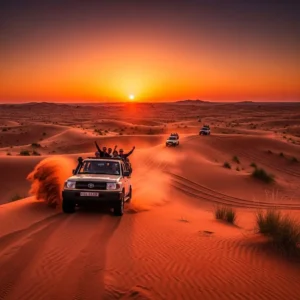
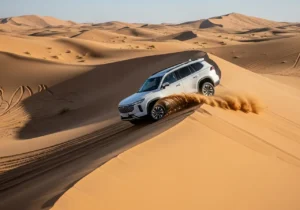
9. Capture the Action: 4×4 Dune Bashing
The high-energy dune bashing is a spectacular subject. It requires fast shutter speeds.
Use a shutter speed of 1/1000th of a second or faster to freeze the sand spray.
The movement provides a unique perspective. This is a dynamic part of the Dubai Desert Photo Guide.
10. Stay for the Blue Hour
The blue hour follows the sunset. The sky takes on a deep, rich indigo color.
This light is cooler and beautifully contrasts the remaining warmth on the sand. This is great for sunset photography Dubai.
It offers a different, moody palette for your professional desert shots.
11. The Cultural Element of the Ultimate Photo Guide
The cultural activities at the camp provide rich photo opportunities. Focus on portraits and detail shots.
Capture the Henna, the traditional costumes, and the falconry. These add narrative depth.
This is part of the ultimate photo guide to the full desert experience.
12. Master Exposure Bracketing
In high-contrast scenes, take three photos: one normal, one underexposed, and one overexposed.
This technique, called bracketing, is essential for sunset photography Dubai.
You can later combine these images in editing (HDR). This ensures perfect detail in shadows and highlights.
This is a key photography tip for tourists aiming for perfection.
13. Focus on Details and Texture
The desert is all about texture. Focus on the wind-blown ripples, the cracked earth, or camel footprints.
These close-up shots complement the wide landscapes. They add variety to your portfolio.
Texture shots are perfect for showcasing the unique Arabian sandscapes.
14. Utilize the Table for Quick Reference
This table summarizes the best camera settings for desert safari photography.
| Scenario | Shutter Speed (SS) | Aperture (f/) | ISO | Notes |
| Golden Hour Desert | 1/125 to 1/250 | f/8 to f/11 | 100-200 | Deep focus, rich colors. |
| 4×4 Dune Bashing | 1/1000 or faster | f/4 to f/5.6 | 400+ | Freeze the action, capture sand spray. |
| Night Sky/Stars | 15 to 30 seconds | f/2.8 to f/4 | 1600+ | Requires tripod, use wide lens. |
| Portraits (Camp) | 1/100 to 1/200 | f/2.8 to f/4 | 200-800 | Blur background, highlight subject. |
Following this table is a pro photography tip for tourists.
15. The Wide-Angle Perspective for Arabian Sandscapes
A wide-angle lens (16-35mm) is essential for sweeping landscapes. It emphasizes the vastness of the scene.
Use this lens to include a large expanse of the sky and the dunes. This helps to capture desert magic.
It ensures you get the full scope of the Arabian sandscapes.
16. Post-Processing: Enhance the Dubai Desert Photo Guide Results
Editing is where your professional desert shots truly shine. Adjust the White Balance for warmth.
Increase the clarity and contrast to emphasize the sand textures. Boost the saturation of the sky slightly.
These adjustments bring your Dubai Desert Photo Guide images to life.
17. The Best Photo Spots Dubai: Beyond the Dunes
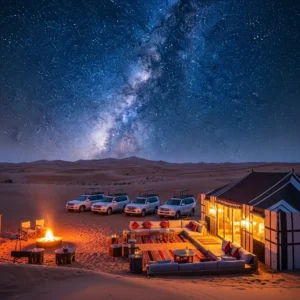
Don’t forget the Beduin camp. It offers unique architectural and cultural photo opportunities.
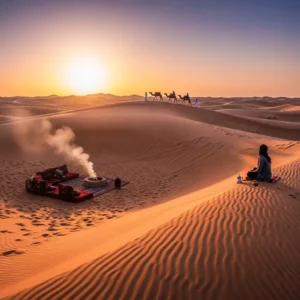
Capture the quiet moments: a guide making coffee, a camel resting, or the camp lights glowing.
This diversity of shots makes your desert safari photography portfolio complete.
Detailed Techniques: Achieving Professional Desert Shots
Moving beyond the basics, advanced techniques can differentiate your work. This is the goal of the Dubai Desert Photo Guide.
Understanding Lens Choice for the Ultimate Photo Guide
Choosing the right lens is a key part of the ultimate photo guide.
Wide Lenses for the Dubai Desert Photo Guide
These are essential for capturing the scale of the landscape. They make the dunes look larger.
Use them to place the sun near the corner of the frame. This creates powerful lens flare.
This is critical for capture desert magic during the day.
Telephoto Lenses for Compression and Detail
The telephoto is perfect for isolating details. It stacks the distant dunes on top of each other.
This creates the illusion of a towering mountain range. This is a favorite technique for professional desert shots.
It turns the Arabian sandscapes into layered art.
Prime Lenses for Low Light
A fast prime lens (f/1.4 or f/1.8) is crucial for the night sky. The large aperture gathers maximum light.
It allows you to capture desert magic even in complete darkness.
This is a vital photography tip for tourists attempting astrophotography.
Mastering Exposure: The Histogram is Your Friend
Your camera’s histogram shows the distribution of tones. It is crucial for sunset photography Dubai.
Avoid clipping (spikes at the far left or right). Clipping means lost data.
Check the histogram after every shot during the golden hour desert light. This ensures perfect exposure.
The Dubai Desert Photo Guide encourages using this tool religiously.
Advanced Composition for Best Photo Spots Dubai
Composition is the arrangement of elements. It is what makes an image appealing.
Rule of Thirds for Desert Safari Photography
Place key subjects along the intersecting lines of a 3×3 grid. This creates balance.
Place the horizon on the top or bottom third, not in the center. This is key to effective desert safari photography.
This rule provides harmony to your shots.
Symmetry in Arabian Sandscapes
Look for symmetrical elements. The reflection of a subject in a shallow pool of water (rare, but possible).
Or, the perfect symmetry of a dune crest. Symmetrical images are naturally pleasing to the eye.
The Dubai Desert Photo Guide encourages you to seek out this balance.
Special Considerations for Mobile Photography (Photography Tips Tourists)
Mobile phones can take stunning images. They just require different techniques.
Use the Grid Feature
The grid helps you apply the rule of thirds. It is a simple but effective photography tip for tourists.
It immediately improves the composition of your ultimate photo guide images.
Shoot in RAW or Pro Mode
If your phone allows, shoot in RAW or a high-quality “Pro” mode. This captures more data.
The extra data gives you more flexibility during post-processing. This is key to capture desert magic on a phone.
External Lens Attachments
Consider a small wide-angle or telephoto lens attachment. These are inexpensive.
They significantly expand the versatility of your mobile desert safari photography.
This helps mobile users achieve professional desert shots.
Gear Checklist for Your Dubai Desert Photo Guide Trip
A detailed gear list is necessary for the Dubai Desert Photo Guide. Proper preparation prevents frustration.
Essential Camera Body and Lens Kit
-
Camera Body: DSLR or mirrorless. Bring a spare battery due to the extreme temperatures.
-
Lenses: Wide-angle (16-35mm), Mid-zoom (24-70mm), Telephoto (70-200mm).
-
Filters: Polarizing filter (reduces glare), Neutral Density (ND) filter (allows long exposure).
Protection and Cleaning: The Ultimate Photo Guide Necessity
-
Sand Protection: Rain cover or plastic bag to wrap the camera in transit.
-
Cleaning Kit: Air blower (never wipe sand!), lens cleaning cloth, and brush.
-
Tripod: Absolutely essential for sunset photography Dubai and night shots.
Accessories for Capture Desert Magic
-
Remote Shutter Release: Prevents camera shake during long exposures.
-
Headlamp/Flashlight: Useful for setting up gear in the dark.
-
Extra Memory Cards: The beautiful scenes demand a lot of storage.
Always check if your operator, like https://dubaidesertsafarie.com/, offers secure storage for your gear during the 4×4 ride.
Post-Processing: Transforming Your Arabian Sandscapes
Editing is the final step in the Dubai Desert Photo Guide. It elevates your work to professional desert shots.
Color Grading for the Golden Hour Desert
Focus on enhancing the warmth of the light. Adjust the color temperature slider towards yellow/orange.
Increase the “Vibrance” over “Saturation.” Vibrance boosts muted colors without oversaturating skin tones.
This makes the golden hour desert light truly pop.
Clarity and Detail
Increase the “Clarity” and “Texture” sliders gently. This enhances the ripples and lines in the Arabian sandscapes.
Be careful not to overdo it. Excessive clarity can make the image look fake.
This technique is essential for showcasing the fine Dubai sand experience.
Cropping and Straightening
Always straighten the horizon. A crooked horizon is the hallmark of amateur photography tips tourists ignore.
Use cropping to improve composition. Crop tightly on a subject for a powerful professional desert shot.
The final edit brings your Dubai Desert Photo Guide journey to a powerful conclusion.
Why This Dubai Desert Photo Guide Matters
The Arabian Desert is more than just sand. It is a place of profound beauty and ancient culture.
Your photographs should reflect this depth. They should tell a story.
This Dubai Desert Photo Guide gives you the tools to tell that story masterfully.
From securing your gear from the fine Dubai sand to capturing the subtle light changes.
The secrets outlined here are the difference between a good photo and a truly mesmerizing one.
It ensures every single one of your images truly helps to capture desert magic.
Book your adventure with a trusted name, perhaps one found on https://hafiztourism.com/. Then, apply this guide.
The Dubai Desert Photo Guide is your passport to amazing visuals.
15 Frequently Asked Questions (FAQs) about the Dubai Desert Photo Guide
1. What is the single most important action for a photographer to take when preparing for a Dubai Desert Photo Guide trip?
The most important action is gear protection. Due to the extreme fine quality of the Dubai sand, photographers must seal their equipment. Use sealed plastic bags or professional waterproof casings. Never change lenses in the open desert environment, as fine sand can enter the camera body and damage internal mechanics, jeopardizing your ability to capture desert magic.
2. How can I protect my lens from dust and sand when shooting during the 4×4 ride or during the desert safari photography action?
When shooting action during desert safari photography, use an Air Blower to remove surface dust before changing lenses or packing up. A UV filter or a clear protective filter should always be mounted on the lens. This protects the actual glass element from the constant bombardment of fine sand particles. Never wipe the lens glass with a cloth if sand is present, as this will scratch the coating.
3. What is the ideal time, in terms of light, to apply the techniques of the Dubai Desert Photo Guide for sunset photography Dubai?
The optimal time for sunset photography Dubai is the 30-minute window before and 30 minutes after the actual sun sets. The “golden hour desert” before sunset provides warm, soft sidelight. The “blue hour” immediately after sunset offers a deep, rich indigo sky that beautifully contrasts with the warm camp lights or a silhouette of the dunes.
4. How can I safely include myself or a model in the shot to provide a sense of scale for the Arabian sandscapes?
To provide scale in your Dubai Desert Photo Guide images, place a small human subject on the top third of the frame, often standing on a dune crest. Ensure the subject is looking into the vast Arabian sandscapes, not at the camera. Use the telephoto lens compression technique to make the dunes behind them appear closer and larger, adding drama and emphasis to the subject.
5. What are the best camera settings for professional desert shots of the night sky during a desert safari trip?
For night sky professional desert shots, you need a tripod. Use a wide-angle lens (24mm or wider). The recommended settings are: Aperture at its widest (f/2.8 or f/4), Shutter Speed between 15 and 30 seconds (to avoid star trails), and ISO between 1600 and 3200. Focus should be manually set to infinity.
6. Are there any restrictions on flying drones for aerial desert safari photography and to capture desert magic?
Drone usage in the UAE is highly regulated. You must obtain permits from the Dubai Civil Aviation Authority (DCAA) well in advance. Unauthorized drone flying, especially over tourist areas or near airports, can result in heavy penalties. Always check the current regulations before planning aerial desert safari photography. It’s safer to hire a licensed professional for this.
7. How does the Dubai Desert Photo Guide advise handling the high contrast when shooting against the rising or setting sun?
The high contrast during the golden hour desert is best handled by using exposure bracketing. Take one shot for the highlights (sky), one for the shadows (sand), and one balanced shot. You can also use a Graduated Neutral Density (GND) filter which darkens the sky while leaving the foreground untouched, effectively balancing the exposure in-camera.
8. What are the best photo spots Dubai desert operators utilize for the iconic “lone camel” or “falconry” shots?
The best photo spots Dubai operators use are typically pre-scouted areas deep in the Al Badayer dunes. These spots feature long, undisturbed dune lines and are positioned to catch the sun perfectly. For falconry, the spots are usually open, flat areas near the camp or a dedicated stop, allowing for clean, unobstructed backgrounds. These locations are carefully chosen for the ultimate photo guide experience.
9. What are effective photography tips for tourists using a mobile phone to get great landscape photos in the desert?
Mobile photography tips for tourists should focus on composition and editing. Use the phone’s grid overlay for the rule of thirds. Tap on the brightest part of the sky (the sun) to properly expose the highlights. Use the “Pro” or “Manual” mode to lower the ISO and Shutter Speed for night shots. Edit using high-quality apps like Lightroom Mobile to enhance color and clarity.
10. How can I ensure I don’t miss the fast-paced action shots during the 4×4 dune bashing part of the Dubai Desert Photo Guide tour?
To avoid missing action shots during the Dubai Desert Photo Guide tour, use your camera’s continuous shooting mode (burst mode) and switch to Shutter Priority mode (S or Tv). Set the shutter speed to at least 1/1000th of a second. Pre-focus on the area where the vehicle will be, then hold the shutter button down as the action passes for a rapid series of professional desert shots.
11. Is it advisable to use flash for portraits at the Beduin camp during the cultural segment of the desert safari photography?
Using direct flash for portraits at the Beduin camp is generally not advisable as it creates harsh shadows and flattens the image. Instead, use the ambient light from the campfires or lanterns. You can use a small external flash or an LED light aimed off-camera (bounced off a tent or wall) to create soft, flattering, and atmospheric light for your desert safari photography portraits.
12. What are the necessary post-processing steps to make the red color of the Arabian sandscapes truly stand out in my photos?
To enhance the red color in your Arabian sandscapes, focus on color grading. In your editing software, specifically adjust the “Orange” and “Red” color channels (HSL panel). Increase the Saturation and Luminance of these colors. Also, slightly warm up the White Balance (Color Temperature) to bring out the golden tones of the golden hour desert light.
13. How do external operators like https://royaldesertadventures.ae/ assist with obtaining the best photo spots Dubai for large groups?
Reputable operators like https://royaldesertadventures.ae/ assist large groups by using multiple 4×4 vehicles to access remote, uncrowded dunes. They will often block off an area temporarily, ensuring the sand remains pristine for the best photo spots Dubai shots. Guides are trained to position vehicles strategically for optimal background composition, enhancing the ultimate photo guide experience.
14. Should I rent specialized camera gear in Dubai for the Dubai Desert Photo Guide trip, or should I bring my own equipment?
If you are planning intensive Dubai Desert Photo Guide shooting, it is safer to bring your own gear as you are familiar with it. However, if you need a specialized lens (like a super-telephoto for wildlife or a fast prime for night shots) and do not want to risk airport luggage, renting from a local Dubai camera shop is a viable alternative for your photography tips for tourists session.
15. What are the most common mistakes in sunset photography Dubai and how does the Dubai Desert Photo Guide recommend avoiding them?
The most common mistake in sunset photography Dubai is clipping the highlights (blowing out the sun/sky). This occurs when the camera overexposes the bright areas. The Dubai Desert Photo Guide recommends setting your exposure based on the brightest part of the sky, using the histogram to confirm, or using the bracketing technique mentioned in the ultimate photo guide to ensure you capture the full dynamic range of the scene.