

Desert Safari Sustainability 13 Vital Secrets for Eco Tourism
The golden sands of Dubai are iconic.
They stretch for miles.
They shimmer in the heat.
For decades, they have been a playground.
Tourists flock here for thrills.
They come for the speed.
They come to conquer the dunes with high-powered engines.
But the desert is not just a playground.
It is a living, breathing ecosystem.
It is fragile.
It is ancient.
And it is under threat.
This brings us to the most important topic in modern travel.
Desert Safari Sustainability.
It is no longer a niche concept.
It is a necessity.
If we want our children to see the Arabian Oryx.
If we want the Ghaf trees to survive.
We must change how we explore.
In 2026, the discerning traveler chooses responsibly.
They look for experiences that give back.
They look for operators who respect the land.
This guide is your handbook to ethical adventure.
We will explore the hidden life of the desert.
We will discuss the conservation efforts that are saving species from extinction.
We will show you how to have an amazing time without leaving a scar on the sand.
When you book with https://royaldesertadventures.ae/, you are making a choice for the future.
Let us embark on a green journey into the heart of Arabia.
The Fragile Beauty of the Desert Ecosystem
Most people look at the desert and see nothing.
They see empty space.
They see a pile of sand.
This is a dangerous misconception.
The desert is teeming with life.
It is a complex web of biology.
Under the sand, there are root systems.
These roots hold the dunes together.
There are burrows where reptiles hide from the sun.
There are seeds waiting for a single drop of rain.
When we drive aggressively over this landscape, we disturb it.
Heavy tires crush the burrows.
They destroy the vegetation.
They loosen the soil, leading to erosion.
Desert Safari Sustainability begins with understanding this fragility.
It starts with respect.
Every footstep matters.
Every tire track matters.
The desert recovers slowly.
A track made today might be visible for years.
We must treat the dunes like a coral reef.
You would not stomp on coral.
You should not thrash the dunes without care.
The Dubai Desert Conservation Reserve (DDCR)
This is the crown jewel of conservation.
The DDCR is a sanctuary.
It covers 225 square kilometers.
That is almost 5% of Dubai’s total land area.
It was created to protect the habitat.
It is fenced off.
It is guarded.
Not everyone can enter.
Only select tour operators have the privilege.
This exclusivity is the key to Desert Safari Sustainability.
By limiting the number of cars, the land heals.
The wildlife returns.
Inside the reserve, the rules are strict.
No littering.
No speeding.
No driving off the designated tracks.
This ensures that the animals are not stressed.
It ensures that the plants can grow.
When you visit the DDCR, you are a guest in nature’s home.
You are not an intruder.
A portion of your ticket fee goes directly to conservation.
It funds scientific research.
It funds the rangers who patrol the area.
This is tourism in its purest form.
The Miracle of the Arabian Oryx
The story of the Arabian Oryx is inspiring.
It is a story of hope.
In the 1970s, the Oryx was extinct in the wild.
They were hunted to the last animal.
They existed only in zoos and private collections.
But the UAE leadership had a vision.
They started a breeding program.
They reintroduced the Oryx to the desert.
Today, thanks to Desert Safari Sustainability efforts, they are thriving.
There are hundreds of them in the DDCR.
Seeing a white Oryx against the red sand is magical.
They are majestic.
They are the spirit of the desert.
When you go on a sustainable safari, you see them.
You see them living wild and free.
This sighting is worth more than any roller coaster ride.
It is a connection to history.
It is a testament to what humans can do when we care.
You might also see the Sand Gazelle.
They are fast and shy.
Or the Arabian Gazelle.
These animals rely on the protection of the reserve.
Shifting Gears: Nature Drives vs. Dune Bashing
This is the biggest change in the industry.
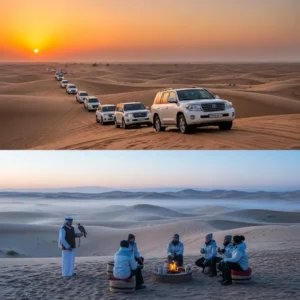
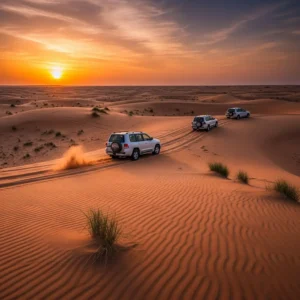
The traditional safari is about “bashing”.
It is about adrenaline.
It involves high revs and sliding tires.
While fun, it is high impact.
It burns a lot of fuel.
It creates noise pollution.
The sustainable alternative is the “Nature Drive”.
This is a slow exploration.
The car moves gently.
It sticks to established paths.
The goal is not to scream.
The goal is to observe.
Your driver becomes a guide.
They stop to show you animal tracks.
They point out medicinal plants.
They explain the geology of the dunes.
This is the essence of Desert Safari Sustainability.
It changes the focus from the car to the environment.
You learn.
You appreciate.
You engage with the surroundings.
Many travelers find this deeper experience more rewarding.
It stays with you longer.
You can find these specialized tours at https://dubaidesertsafarie.com/.
The War on Plastic
Plastic is the enemy.
In the desert, a plastic bag is a killer.
It does not degrade.
It flies with the wind.
Camels mistake it for food.
They eat it.
It creates a blockage in their stomach.
It leads to a slow and painful death.
This is a tragedy we must prevent.
Sustainable operators have declared war on plastic.
They have banned single-use bottles.
They provide reusable metal flasks.
They use water dispensers at the camp.
They use bamboo or metal cutlery.
This reduction in waste is a pillar of Desert Safari Sustainability.
When you book, ask about their plastic policy.
If they hand you a plastic bottle, challenge them.
Bring your own reusable bottle.
Be part of the solution.
Even a small piece of wrapper can be fatal.
Keep your trash in your pocket.
Leave the desert cleaner than you found it.
Solar Power in the Sand
The sun is abundant in Dubai.
It is a limitless source of energy.
Traditional camps run on diesel generators.
These are loud.
They emit fumes.
They pollute the pristine air.
The new wave of camps is going solar.
They use photovoltaic panels.
They store energy in batteries.
This powers the lights.
It powers the kitchens.
It creates a silent camp.
At night, you don’t hear a generator humming.
You hear the wind.
You hear the crickets.
You hear the silence of the void.
Desert Safari Sustainability embraces technology.
It proves that luxury does not need to be wasteful.
Solar lights are also less intrusive.
They reduce light pollution.
This helps the nocturnal animals.
It also helps you see the stars better.
Water Conservation Strategies
Water is gold in the desert.
Wasting it is a crime against nature.
Sustainable camps are smart about water.
They use low-flow taps.
They recycle greywater for irrigation.
They use this water for the indigenous plants.
They do not have massive swimming pools.
They focus on efficiency.
This teaches guests about the value of resources.
The Bedouins lived on very little water.
They respected every drop.
A sustainable safari reconnects us with that value.
It makes us think about our consumption back home.
It is an educational experience.
Operators like https://hafiztourism.com/ are leading the way in these practices.
Cultural Sustainability: Preserving Heritage
Sustainability is not just about nature.
It is about people.
It is about culture.
Mass tourism can dilute culture.
It can turn traditions into cheap shows.
Desert Safari Sustainability protects heritage.
It focuses on authentic interactions.
You meet real Bedouins.
You hear their stories.
You learn about their skills.
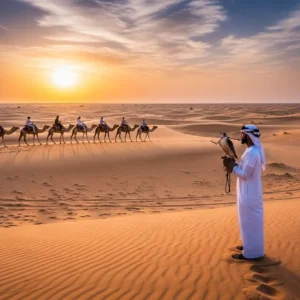
Falconry is not just a show.
It is a way of life.
It was a survival method.
Sustainable tours explain this context.
They treat the birds with respect.
They do not overwork them.
They educate the guests.
Weaving is another tradition.
You see how tents were made.
You understand the resilience of the people.
Preserving this knowledge is vital.
It ensures that the next generation knows their roots.
It gives dignity to the local culture.
The Food: Local and Organic
What we eat matters.
Importing food has a huge carbon footprint.
Sustainable safaris source locally.
They buy vegetables from UAE farms.
They buy fish from local fishermen.
They serve traditional Emirati dishes.
This supports the local economy.
It reduces food miles.
It tastes better because it is fresh.
Food waste is another issue.
Large buffets create huge waste.
Sustainable camps often serve plated meals.
Or they cook to order.
They compost the leftovers.
They turn waste into fertilizer.
This creates a closed loop.
It is a delicious way to practice Desert Safari Sustainability.
You enjoy a feast that is kind to the planet.
Vintage Vehicles: A Classy Low-Impact Option
There is a trend towards vintage.
Land Rovers from the 1950s.
These cars are lighter than modern SUVs.
They are slower.
This means they do less damage to the sand.
They consume less fuel per hour because they are driven gently.
They are open-top.
This connects you to the elements.
You feel the breeze.
You smell the sage.
It is a nostalgic experience.
It is also a sustainable one.
Retrofitted with better engines, they are efficient.
Some operators are even converting them to electric.
Imagine a silent vintage car gliding over the dunes.
This is the future of Desert Safari Sustainability.
It combines style with responsibility.
It is exclusive and eco-friendly.
The Role of the Guide
The guide is the bridge.
They connect you to the land.
In a sustainable safari, the guides are experts.
They are conservationists.
They are trained in biology and history.
They are not just drivers.
They teach you how to spot tracks.
They explain the life cycle of the desert.
They instill respect in the guests.
They stop you from walking on fragile plants.
They pick up trash if they see it.
Their passion is contagious.
You leave the tour with a new perspective.
You become an ambassador for the desert.
Investment in staff training is a key part of Desert Safari Sustainability.
High-quality guides ensure high-quality behavior from tourists.
Stargazing: The Ultimate Low-Carbon Activity
The best activity uses zero energy.
It is looking up.
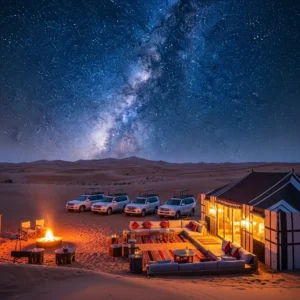
The desert sky is a masterpiece.
Away from the city lights, the stars are brilliant.
Stargazing is central to sustainable tourism.
It requires no fuel.
It creates no waste.
It is pure awe.
Guides use laser pointers to show constellations.
They tell stories about how Bedouins navigated.
They used the stars as a map.
This connects you to the universe.
It is a spiritual moment.
It reminds us of our place in the cosmos.
Many sustainable camps turn off all lights for this.
Total darkness.
Total silence.
This is the pinnacle of the Desert Safari Sustainability experience.
Supporting Scientific Research
Your visit helps science.
The fees paid to the DDCR support ecologists.
They study the animals.
They track the movement of the Oryx.
They monitor the health of the plants.
They conduct breeding programs.
Without tourism revenue, this work would stop.
So, by choosing a sustainable tour, you are a donor.
You are funding the protection of the species.
You are helping to expand the reserve.
There are plans to reintroduce other animals.
Maybe the Arabian Leopard one day.
Your ticket contributes to this vision.
It is a direct positive impact.
You can feel good about where your money goes.
The Future: Dubai 2040 Urban Master Plan
Dubai has a green vision.
The 2040 plan aims to double green spaces.
It aims to protect 60% of the emirate as nature reserves.
Desert Safari Sustainability is at the core of this.
The government is pushing for eco-tourism.
They are setting stricter regulations.
They are encouraging electric vehicles in the desert.
They are promoting glamping over concrete hotels.
The future is bright.
It is green.
As a tourist, you drive this demand.
By choosing sustainable options, you signal the market.
You tell the industry that you care.
You accelerate the change.
Choosing the Right Operator
How do you know who is green?
Look for certifications.
Look for the “DDCR Approved” badge.
Read their sustainability policy.
Do they mention plastic?
Do they mention solar?
Check their reviews.
Do people mention wildlife?
Do they mention clean camps?
Price is often an indicator.
Sustainable practices cost more.
A cheap safari cuts corners.
It relies on volume.
A sustainable safari relies on quality.
It limits numbers.
Paying a bit more ensures ethical standards.
It ensures fair wages for staff.
It ensures animal welfare.
Trust established names like https://royaldesertadventures.ae/.
Conclusion
The desert is a gift.
It is a sanctuary of peace in a busy world.
It deserves our protection.
Desert Safari Sustainability is not just a choice.
It is a responsibility.
It is the only way to ensure that the desert remains wild.
By following these secrets, you enhance your trip.
You see more.
You feel more.
You taste the real Arabia.
You leave no trace, but you take home memories.
So, when you plan your trip to Dubai.
Think green.
Choose the path of conservation.
Choose the nature drive.
Refuse the plastic bottle.
Be a guardian of the sand.
Book your sustainable adventure today.
Visit https://royaldesertadventures.ae/ to see our eco-friendly options.
Explore the conservation packages at https://dubaidesertsafarie.com/ and https://hafiztourism.com/.
The desert is waiting for you.
Let’s keep it beautiful forever.
See you in the reserve.
Comparison: Standard vs. Sustainable Safari
| Feature | Standard Safari | Sustainable Safari |
| Location | Open Desert (Al Aweer) | Conservation Reserve (DDCR) |
| Drive Style | Dune Bashing (High Impact) | Nature Drive (Low Impact) |
| Wildlife | Rare / None | Guaranteed (Oryx/Gazelle) |
| Crowds | High Density | Low Density / Private |
| Energy | Diesel Generators | Solar Power |
| Waste | Single-use Plastic | Refillable / Zero Waste |
| Food | Imported / Bulk | Local / Organic |
| Guide | Driver | Conservationist |
20 FAQs with Long Answers
1. What exactly is “Desert Safari Sustainability”?
Desert Safari Sustainability refers to tourism practices that minimize the negative impact on the desert environment while maximizing the benefits to local culture and conservation. It involves using eco-friendly vehicles, reducing waste (especially plastic), conserving water, protecting wildlife, and supporting local heritage. The goal is to leave the desert exactly as it was found, ensuring that future generations can enjoy its beauty and that the ecosystem remains healthy and intact.
2. Is dune bashing bad for the environment?
Yes, aggressive dune bashing can be harmful to the desert ecosystem. The heavy vehicles and fast maneuvers disturb the sand structure, leading to soil erosion. This can damage the root systems of desert plants, which hold the dunes together. It can also collapse the burrows of small reptiles and insects that live under the sand. Noise pollution from the engines also stresses the wildlife. Sustainable safaris prefer “Nature Drives” which stay on designated tracks to minimize this damage.
3. Can I see animals on a sustainable safari?
Absolutely. In fact, you are much more likely to see animals on a sustainable safari than a standard one. Sustainable tours operate in protected areas like the Dubai Desert Conservation Reserve (DDCR). Here, animals like the Arabian Oryx and Gazelles roam freely and are protected from hunting and harassment. The quiet nature of the tour means animals are not scared away, allowing for incredible wildlife photography and observation opportunities.
4. Why are sustainable safaris more expensive?
Sustainable safaris often have a higher price point because of the costs involved in conservation. A portion of your ticket goes directly to the management of the conservation reserve. Additionally, these tours operate with smaller group sizes to reduce impact, meaning the cost per person is higher. They also invest in higher quality food, better-trained guides, and eco-friendly technologies like solar power, which requires a larger initial investment than standard budget setups.
5. Are plastic bottles allowed on these tours?
Most reputable sustainable operators have strictly banned single-use plastic bottles. Instead, they provide guests with high-quality, reusable metal or glass flasks. You can refill these flasks from large water dispensers located in the vehicles and at the camp. This initiative saves thousands of plastic bottles from entering the landfill or polluting the pristine desert landscape every year.
6. What kind of vehicles are used in eco-safaris?
Eco-safaris use a variety of vehicles designed to lower impact. The most iconic are the vintage Land Rovers used in heritage tours. These classic cars are lighter and driven at slower speeds, reducing soil disturbance. Some modern operators are also introducing electric vehicles (EVs) or hybrid SUVs to the desert. These reduce carbon emissions and noise pollution significantly, making the experience more peaceful for both guests and wildlife.
7. How do the camps get electricity?
Traditional camps rely on noisy diesel generators. However, sustainable camps are increasingly switching to solar energy. The desert provides abundant sunlight, making it the perfect place for photovoltaic panels. These panels charge batteries during the day, which then power the lights and kitchen equipment at night. This eliminates noise and fumes, allowing guests to enjoy the true silence of the desert night.
8. Is the food sustainable?
Yes, sustainable dining is a key focus. Operators strive to source ingredients locally from UAE farms and fisheries. This reduces the “food miles” (carbon footprint of transport) associated with importing food. Menus often feature traditional Emirati cuisine, which uses local ingredients like dates, camel milk, and local vegetables. Furthermore, they implement composting systems to manage food waste responsibly, returning nutrients to the soil.
9. Can I smoke during the safari?
Smoking is generally restricted on sustainable safaris, especially during the drive and nature walks. Cigarette butts are a major source of litter and can be toxic to wildlife if eaten. If you must smoke, it is usually only permitted in designated areas at the campsite where ashtrays are provided. You must never throw a cigarette butt into the sand, as it is a fire hazard and a pollutant.
10. What is the Dubai Desert Conservation Reserve (DDCR)?
The DDCR is a protected area established by the Dubai government to preserve the desert habitat. It is enclosed by a fence to keep out stray camels and uncontrolled vehicles. It serves as a sanctuary for indigenous wildlife and plants. Access is strictly controlled, and only a few approved tour operators are allowed to bring guests inside. This ensures that the environment is not overrun by mass tourism and remains pristine.
11. How can I help as a tourist?
You can help by choosing a responsible operator like https://royaldesertadventures.ae/. During the tour, follow the “Leave No Trace” principles. Do not drop any litter, even organic waste like apple cores. Keep your voice down to avoid disturbing wildlife. Do not ask the driver to chase animals or drive off-track. Bring your own reusable water bottle. By acting responsibly, you contribute to Desert Safari Sustainability.
12. Are there toilets in the eco-camps?
Yes, eco-camps have fully functional toilets. However, they are designed to be water-efficient. They often use low-flush systems or waterless technology where possible. The wastewater is carefully managed and treated so that it does not contaminate the groundwater. You get the comfort of a modern restroom without the environmental guilt of water wastage.
13. Is falconry eco-friendly?
Falconry, when practiced ethically, is a sustainable cultural activity. In heritage safaris, the birds are treated with the utmost care and respect. They are not overworked and are flown in their natural environment. The demonstrations are educational, teaching guests about the biology of the bird and its historical importance to Bedouin survival. It promotes respect for these predators rather than exploitation.
14. What is the Ghaf tree?
The Ghaf tree is the national tree of the UAE and a symbol of desert life. It is an evergreen tree that can survive in harsh conditions by sending roots deep underground to find water. It provides essential shade and food for desert animals. In sustainable safaris, guests are taught about the importance of the Ghaf tree. It is illegal to cut them down, and conservation efforts focus on planting and protecting them.
15. Can I camp overnight sustainably?
Yes, overnight camping is a fantastic low-impact activity. Sustainable camps use solar lights and minimize noise. Sleeping under the stars requires no energy and connects you deeply with nature. The bedding is clean and comfortable. In the morning, you wake up to a natural sunrise. It is an eco-friendly alternative to staying in a high-consumption city hotel.
16. Do I need to dress differently for an eco-safari?
The dress code is similar to a standard safari—comfortable and modest. However, for nature walks, closed shoes are recommended to protect your feet from thorns and sand. Wearing earth tones (beige, green, brown) is also encouraged as it helps you blend in with the environment, making it less likely that you will startle the wildlife you are observing.
17. Is sandboarding sustainable?
Sandboarding is a relatively low-impact activity as it relies on gravity and human power, not engines. However, it should be done in designated areas to avoid damaging sensitive plant life on the dunes. Walking up the dune is a good workout and leaves only footprints, which the wind will soon erase. It is a fun, green way to enjoy the slopes.
18. How do I know if a company is “Greenwashing”?
Greenwashing is when a company claims to be eco-friendly but isn’t. To avoid this, ask specific questions. Ask about their plastic policy. Ask if they contribute to the DDCR. Ask about their waste management. A truly sustainable operator will be transparent and proud of their practices. Check for certifications or awards related to sustainable tourism on their website.
19. Can children go on sustainable safaris?
Yes, sustainable safaris are excellent for children. They provide a hands-on education about nature and conservation. Kids love seeing the Oryx and learning about animal tracks. The gentle nature of the drive is also safer for younger children compared to the violent motion of dune bashing. It instills a love for the environment at a young age.
20. Why should I choose Royal Desert Adventures for sustainability?
https://royaldesertadventures.ae/ is committed to the principles of Desert Safari Sustainability. We work closely with conservation bodies to ensure our operations leave a minimal footprint. We invest in training our guides to be ambassadors of the desert. We prioritize the health of the ecosystem over short-term profit. By booking with us, you ensure that your visit supports the preservation of Dubai’s beautiful desert for future generations.