
Desert Safari Safety Tips: 10 Critical Guidelines for First-Time Visitors
The Arabian Desert is a place of wonder.
It is vast, beautiful, and silent.
For a first-time visitor, it is a bucket-list destination.
However, the desert is also a wild environment.
It has extreme temperatures.
It has challenging terrain.
It demands respect.
Many tourists arrive in Dubai thinking a safari is just a gentle drive.
They are often unprepared for the reality of Desert Safari Safety Tips.
Dune bashing is an extreme sport.
The heat can be dangerous if you are not hydrated.
Safety should be your number one priority.
If you ignore safety, a dream vacation can turn into a nightmare.
We want you to have the best time of your life.
We want you to leave with memories, not injuries.
That is why we have written this massive guide.
It is the most comprehensive safety manual available.
We will cover everything from car safety to food hygiene.
We will discuss what to wear and what to eat.
We will explain why booking with https://royaldesertadventures.ae/ is the safest choice.
Let us dive deep into the rules of the sand.
Rule #1: Choosing the Right Operator
This is the most important of all Desert Safari Safety Tips.
Your safety is in the hands of the tour operator.
There are hundreds of companies in Dubai.
Some are world-class.
Some are dangerous budget operators.
How do you tell the difference?
A safe operator invests in their fleet.
They maintain their cars daily.
They hire licensed, professional drivers.
A dangerous operator cuts corners.
They might use old tires.
They might have drivers who work too many hours.
They might ignore safety protocols to save money.
When you are bouncing over a 30-meter dune, you need to trust the car.
You need to trust the driver.
Do not choose based on the lowest price alone.
A 50 AED safari might save you money, but at what cost?
Cheap tours often crowd 7 people into a small car.
They might skip the safety briefing.
Stick to reputable names.
Companies like https://royaldesertadventures.ae/ have a proven track record.
They follow government regulations strictly.
They prioritize your well-being over profit.
This is the foundation of a safe trip.
The Physics of Dune Bashing
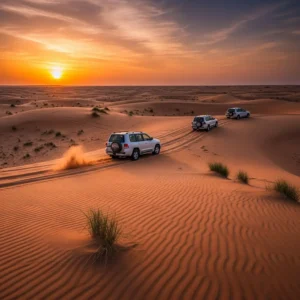
Dune bashing is not like driving on the road.
It involves sliding, drifting, and climbing loose sand.
The car moves in unpredictable ways.
Understanding the physics helps you stay safe.
The driver deflates the tires before entering the desert.
This increases the surface area of the tire.
It gives the car grip.
Without this, the car would sink and flip.
Inside the car, you are subjected to G-forces.
You move side to side.
You bounce up and down.
The most critical of all Desert Safari Safety Tips here is the seatbelt.
You must wear your seatbelt.
It is not optional.
Even if you are in the back seat.
If the car hits a bump, you can fly upwards.
You can hit your head on the roof.
You can hit the person next to you.
The seatbelt keeps you anchored.
It protects your spine.
Licensed cars have reinforced roll cages.
This is a metal frame inside the car.
If the car rolls over (which is rare but possible), the roof won’t crush.
Check for the roll bars when you get in.
It is a sign of a professional vehicle.
Coping with Motion Sickness
Motion sickness is the number one complaint.
It is not an injury, but it ruins the experience.
The motion of the car is similar to a boat in a storm.
It confuses your inner ear.
This leads to nausea and dizziness.
Following Desert Safari Safety Tips for health is vital.
Do not eat a heavy meal before the trip.
Avoid greasy food.
Avoid dairy products.
Eat a light snack, like toast or crackers.
Take a motion sickness pill 1 hour before pickup.
Dramamine is a popular brand.
Do not wait until you feel sick to take it.
It will be too late.
If you feel sick during the drive, speak up.
Tell the driver immediately.
Do not be embarrassed.
They are trained to handle this.
They can stop the car.
They can let you get some fresh air.
They can drive on flatter routes.
Sitting in the front seat helps.
You can see the horizon.
This helps your brain process the movement.
If you know you have a sensitive stomach, skip the hard bashing.
Book a “Nature Drive” instead.
It is smooth and gentle.
Check options at https://dubaidesertsafarie.com/.
Hydration and Heat Stroke
Dubai is hot.
In summer, it is incredibly hot.
Temperatures can reach 50 degrees Celsius.
Even in winter, the sun is strong.
Dehydration happens fast in the desert.
The dry air evaporates sweat instantly.
You might not feel sweaty, but you are losing water.
One of the key Desert Safari Safety Tips is to drink before you are thirsty.
Drink water throughout the day.
Avoid too much coffee or alcohol before the trip.
They dehydrate you.
Symptoms of heat stroke include headache and dizziness.
If you stop sweating, that is a danger sign.
Get to the shade immediately.
Drink water slowly.
Cool your neck with a wet cloth.
Reputable operators provide unlimited water.
Keep a bottle with you at all times.
Do not walk long distances in the open sun.
Stay near the car or the camp.
Wear a hat.
Protect your head from direct sunlight.
Clothing: What to Wear for Safety
Fashion is fun, but safety is better.
The wrong clothes can cause problems.
High heels are a disaster in the sand.
You will sink.
You might twist your ankle.
Wear flat, closed shoes or sandals with straps.
Sneakers are the best option.
They protect your feet from hot sand.
They protect you from thorns or insects.
Avoid short skirts or dresses.
It is windy in the desert.
Loose, flowing clothes can get caught in car doors.
Or they can get caught in quad bikes.
Wear comfortable trousers or shorts.
Cotton and linen are good fabrics.
They breathe.
They keep you cool.
Bring a light jacket in winter.
The desert gets cold at night.
The temperature drops rapidly after sunset.
Shivering is not fun.
Being prepared is one of the best Desert Safari Safety Tips.
Sunglasses are mandatory.
The glare from the sand can damage your eyes.
It can cause headaches.
Sand can also blow into your eyes.
Sunglasses act as a shield.
Safety for Pregnant Women
This is a serious topic.
Is it safe for pregnant women?
Generally, no.
Dune bashing is strictly forbidden for pregnant women.
The violent jerks can cause placental abruption.
It can induce early labor.
It is simply not worth the risk.
However, you can still visit the desert.
You must follow specific Desert Safari Safety Tips.
Do not book a standard shared car.
Book a private car.
Tell the driver you are pregnant.
They will skip the dunes.
They will drive on the flat tracks.
They will take you directly to the camp.
At the camp, be careful.
Do not ride the camels.
The camel might stand up suddenly.
This can cause a fall.
Do not ride quad bikes.
Enjoy the dinner and the show.
Sit in a comfortable chair.
Stay hydrated.
If you are in the first or third trimester, consult your doctor first.
Safety comes before adventure.
Companies like https://hafiztourism.com/ can arrange smooth transfers.
Safety for Infants and Toddlers
Can kids go to the desert?
Yes, but with precautions.
Infants under 2 years old should not do dune bashing.
Their neck muscles are not strong enough.
The shaking can be harmful.
For toddlers, you need a car seat.
It is the law.
Do not hold a child on your lap.
In a rollover or sudden stop, they become a projectile.
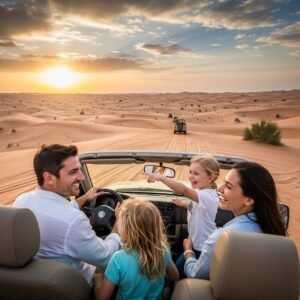
Book a private car for the family.
This allows you to control the speed.
You can tell the driver to go “Soft”.
Soft driving is gentle.
It is like a rolling wave.
It is safe for kids.
Keep an eye on them at the camp.
The desert is open.
They can wander off easily.
Keep them away from the fire pits.
Keep them away from the back of the camels.
Camels can kick.
Make sure they drink water.
Kids forget to drink when they are having fun.
Apply sunscreen on them frequently.
Quad Biking Risks and Rules
Quad bikes are popular.
They are also the cause of many injuries.
People think they are toys.
They are powerful machines.
They can flip over easily.
If you rent a quad bike, follow Desert Safari Safety Tips.
Wear a helmet.
Do not ride without one.
It protects your skull.
Wear goggles.
Sand in your eyes at 40 km/h blinds you.
Do not speed.
The dunes are unpredictable.
There might be a drop-off behind a crest.
If you go too fast, you will fly off.
Do not show off.
Do not try to drift if you are inexperienced.
Follow the guide.
Stay in the designated area.
Do not go into the open desert alone.
You can get lost.
You can run out of fuel.
Keep a safe distance from other riders.
Collisions are common.
If you crash, you are liable for the damage.
Ride responsibly.
Camel Riding Safety
Camels are gentle giants.
But they are big.
Falling from a camel is a long drop.
It can break bones.
The most dangerous moment is mounting and dismounting.
The camel kneels down for you.
You sit on the saddle.
Hold the handle tight.
Lean back when the camel stands up.
It lifts its back legs first.
This throws you forward.
If you don’t lean back, you fall over its head.
Then it lifts its front legs.
Lean forward slightly.
Listen to the handler.
Do not scream or make loud noises.
It scares the animal.
Do not walk behind a camel.
They can kick.
Do not tease them.
They can bite.
Only one person per camel usually.
Or one adult and one small child.
Follow these Desert Safari Safety Tips for a smooth ride.
Wildlife Awareness
The desert is alive.
It is home to scorpions, snakes, and spiders.
They are rare to see.
They usually hide from humans.
But they are there.
Do not walk barefoot in the deep sand.
Especially at night.
Wear shoes.
Do not put your hands in bushes.
Do not turn over rocks.
If you see a snake, back away slowly.
Do not try to touch it.
Do not try to take a selfie with it.
Scorpion stings are painful.
Seek medical attention immediately if stung.
However, in the tourist camps, it is safe.
The foot traffic keeps animals away.
The areas are cleaned regularly.
Just be aware if you wander far from the camp.
Food Hygiene and Allergies
Food poisoning can ruin a trip.
In a desert camp, hygiene is critical.
The food sits out in a buffet.
Reputable camps keep food hot.
They use warmers.
They cover the food to keep flies away.
Check the cleanliness of the plates.
Check the cleanliness of the staff.
If the food looks cold or old, avoid it.
Stick to freshly cooked items.
The BBQ is usually safe as it is grilled live.
If you have allergies, ask.
Ask what is in the dishes.
Nut allergies are common.
Arabic food uses nuts and sesame.
There might be cross-contamination.
If you have severe allergies, bring your own snacks.
It is better to be safe.
Drink only sealed bottled water.
Do not drink tap water in the bathroom.
Fire Safety at Camp
Camps have open fires.
There is a bonfire area.
There are fire shows.
Fire is mesmerizing but dangerous.
Keep a safe distance from the bonfire.
Sparks can fly.
Synthetic clothes can melt.
Do not throw trash in the fire.
During the fire show, stay seated.
The performers spin fire chains.
If you stand up or move closer, you can get hit.
Do not let kids run near the stage.
The performers need space.
Know where the fire extinguishers are.
Every camp must have them.
Know where the emergency exit is.
It is usually the main gate.
Being aware is a key part of Desert Safari Safety Tips.
Lost and Found Protocols
It is easy to lose things in the sand.
Phones slide out of pockets.
Wallets fall out during dune bashing.
Once it is buried in sand, it is gone.
Secure your belongings.
Use pockets with zippers.
Leave your passport in the hotel safe.
Carry only a copy.
Do not bring expensive jewelry.
If you lose something, tell the guide immediately.
They can help you search.
But recovery is difficult.
If you get lost yourself, stay put.
Do not walk aimlessly.
The desert looks the same in every direction.
Stay near a landmark.
Wait for the car to come back.
They will count the passengers.
They will find you.
Staying calm is one of the most vital Desert Safari Safety Tips.
Scam Prevention
Scams are a safety issue too.
Financial safety matters.
Avoid street sellers selling “cheap” tickets.
They might take your money and vanish.
Or they put you on a bus to a terrible camp.
Book online.
Use trusted websites like https://royaldesertadventures.ae/.
Read reviews.
Check if they have a physical office.
Be careful of “free” gifts at the camp.
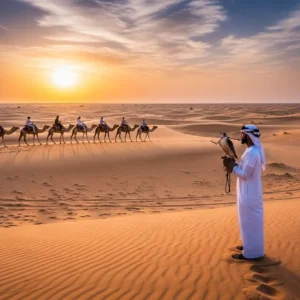
Someone might put a falcon on your arm.
Then they demand money for the photo.
Ask the price first.
“Is this free?”
Be firm.
Avoid the “free” souvenir shops on the way.
They sell overpriced items.
Stick to your plan.
Seasonal Hazards: Fog and Sandstorms
Weather in the desert can change.
In winter, there is fog.
Thick fog in the morning reduces visibility.
Driving becomes dangerous.
Tours might be delayed.
This is for your safety.
Do not pressure the driver to speed in fog.
Sandstorms can happen anytime.
Wind blows sand at high speed.
It hurts your skin.
It blinds you.
If a storm hits, cover your face.
Use a scarf.
Wear sunglasses.
Stay inside the car or tent.
Do not try to walk in a sandstorm.
You will lose your direction.
Wait it out.
Storms usually pass quickly.
Insurance Coverage
Does your insurance cover this?
Most travel insurance covers “activities”.
But check the fine print.
Is “off-road driving” covered?
Is “quad biking” covered?
Often, extreme sports are excluded.
You might need to buy an add-on.
Reputable tour operators have their own insurance.
They cover passengers inside the car.
Ask to see their insurance certificate.
A legal operator will show you.
An illegal freelancer will not.
This protects you if there is an accident.
It pays for the ambulance.
It pays for the hospital.
Never go without coverage.
This is a non-negotiable Desert Safari Safety Tips.
Respecting the Culture
Safety is also about social safety.
Respect local laws and customs.
Do not take photos of local women without permission.
It is illegal.
It can get you in trouble with the police.
Do not use bad language.
Do not make rude gestures while driving.
Road rage is a crime.
Dress modestly at the camp.
Public displays of affection are frowned upon.
Kissing in public can lead to fines.
Holding hands is okay for married couples.
Alcohol is served in camps.
But do not get drunk and disorderly.
Being drunk in public is an offense.
Drink responsibly.
Enjoy the culture safely.
Emergency Contacts
Save these numbers in your phone.
Police: 999.
Ambulance: 998.
Save the number of your driver.
Save the number of the tour agency.
If you get separated, call them.
Make sure your phone is charged.
Bring a power bank.
Signal in the desert is surprisingly good.
But batteries drain fast looking for signal.
Keep your phone ready.
It is your lifeline.
The Importance of Listening
The guide is your leader.
They know the desert.
When they say “Stay in the car”, stay in the car.
When they say “Fasten seatbelts”, do it.
Do not argue.
Do not think you know better.
Many accidents happen because tourists ignore instructions.
They wander off for a photo.
They stand on a dune ridge.
A car comes over the ridge and cannot see them.
This is how accidents happen.
Stay where the guide tells you.
Listening is the simplest of Desert Safari Safety Tips.
Why Royal Desert Adventures is Safer
We prioritize your life.
At https://royaldesertadventures.ae/, we do not compromise.
Our cars have GPS tracking.
We know where every car is.
If a car stops, we know.
We send backup immediately.
Our drivers undergo rigorous training.
They are certified in first aid.
They are certified in off-road driving.
We inspect our camps daily for hygiene.
We maintain a low guest-to-staff ratio.
You are never ignored.
We provide clear briefings.
We ensure you understand the risks.
We want you to return.
We want you to recommend us.
Safety is our business model.
Conclusion
The desert is a place of joy.
It is a place of discovery.
By following these Desert Safari Safety Tips, you ensure it remains joyful.
You remove the risk.
You focus on the fun.
Preparation is the key.
Choose the right company.
Wear the right clothes.
Drink water.
Listen to the guide.
It is simple.
But it makes all the difference.
Don’t let fear stop you.
Let caution guide you.
The dunes are waiting.
The sunset is waiting.
Go out there and explore.
But do it safely.
Book your safe adventure today.
Visit https://royaldesertadventures.ae/ for peace of mind.
Check details at https://dubaidesertsafarie.com/ and https://hafiztourism.com/.
Safe travels.
See you in the sand.
Safety Checklist for First-Timers
| Item | Status | Notes |
| Operator Check | Verified | Licensed & Insured |
| Motion Sickness Pill | Taken | 1 hour before |
| Clothing | Correct | Loose pants, sneakers |
| Hydration | Ready | Water bottle packed |
| Phone Battery | 100% | Power bank included |
| Sun Protection | Applied | Hat & Sunglasses |
| Seatbelt | Fastened | At all times |
| Driver Number | Saved | For emergency |
20 FAQs with Long Answers
1. Is desert safari safe for senior citizens?
Yes, desert safaris can be safe for senior citizens if you choose the right package. The extreme dune bashing is generally not recommended for seniors, especially those with back or heart conditions, due to the bumpy ride. However, you can book a private car and request a “soft drive” or “nature drive.” This involves driving gently over the dunes without the steep drops. Alternatively, you can go directly to the camp for dinner and entertainment. Always consult with the operator like https://royaldesertadventures.ae/ to customize the trip for elderly guests.
2. What should I do if I feel sick during the dune bashing?
If you feel nauseous, alert your driver immediately. Do not wait until you are about to vomit. The drivers are experienced and will stop the car on a flat surface to let you get fresh air and recover. They can also adjust their driving style to be smoother for the rest of the trip. Sitting in the front passenger seat often helps as it provides a clear view of the horizon, which helps the brain reconcile the motion.
3. Are the Land Cruisers safe in case of a rollover?
Yes, the Land Cruisers used by licensed tour operators are outfitted with internal roll cages. These are reinforced metal bars that prevent the roof from collapsing in the unlikely event of a rollover. Additionally, all passengers must wear seatbelts. The drivers are trained to handle such situations, and the convoy system ensures that if one car has trouble, others are there to assist immediately.
4. Can I bring my infant to the desert safari?
It is generally not recommended to bring infants (under 3 years) on a standard dune bashing safari. The violent motion can be harmful to their developing necks and spines. However, you can bring them if you book a private vehicle and skip the dune bashing, going straight to the camp. At the camp, you must supervise them closely as the terrain is uneven and there are fire pits and animals.
5. Is it safe to walk barefoot in the desert?
Walking barefoot on the soft sand feels great, but you should be cautious. In the summer, the sand can be scorching hot and cause burns. In the evening or away from the main camp, there is a small risk of stepping on thorns, sharp rocks, or even insects like scorpions (though rare in tourist areas). It is safer to wear sandals or flip-flops that you can easily take off when you are sure the area is safe.
6. What happens if our car breaks down in the middle of the desert?
Desert safari cars travel in convoys (groups). If your car breaks down or gets stuck, the other cars in the convoy will stop to help. The guides carry tow ropes and shovels. If the car cannot be fixed, you will be transferred to another vehicle in the convoy. You are never left alone in the desert. This is why booking with a reputable company with a fleet is one of the top Desert Safari Safety Tips.
7. Are there snakes and scorpions in the desert?
Yes, the Arabian desert is home to vipers and scorpions. However, they are shy and nocturnal. They avoid the vibrations and noise of the 4x4s and the busy campsites. Sightings during a standard safari are extremely rare. To be safe, do not wander far into the untouched bushes or turn over rocks. If you are camping overnight, keep your tent zipped up.
8. How safe is quad biking for beginners?
Quad biking carries a risk of injury if not done carefully. For beginners, it is crucial to listen to the safety briefing, wear a helmet, and stay within the designated designated area. Do not try to speed or perform stunts. Many accidents happen when inexperienced riders try to climb steep dunes and roll the bike over. If you follow the rules and ride at a moderate speed, it is a fun and safe activity.
9. Is the food at the camp hygienic?
Reputable camps follow strict hygiene standards set by the Dubai Municipality. They are inspected regularly. The food is kept covered and at the right temperature. However, if you have a very sensitive stomach, avoid raw salads and stick to hot, cooked foods like rice and BBQ meat. Wash your hands before eating. If the camp looks dirty or disorganized, rely on pre-packaged snacks you brought yourself.
10. Can I wear contact lenses in the desert?
It is better to wear glasses if possible. The desert can be windy, and fine sand particles can blow into your eyes. If sand gets under your contact lens, it can be very painful and scratch your cornea. If you must wear contacts, bring eye drops, wear wrap-around sunglasses for protection, and carry your backup glasses just in case.
11. What is the safest time of year to visit?
The safest and most comfortable time is winter (October to April). The temperatures are pleasant (20-30°C). In summer (May to September), the heat is a significant safety factor. Temperatures exceed 40°C, increasing the risk of heat exhaustion and dehydration. If you visit in summer, stick to evening tours and minimize physical exertion during the day.
12. Do I need travel insurance for a desert safari?
Yes, it is highly recommended. While the tour operator has insurance for the vehicle and passengers during the drive, personal travel insurance covers you for other mishaps like illness, lost property, or accidents during optional activities like sandboarding. Check your policy to ensure it covers “adventure activities” or “off-road driving” as a passenger.
13. Is sandboarding dangerous?
Sandboarding is relatively safe because sand is soft. However, you can still twist an ankle or knee if you fall awkwardly. The biggest risk is colliding with another person. Always wait until the person before you has cleared the bottom of the dune before you slide down. Do not stand in the landing area. If you are unsure, sit on the board like a sled instead of standing.
14. How do I avoid getting lost at the camp?
The campsites can be large and crowded. It is easy to get disoriented, especially for children. Establish a meeting point with your group upon arrival (e.g., “Table 5” or “Next to the stage”). Keep your phone with you. If you go to the restroom or for a camel ride, tell someone in your group. If you get lost, go to the DJ booth or reception; they can make an announcement.
15. Is it safe to drive my own rental car into the desert?
No! Most standard rental car agreements strictly prohibit off-road driving. You will void your insurance. Furthermore, driving in sand requires special skills and a 4×4 vehicle with deflated tires. You will likely get stuck, and recovery can be expensive. It is much safer and cheaper to book a guided safari with professional drivers who know the terrain.
16. What safety gear is provided in the car?
Professional safari vehicles are equipped with a roll cage, seatbelts for every passenger, a first aid kit, and a fire extinguisher. The cars also have GPS tracking in many cases. The tires are specialized for off-road use. Before you start, you can quickly glance to see if these elements are present. If a car lacks seatbelts, refuse to ride in it.
17. Are the drivers trained in first aid?
Yes, drivers for top-tier companies like https://royaldesertadventures.ae/ undergo basic first aid training. They know how to handle minor injuries, heat exhaustion, and motion sickness. They also have direct lines to emergency services and their operations managers to coordinate help if a more serious situation arises.
18. Is it safe to ride a camel if I have back pain?
If you have chronic back pain or a recent injury, it is best to avoid camel riding. The motion of the camel walking is swaying, which can be relaxing, but the process of the camel standing up and sitting down is jerky and abrupt. This sudden movement can aggravate back issues. You can still pet the camel and take photos without riding.
19. How much water should I drink?
You should drink more than you think you need. Aim for at least 500ml every hour if you are active outdoors. Do not wait until you feel thirsty. Thirst is a sign that you are already dehydrated. Avoid alcohol and excessive caffeine before the trip as they act as diuretics. Safe operators will offer unlimited water; take advantage of it.
20. Why should I choose Royal Desert Adventures for safety?
Choosing https://royaldesertadventures.ae/ ensures you are with a licensed, regulated operator. They adhere to all Desert Safari Safety Tips and government protocols. Their fleet is modern and maintained. Their drivers are professionals, not freelancers. They have a reputation to protect, so they will never compromise your safety for a quick profit. Peace of mind is the best safety feature you can buy.