
Hidden Wildlife Desert Safari 15 Amazing Animals You Must See
Many people think the desert is empty.
They see endless waves of sand.
They imagine a dead landscape.
But they are wrong.
The desert is alive.
It is teeming with creatures.
You just need to know where to look.
A Hidden Wildlife Desert Safari reveals this secret world.
The animals here are masters of survival.
They endure extreme heat.
They survive with almost no water.
They hide during the day.
They come alive at night.
When you book a safari, you expect dune bashing.
You expect a BBQ dinner.
But the real treasure is the nature.
If you look closely, you will see tracks.
You will see movement in the bushes.
This guide will open your eyes.
We will explore the mammals, reptiles, and birds.
We will learn how they live.
We will learn how to spot them.
Get your camera ready.
The Hidden Wildlife Desert Safari is about to begin.
The Arabian Oryx: The Spirit of the Desert
The Arabian Oryx is the star of the show.
It is the national animal of the UAE.
It is a large antelope.
Its body is bright white.
This is a clever adaptation.
The white coat reflects the hot sun.
It keeps the animal cool in summer.
Its legs are dark.
This helps absorb heat on cold winter mornings.
The most striking feature is the horns.
They are long and straight.
They look like spears.
Some say the legend of the unicorn comes from the Oryx.
If you see it from the side, it looks like one horn.
Seeing one on a Hidden Wildlife Desert Safari is lucky.
But it was not always easy.
In the 1970s, they went extinct in the wild.
Hunters killed them all.
But the UAE government stepped in.
Sheikh Zayed started a breeding program.
Today, there are thousands.
They roam freely in the Dubai Desert Conservation Reserve.
They are a symbol of hope.
They show that conservation works.
When you see them, stay quiet.
They are shy animals.
They often travel in small herds.
A dominant male leads them.
They can smell water from miles away.
Operators like https://royaldesertadventures.ae/ respect these animals.
They keep a safe distance.
They ensure the herd is not disturbed.
This is true eco-tourism.
The Sand Gazelle: Speed and Grace
The Sand Gazelle is different from the Oryx.
It is much smaller.
It is light brown or beige.
This camouflage is perfect.
They blend into the dunes completely.
Sometimes, you only see them when they move.
They are incredibly fast.
They can run up to 60 km/h.
They need this speed to escape predators.
On a Hidden Wildlife Desert Safari, look for them in the shade.
During the hot afternoon, they rest under Ghaf trees.
They are known as “Reem” in Arabic.
They are very beautiful.
They have large, dark eyes.
Their horns are curved like a lyre.
They are tough survivors.
They can shrink their liver and heart.
This reduces their need for oxygen.
It helps them prevent water loss.
They get most of their moisture from plants.
They rarely drink free-standing water.
This adaptation is a miracle of nature.
They are often seen in pairs.
Sometimes you see a mother with a fawn.
The fawns are tiny and fragile.
They hide in the scrub brush.
Drivers from https://dubaidesertsafarie.com/ are trained to spot them.
They know the hiding spots.
They will point them out to you.
Watching a gazelle run is poetry in motion.
The Mountain Gazelle: The Agile Climber
There is another type of gazelle.
The Mountain Gazelle.
They are darker than the Sand Gazelle.
They have a distinct dark stripe on their side.
They prefer rocky areas.
But they are also found on the gravel plains.
They are more aggressive than the Reem.
Males will fight for territory.
They lock their horns and push.
It is a display of strength.
On a Hidden Wildlife Desert Safari, you might see this battle.
It is rare but exciting.
These gazelles are also endangered.
Habitat loss is a threat.
But protected areas help them thrive.
They are very alert.
Their ears are constantly moving.
They listen for danger.
If they see a car, they freeze.
Then they bolt.
They bounce as they run.
This is called “stotting.”
It signals to predators that they are fit.
It tells the predator: “Don’t bother chasing me.”
It consumes energy but saves their life.
Companies like https://hafiztourism.com/ offer nature drives to see them.
They use binoculars.
They drive slowly.
This increases your chances of a sighting.
The Arabian Red Fox: The Cunning Hunter
Predators also live here.
The Arabian Red Fox is common.
But it is rarely seen.
It is strictly nocturnal.
It comes out after sunset.
If you do an evening Hidden Wildlife Desert Safari, look for eyes.
Their eyes reflect the car headlights.
They shine green or yellow in the dark.
This fox is smaller than European foxes.
It has huge ears.
These ears serve two purposes.
First, they hear insects underground.
Second, they dissipate body heat.
They act like radiators.
The fox eats everything.
It eats rodents, birds, and lizards.
It even eats fruit and scorpions.
It is an opportunist.
It is very intelligent.
It avoids humans usually.
But sometimes, it visits camp sites.
It looks for food scraps.
This is why we must not litter.
Human food is bad for them.
It makes them sick.
It makes them dependent.
We want them to stay wild.
Seeing a fox is a thrill.
They move like shadows.
One moment they are there.
The next moment they are gone.
The Ruppell’s Fox: The Ghost of the Sands
There is another fox.
The Ruppell’s Fox.
It is even more elusive.
It is smaller and paler.
It lives in the deep dunes.
It rarely drinks water.
It gets moisture from its prey.
Its fur is very soft.
It has fur on the pads of its feet.
This protects it from hot sand.
It also silences its footsteps.
It is a ghost.
On a Hidden Wildlife Desert Safari, this is a prize sighting.
Photographers wait hours for it.
It is a master of camouflage.
It can dig a burrow in seconds.
It hides underground during the day.
The sand is cooler down there.
At night, it hunts.
It catches beetles and gerbils.
It is a vital part of the ecosystem.
It controls the rodent population.
Without foxes, rats would take over.
Nature has a balance.
The Hidden Wildlife Desert Safari shows this balance.
Every animal has a job.
Every animal matters.
The Desert Hare: The Fast Sprinter
You might see something jump.
It looks like a rabbit.
But it is a Desert Hare.
It has very long ears.
It has long hind legs.
It is incredibly fast.
It runs in a zigzag pattern.
This confuses predators.
Eagles try to catch them.
Foxes try to catch them.
The hare must be faster.
Its eyes are large.
It has excellent vision.
It can see almost 360 degrees.
On a Hidden Wildlife Desert Safari, look near bushes.
They hide in the shade.
They freeze when a car approaches.
They hope you don’t see them.
Their fur matches the sand perfectly.
They are active at dawn and dusk.
They eat grass and roots.
They are tough little animals.
They do not dig burrows.
They lie in shallow depressions.
These are called “forms.”
They rely on speed, not holes.
Spotting one requires sharp eyes.
Guides from https://royaldesertadventures.ae/ are good at this.
They scan the horizon.
They catch the slightest movement.
The Spiny Tailed Lizard: The Mini Dinosaur
Let us look at reptiles.
The Spiny Tailed Lizard is famous.
Locals call it the “Dhub.”
It looks like a dinosaur.
It has a thick, heavy body.
Its tail is covered in spikes.
This tail is a weapon.
If attacked, it thrashes the tail.
It can hurt a predator badly.
You see them on a Hidden Wildlife Desert Safari in the morning.
They lie on rocks.
They are cold-blooded.
They need the sun to warm up.
Once they are warm, they move.
They are vegetarians.
They eat desert plants.
They live in deep burrows.
They run back to their hole if scared.
They can live for 80 years.
They change color.
In the morning, they are dark grey.
This absorbs heat.
As they get hot, they turn yellow.
This reflects heat.
It is a natural thermostat.
They are fascinating to watch.
They bob their heads up and down.
It looks like they are doing push-ups.
This is a communication signal.
It tells other lizards: “This is my rock.”
The Sandfish Skink: The Swimmer of Sand
This is a strange creature.
It is a lizard.
But it “swims” through the sand.
It does not walk on top.
It dives under the surface.
Its nose is shaped like a shovel.
Its skin is super smooth.
It has no friction.
It moves like a fish in water.
On a Hidden Wildlife Desert Safari, look at the dune face.
If you see tracks that suddenly vanish, it is a skink.
They are very shiny.
They reflect the sun like a mirror.
They eat insects.
They sense vibrations in the sand.
If a beetle walks by, the skink attacks.
They erupt from the sand.
It is like a scene from a movie.
Kids love seeing this.
It feels like magic.
Guides sometimes track them.
They gently dig the sand.
If they catch one, they show it to you.
Then they release it immediately.
We never harm the wildlife.
We observe and respect.
https://dubaidesertsafarie.com/ guides are trained in handling.
They know how to be gentle.
The Horned Viper: The Master of Ambush
Snakes exist in the desert.
The Horned Viper is the most famous.
It has two small horns above its eyes.
It looks devilish.
It is venomous.
But do not panic.
They are very shy.
They avoid humans.
On a Hidden Wildlife Desert Safari, you are safe in the car.
The viper buries itself in the sand.
Only its eyes stick out.
It waits for a lizard or mouse.
When prey comes close, it strikes.
It moves sideways.
This is called “sidewinding.”
It touches the hot sand only briefly.
This prevents it from burning its belly.
It leaves a unique J-shaped track.
If you see this track, do not follow it.
Just take a photo of the track.
Respect the snake’s space.
It is part of the Hidden Wildlife Desert Safari experience.
Knowing danger exists makes it exciting.
But accidents are extremely rare.
Most tourists never see one.
But the knowledge that they are there adds a thrill.
The Desert Monitor: The Giant Lizard
This is the biggest reptile here.
The Desert Monitor can be one meter long.
It looks like a Komodo Dragon.
It is powerful.
It has a long blue tongue.
It flicks its tongue to smell.
It hunts snakes and hares.
It is a top predator.
On a Hidden Wildlife Desert Safari, seeing one is special.
They stride across the sand with confidence.
They are not afraid.
When threatened, they hiss loudly.
They puff up their body.
They whip their tail.
They are active in the midday heat.
While other animals sleep, the Monitor hunts.
It digs huge burrows.
Sometimes it steals burrows from foxes.
It is a tough neighbor.
It has beautiful markings.
Yellow and brown stripes.
It is a protected species.
Capturing them is illegal.
We watch them from the 4×4.
We admire their prehistoric look.
It feels like Jurassic Park.
The Houbara Bustard: The Royal Bird
Now, let us look up.
The birds of the desert are unique.
The Houbara Bustard is famous.
It is a large, ground-dwelling bird.
It looks like a small turkey.
It is brown and speckled.
This camouflage is incredible.
It freezes when danger approaches.
You can drive right past it.
You won’t see it until it moves.
On a Hidden Wildlife Desert Safari, guides scan carefully.
This bird is important to Bedouin culture.
It is the traditional prey for falcons.
Falconry was a way of life.
Bedouins used falcons to hunt Houbara for food.
Now, hunting is regulated.
Conservation programs release Houbara into the wild.
They want to increase numbers.
The bird has a funny walk.
It lifts its feet high.
It looks arrogant.
When it flies, it is heavy.
But it can fly long distances.
Seeing one in the wild connects you to history.
It reminds you of the old days.
https://hafiztourism.com/ often shares these cultural stories.
They explain the link between bird and man.
The Lappet-faced Vulture: The Cleaner
This is a huge bird.
It is a vulture.
It has a wingspan of 3 meters.
It is massive.
It is a scavenger.
It cleans the desert.
If an animal dies, the vulture eats it.
This prevents disease.
It is nature’s garbage man.
On a Hidden Wildlife Desert Safari, look at the sky.
If you see birds circling, they found something.
They fly high on thermal currents.
They barely flap their wings.
They just glide.
They have a red head.
They have a powerful beak.
They can tear tough skin.
They are rare in Dubai now.
But in the deeper desert, they exist.
Conservation efforts are trying to bring them back.
They are misunderstood animals.
People think they are ugly.
But they are vital.
Without them, bacteria would spread.
Respect the vulture.
It does the dirty work for the ecosystem.
The Falcon: The Hunter of the Skies
You cannot talk about desert wildlife without the Falcon.
Specifically, the Peregrine and Saker falcons.
They are the fastest animals on earth.
They can dive at 300 km/h.
In the wild, they hunt other birds.
On a Hidden Wildlife Desert Safari, you might see a show.
But seeing a wild one is different.
They perch on high rocks.
Or on power lines.
They scan for movement.
Their vision is 8 times better than ours.
They can see a mouse from 1 km away.
They are efficient killers.
Bedouins trapped them.
They trained them.
They became partners.
The falcon provided meat for the family.
Today, it is a sport.
But wild falcons still migrate through Dubai.
Winter is the best time to see them.
They come from colder countries.
They stay for the mild winter.
Watching a falcon dive is breathtaking.
It is a blur of feathers.
It hits its prey with immense force.
It is nature’s missile.
The Ghaf Tree: The Tree of Life
Life needs a source.
In the desert, the Ghaf Tree is that source.
It is not an animal.
But it supports all animals.
It is the national tree of the UAE.
Its roots go 30 meters deep.
It finds water deep underground.
It stays green forever.
It never dies of drought.
On a Hidden Wildlife Desert Safari, you will see them.
They are the only shade.
Gazelles sleep under them.
Birds build nests in them.
Insects live in the bark.
Goats eat the leaves.
Humans used to eat the seeds.
It is the center of the ecosystem.
Destroy the Ghaf, and you destroy the life.
That is why it is illegal to cut them.
Huge fines apply.
When you see a Ghaf tree, look closely.
You will see owl holes.
You will see lizard tracks.
It is a mini-hotel for wildlife.
The branches are twisted and gnarled.
They look like old hands.
They tell a story of survival.
The Arachnids: Scorpions and Camel Spiders
Now for the creepy crawlies.
The Deathstalker Scorpion.
It is yellow.
It is small.
But it is dangerous.
Its venom is potent.
But again, do not fear.
They hide under rocks.
They glow under UV light.
Guides carry UV torches on night safaris.
They shine the light on the sand.
The scorpion glows bright blue.
It is beautiful in a scary way.
Then there is the Camel Spider.
It is big.
It runs very fast.
It looks terrifying.
Myths say it eats camels.
This is false.
It eats insects.
It is not venomous.
It just has a painful bite.
It chases your shadow.
It wants shade, not you.
People get scared because it runs at them.
It is just trying to cool down.
On a Hidden Wildlife Desert Safari, these encounters are memorable.
They remind you that this is a wild place.
It is not a zoo.
Respect the small things.
They have been here millions of years.
The Dubai Desert Conservation Reserve (DDCR)
Where can you see all this?
The best place is the DDCR.
It is a protected area.
It covers 5% of Dubai’s land.
It is fenced off.
No camels from farms are allowed.
No casual camping is allowed.
Only select tour operators can enter.
https://royaldesertadventures.ae/ is one of them.
They have special permits.
This reserve is a sanctuary.
Here, the vegetation has recovered.
The natural grasses have grown back.
This brings the insects.
Which brings the lizards.
Which brings the foxes.
It is a complete food web.
A Hidden Wildlife Desert Safari here is superior.
You see 10 times more animals.
Outside the fence, overgrazing is a problem.
Inside, it is a paradise.
The rangers patrol daily.
They check the water points.
They monitor the herds.
It is a success story of global conservation.
Visiting helps fund this work.
A portion of your fee goes to the animals.
You are contributing to nature.
How to Spot Wildlife: A Guide
Spotting animals is a skill.
You need patience.
Here are some tips for your Hidden Wildlife Desert Safari:
1. Look for Movement: Don’t look for the shape of an animal. Look for something that breaks the pattern. A flicker of an ear. A swish of a tail.
2. Look for Contrast: Shadows are your friend. Look under the trees. Look at the base of the bushes.
3. Go Early or Late: Midday is dead. Animals sleep when it is hot. Dawn (6 AM) is best. Dusk (5 PM) is great. Night drives are amazing for predators.
4. Be Quiet: Noise scares them. Turn off the music in the car. Don’t shout. Whisper if you need to speak.
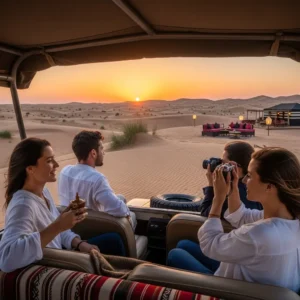
5. Use Binoculars: Bring a pair. The desert is vast. Animals might be far away.
6. Watch the Tracks: Sand records everything. Your guide will read the tracks. “A fox walked here 1 hour ago.” “A snake crossed here.” It is like reading a newspaper.
7. Trust the Guide: They do this every day. If they stop, look where they point. They have “desert eyes.”
Photography Tips for Wildlife
You want to capture the moment.
Wildlife photography is hard.
But rewarding.
Use a Zoom Lens: You cannot get close. A 300mm lens is good. A phone camera might be too wide. But modern phones have good zoom.
Stay Low: Photos look better from eye level. If you can, shoot through the car window. Don’t shoot from high up.
Focus on the Eye: The animal’s eye must be sharp. If the eye is blurry, the photo fails.
Capture the Habitat: Don’t just fill the frame with the animal. Show the dunes. Show the Ghaf tree. Context makes the photo tell a story. A Hidden Wildlife Desert Safari offers great light. The morning sun is golden. The dust creates atmosphere.
Be Fast: Animals don’t pose. Have your camera ready. Settings should be high shutter speed. 1/1000th of a second. This freezes the action.
Don’t Flash: Never use flash on nocturnal animals. It blinds them. It scares them. Use high ISO instead.
Sustainable Tourism and Ethics
We must be responsible.
We are guests in their home.
Don’t Feed Animals: It is dangerous. It makes them sick.
Don’t Chase Animals: Chasing a gazelle causes stress. It can die from exhaustion. Drivers must never pursue an animal.
Stay on Tracks: Driving off-road destroys burrows. It crushes plants. Stick to the established paths.
Take Trash Home: Plastic kills. A simple bag can kill an Oryx. Keep the desert clean.
Operators like https://dubaidesertsafarie.com/ follow strict codes. They sign pledges. They train staff. Choose ethical companies. If a driver chases an animal, tell him to stop. Report him. We must protect the Hidden Wildlife Desert Safari for the future. Eco-tourism is about balance. Enjoying without destroying.
The Role of Water Holes
In the DDCR, there are water holes.
These are artificial lakes.
Or simple troughs.
Water is pumped there.
This helps animals survive summer.
These are hotspots for viewing.
If you park near water, wait. Animals will come. Oryx come to drink. Birds come to bathe. Foxes come to ambush. It is a theater of nature. Your guide knows the locations. They will take you there. It is a guaranteed sighting usually. But remain silent. If they hear you, they won’t drink. Thirst fights fear. Don’t make fear win.
The Seasonal Changes
The desert changes with seasons.
Winter (Nov-Mar): Best time. Migratory birds arrive. Animals are active all day. Weather is pleasant.
Summer (Jun-Sep): Very hot. Animals are nocturnal. You see less in the day. But reptiles are active. Morning safaris must be very early.
Spring: Babies are born. You see fawns. Plants bloom. The desert turns green. It is beautiful.
Plan your Hidden Wildlife Desert Safari accordingly. Winter is the peak season. Book early. Summer has its own charm but is harder.
Conclusion
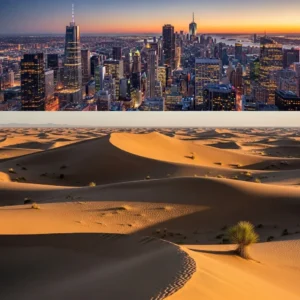
The Dubai desert is a biological wonder. It is not just sand. It is a complex web of life. From the majestic Oryx to the tiny beetle. Each has a story. A Hidden Wildlife Desert Safari tells these stories. It is an educational journey. It is a spiritual journey. You connect with the raw earth. You see survival in its purest form. So, next time you visit Dubai, look beyond the mall. Look beyond the skyscraper. Go into the dunes. Move slowly. Look closely. You will meet the hidden residents. And they will amaze you. Book with trusted experts. Use https://royaldesertadventures.ae/ for eco-tours. Use https://hafiztourism.com/ for family trips. The wild is waiting.
20 FAQs About Hidden Wildlife Desert Safari
1. What is the most common animal I will see?
The most common animal you will encounter on a Hidden Wildlife Desert Safari is the Arabian Gazelle (Sand Gazelle). They are relatively abundant in protected areas like the Dubai Desert Conservation Reserve. You will often see them resting under Ghaf trees or grazing on small shrubs. The Arabian Oryx is also commonly seen in these reserves due to successful breeding programs.
2. Is it safe to be near wild animals in the desert?
Yes, it is generally safe as long as you stay in the vehicle. The animals in the desert, like the Oryx and Gazelles, are not aggressive towards humans unless cornered. Predators like the Arabian Fox are small and shy. The only potential danger comes from scorpions or snakes if you walk barefoot in the sand, but guides are trained to keep you away from risky areas.
3. Can I feed the animals?
No, absolutely not. Feeding wildlife is strictly prohibited. Human food is not suitable for their digestive systems and can cause severe illness or death. Furthermore, feeding animals makes them dependent on humans, leading to aggressive behavior or the loss of their natural hunting/foraging instincts. Responsible operators like https://royaldesertadventures.ae/ enforce a zero-tolerance policy on feeding.
4. What is the best time of day to see wildlife?
The best times are early morning (sunrise) and late afternoon (sunset). During these “golden hours,” the temperature is cooler, and animals are most active. In the middle of the day, especially in summer, most animals hide in burrows or shade to escape the heat. A morning Hidden Wildlife Desert Safari is usually the most productive for photography.
5. Are there snakes in the Dubai desert?
Yes, there are snakes, such as the Horned Viper and the Sand Boa. However, sightings are extremely rare during the day. Snakes are mostly nocturnal and bury themselves deep in the sand to stay cool. They fear humans and will flee if they sense vibrations. Your chances of seeing one are low, but it is always wise to watch where you step.
6. Do I need special equipment to spot animals?
You do not need special equipment, but a pair of binoculars greatly enhances the experience. The desert is vast, and animals often keep their distance. A camera with a decent zoom lens is also recommended. Your guide will usually have sharp eyes and will point out animals you might miss, but having your own optics helps you appreciate the details.
7. Can I see camels in the wild?
Most camels you see in Dubai are domesticated or semi-wild, belonging to farms. There are no truly “wild” camels left in the UAE in the scientific sense. However, on a Hidden Wildlife Desert Safari, you will see camels roaming freely in the desert, grazing without handlers. They are owned but live a free-roaming lifestyle.
8. What is the Dubai Desert Conservation Reserve (DDCR)?
The DDCR is a protected area of 225 square kilometers. It was established to preserve the desert habitat. It is fenced off to prevent overgrazing by camels and unauthorized camping. It is the best place to see the Arabian Oryx and other wildlife in their natural habitat. Only select tour operators like https://dubaidesertsafarie.com/ have permission to enter this reserve.
9. Are there big cats like leopards in the Dubai desert?
No, there are no wild leopards or cheetahs roaming the Dubai desert today. The Arabian Leopard is critically endangered and found only in mountainous regions of Oman or Saudi Arabia, not in the Dubai dunes. The largest predator you will likely encounter is the Arabian Red Fox or perhaps a feral cat.
10. What bird is the national symbol of the UAE?
The Falcon is the national symbol of the UAE. It represents force and courage. While wild falcons migrate through the UAE, the ones you see in cultural shows are trained. Falconry is a deep-rooted tradition. Seeing a wild falcon hunting on a Hidden Wildlife Desert Safari is a rare and lucky event.
11. How do animals get water in the desert?
Many desert animals, like the Gazelle and Oryx, have evolved to get most of their moisture from the plants they eat. They have extremely efficient kidneys that retain water. Predators get moisture from the blood of their prey. In conservation reserves, rangers also maintain artificial water points to support the wildlife population during harsh summers.
12. Is the “Spiny Tailed Lizard” dangerous?
The Spiny Tailed Lizard (Dhub) is not aggressive towards humans and is a vegetarian. However, if you try to grab it, it will defend itself by thrashing its heavy, spiked tail, which can cause a painful scratch or bruise. If you observe it from a distance, it is harmless and fascinating to watch as it sunbathes.
13. What happens if I see a scorpion?
If you see a scorpion, do not panic. Do not touch it or try to move it. Simply step back and admire it from a safe distance. They will not chase you. Scorpions only sting in self-defense if they are stepped on or provoked. Alert your guide, and they might use a UV light to show you how it glows in the dark.
14. Can children go on a wildlife safari?
Yes, a Hidden Wildlife Desert Safari is excellent for children. It is educational and safer than extreme dune bashing. Kids love seeing the Oryx and lizards. It teaches them about nature and conservation. Just ensure they understand the rules: be quiet and do not try to pet the animals.
15. Why are the Oryx white?
The white coat of the Arabian Oryx is an evolutionary adaptation to the desert heat. White reflects sunlight, helping the animal maintain a lower body temperature. Conversely, their legs are dark to absorb heat on cold winter mornings. This thermoregulation allows them to survive in temperatures that can exceed 50°C.
16. What is the Ghaf tree?
The Ghaf tree is the drought-tolerant evergreen tree of the desert. It is crucial for wildlife survival, providing the only source of shade and food (leaves/pods) for many animals. It is illegal to cut down a Ghaf tree in the UAE. On your safari, you will see many animals congregating around these trees.
17. Do I need to book a specific “Wildlife” package?
Yes, standard desert safaris focus on dune bashing and BBQ dinners. They might see a camel, but they don’t focus on nature. To see Oryx and Gazelles, you should book a specific “Conservation Drive” or “Wildlife Safari” through operators like https://hafiztourism.com/. These tours go to protected areas and drive slowly to find animals.
18. How fast can a Sand Gazelle run?
A Sand Gazelle can reach speeds of up to 60 km/h (37 mph). They are incredibly agile and can make sharp turns without slowing down to evade predators. This speed is their primary defense mechanism against foxes and wild dogs.
19. What should I wear for a wildlife safari?
Wear neutral colors like beige, brown, or khaki. Bright colors like neon or red can startle animals and make you stand out against the sand. Comfortable clothes and closed shoes are recommended. Bring a hat and sunglasses for protection against the sun.
20. Why is conservation important in the desert?
Conservation is vital because the desert ecosystem is fragile. Overgrazing and off-road driving can destroy habitats that take decades to recover. By supporting conservation tourism, you fund the protection of endangered species like the Arabian Oryx and ensure that the desert remains a living, breathing wilderness for future generations.